



When we talk about eco-friendly promotional materials, we're not just talking about putting a logo on a random item. We mean thoughtfully designed branded gear made from materials that are kinder to our planet—think recycled, renewable, or biodegradable options. It’s a strategic move that helps brands resonate with today’s conscious consumers and, frankly, get a much better return on their marketing spend.
Why Smart Brands Are Choosing Eco-Friendly Promotional Materials
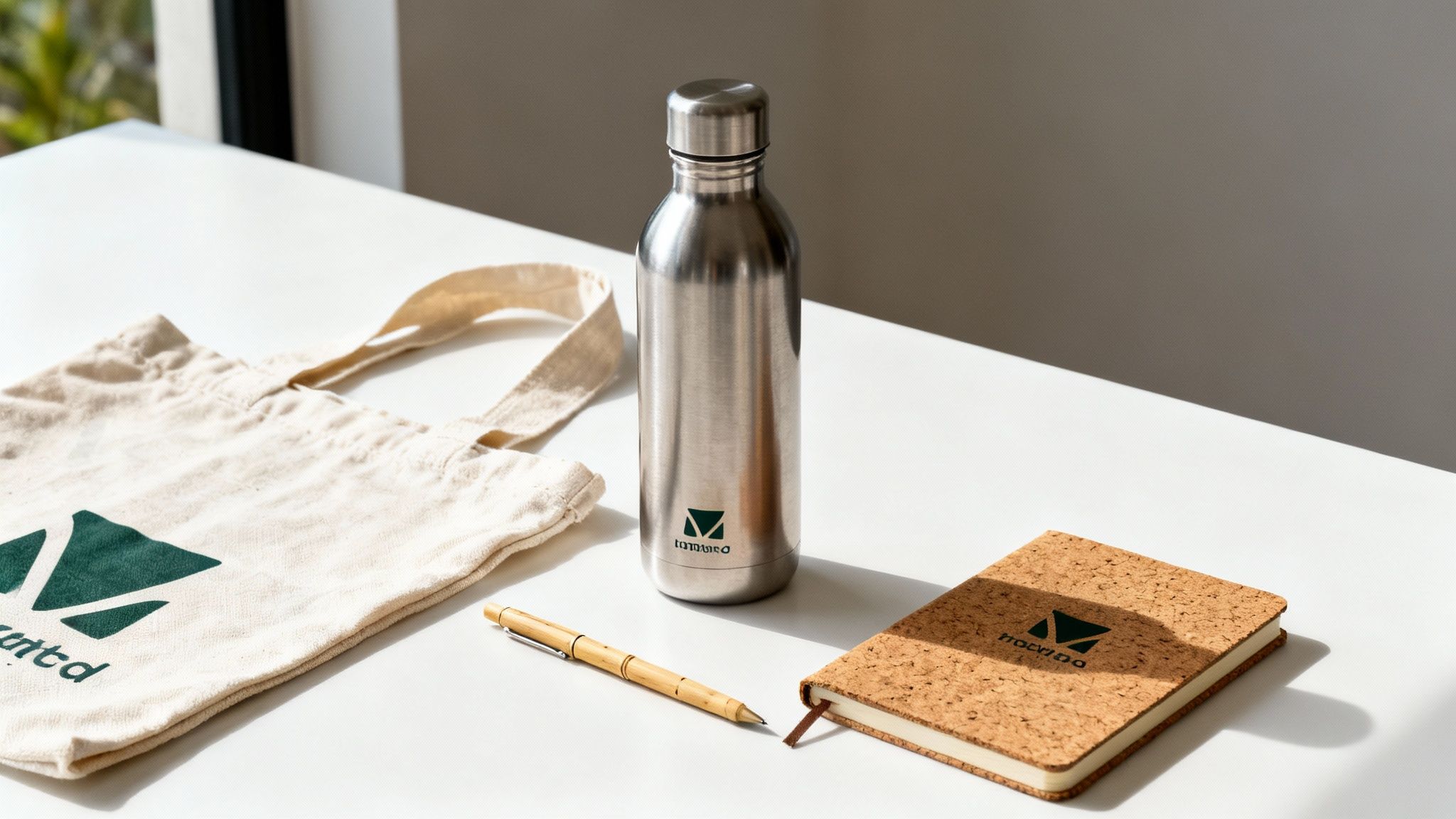
Opting for eco-friendly promotional gear isn't just a niche trend anymore; it's become a cornerstone of modern business strategy. Today's customers are actively looking to support brands that show they genuinely care about their environmental footprint.
When you give someone a tote bag made from recycled cotton or a sleek bamboo coffee cup, you're doing so much more than just marketing. You’re showing them that your brand's values align with theirs.
This simple, conscious choice sends a powerful message. It says your company is forward-thinking and genuinely committed to sustainability. Unlike cheap, disposable trinkets that end up in the bin, high-quality, eco-conscious items are kept and used for months, sometimes even years.
Just think about a sturdy stainless steel water bottle. It quickly becomes a daily companion, putting your logo right in front of your customer—and their network—day in and day out.
The Growing Demand for Sustainable Swag
The shift towards sustainable merchandise is being pulled along by both changing customer expectations and some pretty compelling data. The Australian promotional products market is now a powerhouse, valued at over $2 billion annually.
Within that massive market, the demand for sustainable items has absolutely skyrocketed. This isn't surprising when you look at broader consumer habits. Research on Australian shoppers reveals that a huge 76% consider sustainability when deciding what to buy.
This shift makes choosing eco-friendly promotional materials a very sharp commercial move. For an Australian business, picking a reusable item over a single-use one can lead to years of daily brand exposure for a cost per impression as low as $0.001. You can find more industry insights on the Australian Promotional Products Association (APPA) website.
This isn't just about feeling good; it's about smart marketing. A single, well-chosen eco-friendly product can generate more lasting brand visibility than hundreds of cheap, disposable alternatives combined. It transforms your promotional spend from a fleeting expense into a long-term investment in brand loyalty and perception.
What Makes a Promotional Product Genuinely Eco-Friendly?
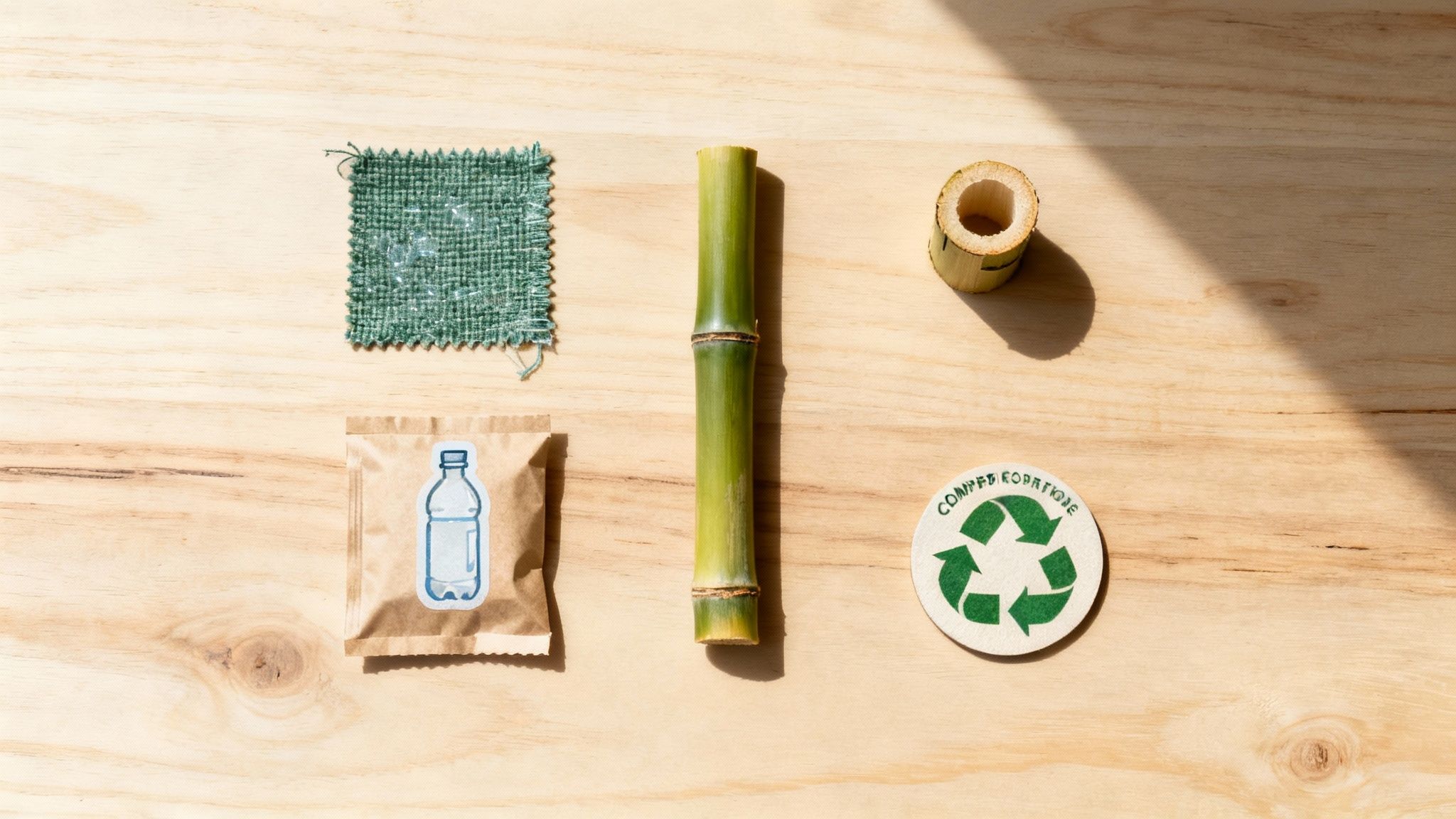
The term "eco-friendly" gets thrown around a lot, doesn't it? It can feel a bit vague, but when you peel back the layers, it comes down to a few straightforward ideas. To make choices that are genuinely sustainable, we need to look past the marketing slogans and understand the entire story of a product—from where it began to where it will end up.
Think of it like a product's life story. Was it created from sustainable sources? Is it designed to have a long and useful life? And when its job is done, can it be reborn into something new? Asking these questions is how you find items that truly reflect your brand’s commitment to the planet.
The 3 Pillars of Eco-Friendly Materials
The best eco-friendly promotional materials are built on three foundational pillars. Grasping these concepts will help you ask the right questions and evaluate your options with confidence.
- Renewable Resources: These are materials that nature can replenish relatively quickly. A perfect example is bamboo, which grows at an astonishing rate. Choosing a bamboo pen over one made from slow-growing timber is a simple but impactful sustainable switch.
- Recycled Content: This is all about giving old materials a second life. A tote bag made from recycled plastic bottles, for instance, diverts waste that might have ended up in our oceans and transforms it into a powerful branding tool.
- End-of-Life Plan: This is about what happens when the product is no longer needed. Is it biodegradable, like a cork coaster that can break down naturally? Or is it recyclable, allowing its core materials to be recovered and used again?
Renewable Resources: These are materials that nature can replenish relatively quickly. A perfect example is bamboo, which grows at an astonishing rate. Choosing a bamboo pen over one made from slow-growing timber is a simple but impactful sustainable switch.
Recycled Content: This is all about giving old materials a second life. A tote bag made from recycled plastic bottles, for instance, diverts waste that might have ended up in our oceans and transforms it into a powerful branding tool.
End-of-Life Plan: This is about what happens when the product is no longer needed. Is it biodegradable, like a cork coaster that can break down naturally? Or is it recyclable, allowing its core materials to be recovered and used again?
Items that check these boxes are more than just promotional products; they’re a statement. They show you value responsible sourcing and smart design. For a great overview of products that fit the bill, you can browse a handpicked collection of eco-friendly merchandise.
A product's eco-credentials aren't just about what it's made of. It's about its entire lifecycle. A truly sustainable choice is one that is sourced responsibly, built to last, and designed to be disposed of with minimal environmental impact.
A Practical Checklist: Key Sustainability Criteria
To make this even easier, think of sustainability as a checklist. Before you sign off on your next order, run through these key factors. This simple evaluation can help you spot the green-washers from the genuinely green options.
Here’s a table to guide you:
Key Sustainability Criteria for Promotional Products
This isn't about finding a "perfect" product—that rarely exists. It's about making a more informed decision and choosing the option that aligns best with your brand's values and has the smallest possible footprint.
Popular Sustainable Merchandise That Makes an Impact
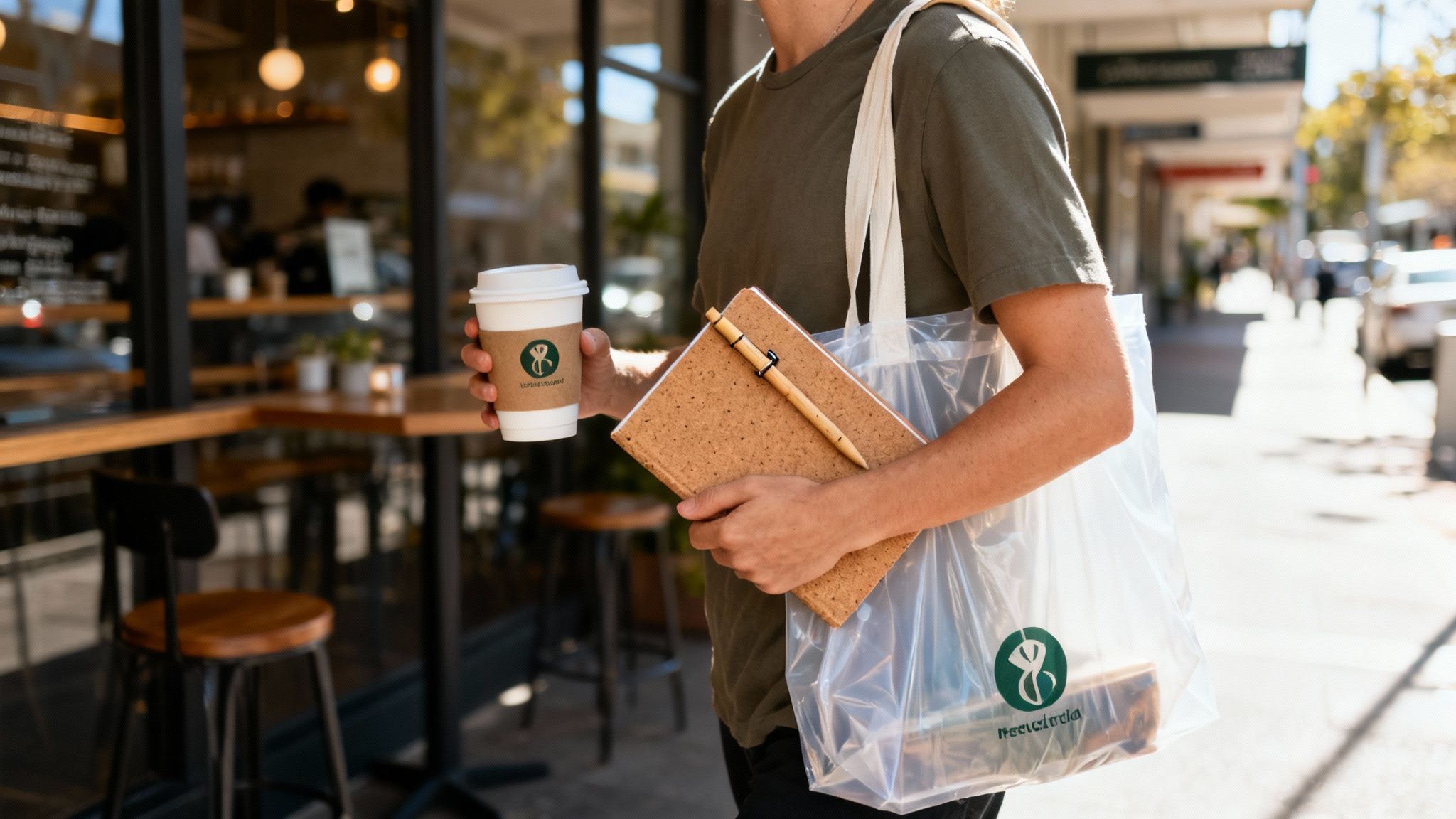
Alright, let's move from theory to reality and look at some of the most popular and effective eco-friendly promotional materials out there. These aren't just bits of merchandise; they're walking billboards that tell a story about your brand's commitment to the planet. Get the choice right, and your branded item will be used, valued, and seen for years.
Think about a branded reusable coffee cup. In Australia's buzzing café culture, that cup quickly becomes a daily accessory, putting your logo right into your client's morning routine. This is where practical, sustainable merch shines—it becomes a genuine part of people's lives.
Reusable Drinkware and Bags
When it comes to sustainable promotions, reusable items are the clear winners. Why? Because they directly tackle the single-use waste problem. Every time someone fills up a branded water bottle or grabs a custom tote bag for their groceries, they’re actively choosing to avoid disposable plastic.
These products also have incredible staying power. A well-made stainless steel bottle or a sturdy canvas bag can last for years, delivering thousands of impressions and building a positive brand image with every single use.
- Stainless Steel Drink Bottles: These are a fantastic premium gift. They're durable, stylish, and perfect for keeping drinks hot or cold, meaning people genuinely appreciate and use them every day. You can check out a huge range of high-quality promotional drink bottles to find the perfect match for your brand.
- Reusable Coffee Cups: Made from materials like bamboo fibre, glass, or recycled plastics, these are a no-brainer for the Australian market. They connect your brand to that beloved daily ritual of a morning coffee.
- Recycled PET or Cotton Tote Bags: These clever items turn waste into a powerful marketing tool. They are perfect for trade shows, retail stores, and corporate gift bags, offering a massive canvas for your branding.
Stainless Steel Drink Bottles: These are a fantastic premium gift. They're durable, stylish, and perfect for keeping drinks hot or cold, meaning people genuinely appreciate and use them every day. You can check out a huge range of high-quality promotional drink bottles to find the perfect match for your brand.
Reusable Coffee Cups: Made from materials like bamboo fibre, glass, or recycled plastics, these are a no-brainer for the Australian market. They connect your brand to that beloved daily ritual of a morning coffee.
Recycled PET or Cotton Tote Bags: These clever items turn waste into a powerful marketing tool. They are perfect for trade shows, retail stores, and corporate gift bags, offering a massive canvas for your branding.
Eco-friendly promotional products in Australia make a real difference in cutting waste. Swapping single-use plastic bags for branded reusable totes can stop thousands of bags from ending up in landfill. Considering 55% of recipients keep promotional products for over a year, a single eco-item can easily outlast hundreds of its disposable counterparts.
Sustainable Stationery and Tech
It's not all about bags and bottles. The world of eco-friendly stationery offers some clever and often budget-friendly ways to make a green statement in the office and at events.
Don't just see a pen as a writing tool; see it as a conversation starter. When you hand someone a pen made from bamboo or recycled cardboard, it feels different. It immediately sends a message about thoughtful sourcing.
Choosing sustainable stationery is a subtle yet powerful way to embed your brand’s eco-conscious values into the everyday work environment. It shows attention to detail and a commitment that extends to every touchpoint.
Here are a few popular options:
- Bamboo Pens: Bamboo is a fantastic renewable resource because it grows so quickly. Laser-engraving your logo onto a bamboo pen creates a sophisticated and lasting impression.
- Cork Notebooks: Cork is harvested from the bark of cork oak trees without harming the tree itself, which makes it a wonderfully renewable material with a unique, tactile feel.
- Solar-Powered Chargers: If you’re after a more tech-focused gift, these chargers align your brand with renewable energy and forward-thinking innovation.
For more inspiration on meaningful items, it can be helpful to explore different eco-friendly gift ideas to get a fresh perspective on what makes merchandise truly thoughtful and sustainable.
Measuring the Business Benefits of Sustainable Giveaways
Choosing eco-friendly promotional materials is much more than a box-ticking exercise for corporate social responsibility. It's a savvy business decision with tangible returns, and it all starts with how these items shape the way people see your brand.
When someone receives a thoughtfully made, durable product, their perception of your company gets an instant lift. It shows you’re a modern, responsible brand that understands what matters to today's consumers. In a sea of competitors, that kind of distinction can be the deciding factor. A quality, sustainable item quietly communicates care and value, forging a positive connection that a cheap, disposable giveaway never could.
Enhancing Brand Image and Loyalty
Your brand's reputation is arguably its most precious asset, and sustainable merchandise is a fantastic way to strengthen it. The numbers back this up: studies have shown that nearly 90% of consumers would pick a product labelled as eco-friendly over an identical one that isn't. This preference absolutely extends to the promotional items they receive.
Giving out a bamboo pen or a recycled cotton tote bag is more than just a handout; it’s a physical statement about your company's values. It proves your commitment to sustainability in a way a fleeting digital ad simply can't. This kind of consistency is what builds trust, which is the secret sauce for genuine customer loyalty.
When your promotional products reflect a genuine commitment to the environment, they do more than market your logo. They build a community around your brand, attracting customers and employees who share your values and are more likely to become long-term advocates.
The Long-Term Value of Durability
One of the most powerful, yet often forgotten, perks of choosing quality eco-friendly promotional materials is how long they stick around. A flimsy plastic pen might get binned after a week, but a well-made stainless steel bottle could be used every single day for years. That longevity delivers a far better return on your investment.
Just think about the cost-per-impression. A throwaway item gives you a brief flash of visibility before it lands in the bin. A durable, genuinely useful eco-product, on the other hand, provides continuous brand exposure for a very long time.
- Increased Impressions: A reusable coffee cup used just twice a week generates over 100 brand impressions in a single year.
- Greater Reach: As that cup travels to cafes, offices, and meetings, it introduces your brand to a whole new audience.
- Positive Association: Every time it's used, it reinforces the positive, eco-conscious message tied to your brand.
This extended lifecycle means your initial investment keeps on working for you, turning a simple giveaway into a lasting marketing asset. Exploring a wide range of promotional products can help you find durable options that maximise this long-term value and align perfectly with your brand’s goals. At the end of the day, investing in sustainability isn't just an expense; it's a strategic move for stronger brand loyalty and superior visibility.
How to Choose the Right Eco Products for Your Brand and Budget
Picking the perfect eco-friendly promotional item isn't just about grabbing the latest trend. It’s about forging a real connection between the product you give, your brand’s core message, and the people you want to reach. The aim is to choose something so genuinely useful and in sync with their values that it becomes a staple in their daily life.
Think about what your brand stands for. If you're a forward-thinking tech company, a solar-powered charger makes a lot of sense, directly connecting your brand with renewable energy and innovation. On the other hand, a wellness brand might find a bamboo yoga block to be a better fit, reinforcing a message of natural health and mindfulness. This kind of thoughtful alignment turns a simple giveaway into a powerful piece of your brand’s story.
Aligning Product Utility With Your Audience
The most sustainable promotional product is always the one that people actually use—over and over again. Before you place a big order, take a moment and ask yourself: "Will my target audience genuinely find this useful?" A well-made reusable coffee cup is a fantastic choice for office workers in Melbourne's CBD, but it might miss the mark for an audience that primarily works from home.
To make sure your investment has a lasting impact, think about these points:
- Daily Routines: What items fit naturally into their day-to-day? Consider their commute, work life, or weekend hobbies.
- Practical Needs: Does the product solve a real problem, like a recycled tote bag for groceries or a wheat straw pen for taking notes?
- Quality and Durability: Is it built to last? A high-quality item not only reflects well on your brand but also avoids a quick trip to the landfill.
To get this right, it helps to understand broader sustainable purchasing practices for businesses. We also offer more detailed advice on matching items to your audience in our guide on the steps to choose the right promotional products.
This flowchart shows how making conscious, eco-friendly choices can directly boost your brand's image, build loyalty, and increase your visibility in the market.
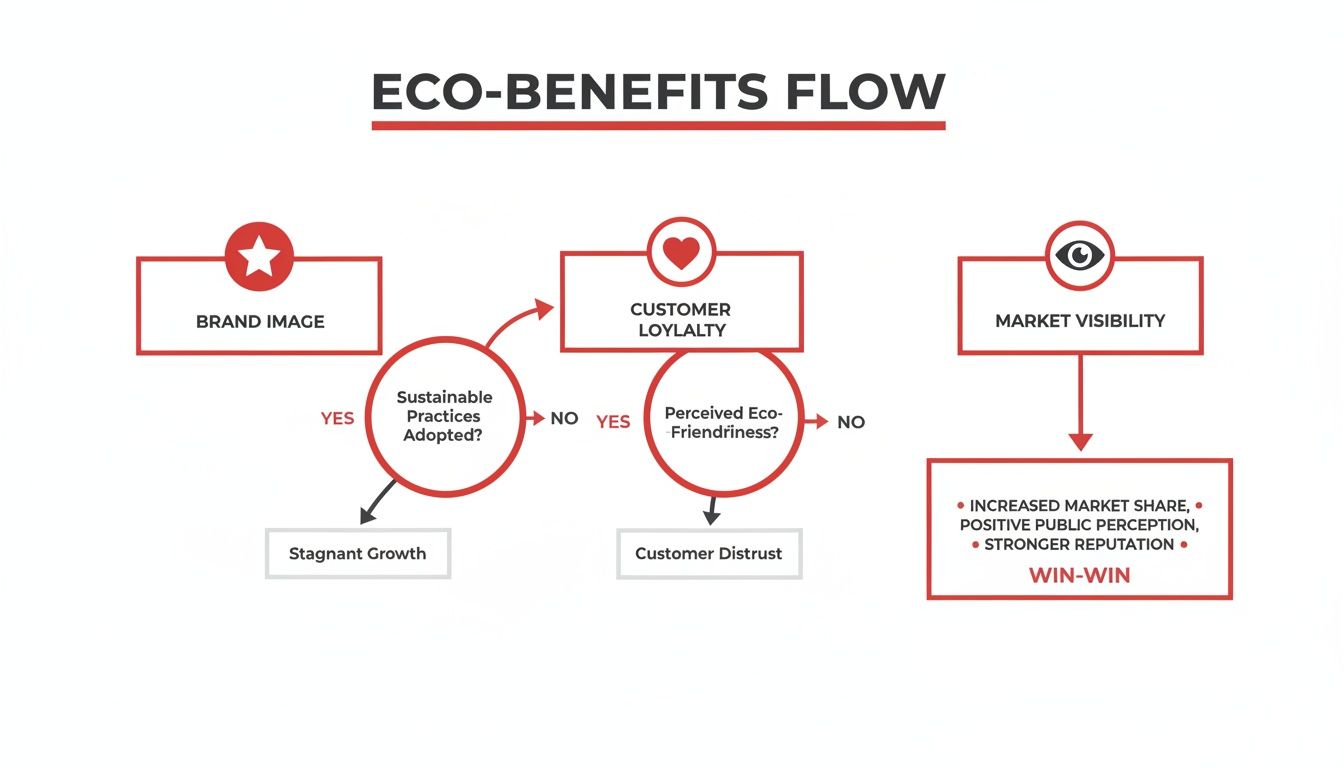
The flow is clear: a strong brand image built on sustainable choices naturally leads to deeper customer loyalty and a greater presence in the market.
To help you get started, here's a quick comparison to match the right product to your campaign goals.
Choosing Your Ideal Eco-Friendly Product
Ultimately, the best choice is one that feels like a natural extension of your brand and provides genuine value to the recipient.
Budgeting for a Better Return on Investment
There's a common myth that choosing sustainable merchandise means breaking the bank. While some eco-friendly items might have a slightly higher upfront cost, they nearly always deliver a far better return on investment (ROI) in the long run. Why? Because their value is measured in longevity and positive impressions, not just the initial unit price.
A cheap, disposable plastic pen offers a fleeting moment of brand exposure before it's lost or thrown away. In contrast, a durable, high-quality eco-product can generate thousands of positive impressions over its lifespan, leading to a much lower cost-per-impression.
You should also consider branding methods that complement the material itself. For instance, laser engraving on bamboo or wood creates a permanent, premium finish that looks fantastic and won’t wear off. This ensures your brand message lasts as long as the product does. By investing wisely at the start, you’re not just buying a product; you’re creating a promotional asset that keeps working for your brand for years.
How to Spot Greenwashing and Make Authentic Choices
When you choose eco-friendly promotional materials, you’re putting your brand’s reputation on the line. Unfortunately, the space is filled with greenwashing—companies making vague or misleading claims about their environmental benefits just to get your business. True authenticity is everything, and learning to spot these red flags is vital for protecting your brand.
Think of it like reading the label on a food package. You wouldn't just grab something that screams "healthy" on the front without flipping it over to check the actual ingredients. It’s the same principle here. Vague terms like “eco-safe” or “earth-friendly” without any real proof are the promotional product equivalent of empty calories. Genuinely sustainable products are backed by specifics, not just feel-good buzzwords.
An authentic commitment to sustainability is built on transparency, not just clever marketing. Asking the right questions and demanding proof isn't being difficult—it's being a responsible brand partner and safeguarding your reputation.
Questions to Ask Your Supplier
To cut through the marketing fluff, you need to be an informed buyer. Any supplier worth their salt will welcome your questions and have clear, honest answers ready. Before you place an order, always dig into the specifics to verify their claims and make sure your choice is genuinely green.
Here are three essential questions to have in your back pocket:
- What specific materials is this product made from? Don’t settle for a generic "eco" label. Ask for the exact composition, like "recycled PET plastic" or "sustainably sourced bamboo."
- Does this product have any official certifications? Keep an eye out for recognised standards like the Forest Stewardship Council (FSC) for wood and paper or GOTS for organic textiles. These certifications are your proof.
- Can you explain the printing process? A truly sustainable product considers the entire lifecycle, and that includes the branding. Ask about the inks they use. You can learn more about responsible branding by exploring different custom printing options that align with eco-friendly values.
What specific materials is this product made from? Don’t settle for a generic "eco" label. Ask for the exact composition, like "recycled PET plastic" or "sustainably sourced bamboo."
Does this product have any official certifications? Keep an eye out for recognised standards like the Forest Stewardship Council (FSC) for wood and paper or GOTS for organic textiles. These certifications are your proof.
Can you explain the printing process? A truly sustainable product considers the entire lifecycle, and that includes the branding. Ask about the inks they use. You can learn more about responsible branding by exploring different custom printing options that align with eco-friendly values.
Arming yourself with this knowledge is the best way to ensure your brand's commitment to sustainability is both credible and authentic.
Your Questions About Eco-Friendly Promo Gear, Answered
Making the switch to more sustainable marketing is a great move, but it's natural to have a few questions. We get it. Let's tackle some of the most common queries we hear from Australian businesses to help you move forward with confidence.
Are Eco-Friendly Promotional Products More Expensive?
It’s true that some sustainable materials might have a slightly higher price tag upfront, but it's all about looking at the bigger picture and the long-term value. A well-made, useful eco-friendly promotional item is something people hold onto for years, which dramatically lowers your cost-per-impression compared to a cheap, disposable giveaway.
Think of it as an investment in brand staying power, not just a one-off expense. We have a huge range of eco options designed to fit all sorts of budgets, so you don't have to break the bank.
The real secret is shifting your focus from the initial price to the long-term value. A durable, eco-friendly item that gets used for years delivers a much better return on investment than a cheap alternative that ends up in the bin.
How Can I Be Sure a Product Is Genuinely Eco-Friendly?
The key here is to look for specifics and transparency. You want to choose products made from materials that are genuinely better for the planet—things like recycled plastics, renewable bamboo, natural cork, or organic cotton. A good supplier won't be vague; they'll give you clear information and help you steer clear of "greenwashing."
The best way to be certain is to ask about official certifications. These are the gold standard:
- FSC (Forest Stewardship Council): This is your guarantee that any wood or paper products come from forests that are managed responsibly.
- GOTS (Global Organic Textile Standard): This certification confirms that textiles are truly organic, from the way they're grown and harvested right through to the final labelling.
Can Eco-Friendly Items Be Branded As Effectively?
Absolutely! In fact, many sustainable materials open the door to really premium branding methods that make your logo look fantastic.
Imagine your logo laser-engraved onto a bamboo coffee cup or a wooden cheeseboard—it creates a sophisticated, permanent finish that screams quality. Screen printing on organic cotton totes also produces vibrant, long-lasting colours. We can help you pick the perfect branding technique to make sure your logo looks sharp and professional for the life of the product, reinforcing your commitment to quality.
At Simply Merchandise, our whole goal is to make it easy for you to find high-impact, genuinely eco-friendly promotional materials that fit your brand and your budget. Why not explore our curated collection and find the perfect sustainable merch to make a lasting impression? Find your perfect sustainable merchandise at https://simplymerchandise.com.au.

