Access Denied
IMPORTANT! If you’re a store owner, please make sure you have Customer accounts enabled in your Store Admin, as you have customer based locks set up with EasyLockdown app. Enable Customer Accounts

Eco Friendly Promotional Products That Build Your Brand
Posted By Matthew Malios
on
Eco-friendly promotional products are much more than just another giveaway. Think of them as a physical representation of your brand's values. In a world where customers are actively looking for businesses that care, these sustainable items become your silent ambassadors, showcasing your commitment to the planet without you having to say a thing.
Why Sustainable Promo Items Are Your New Brand Ambassadors
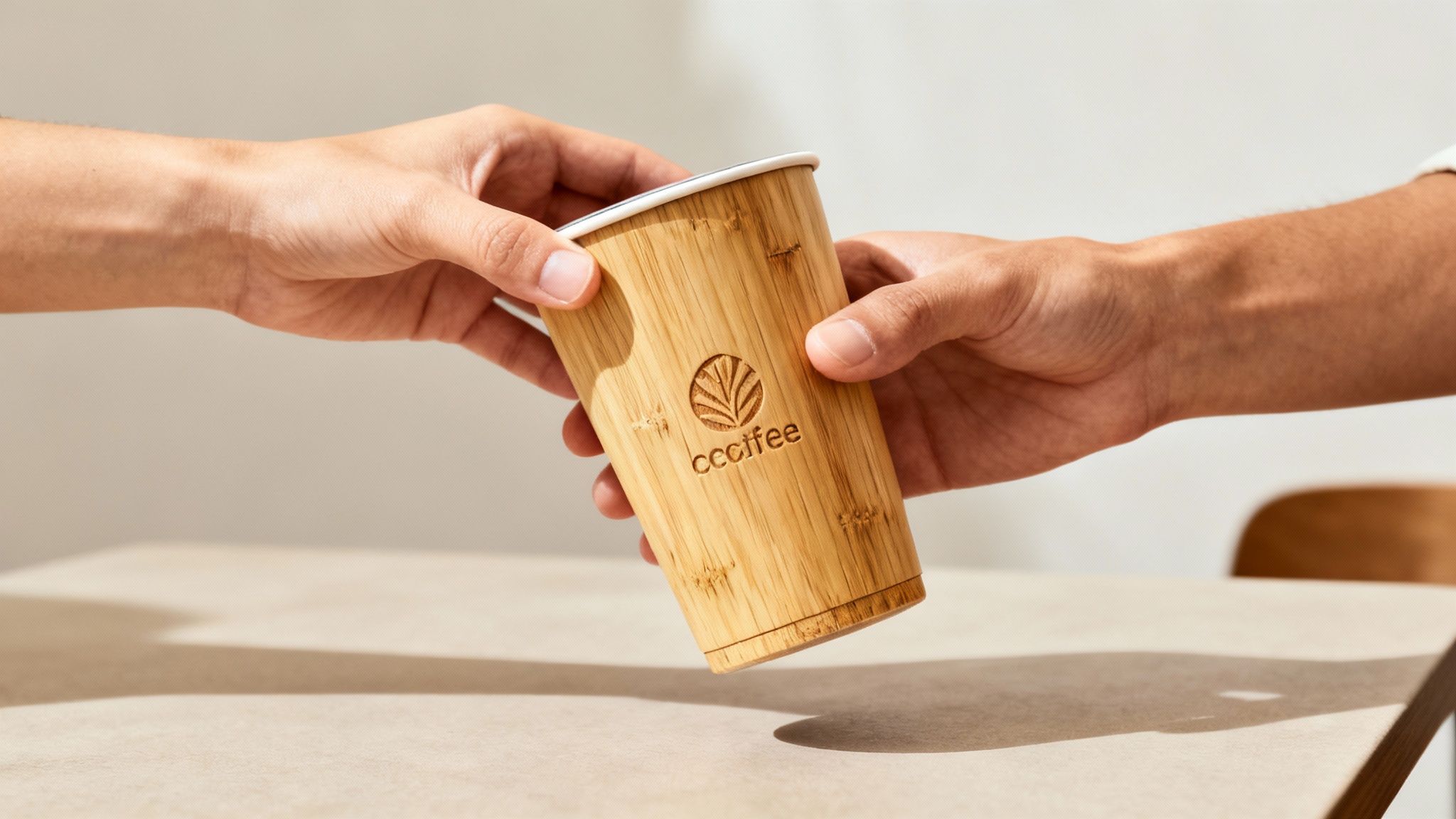
The era of handing out cheap, forgettable plastic pens is well and truly over. Today’s marketing is driven by conscious consumerism, a world where a company’s ethics matter just as much as its products or services. Promotional merchandise isn't just a transaction anymore; it's a conversation starter, a tangible piece of your brand’s story.
When a potential customer receives a thoughtfully chosen eco-friendly item—say, a reusable bamboo coffee cup or a notebook made from recycled stone paper—the message is crystal clear. It tells them your brand is modern, responsible, and shares their values. This forges a powerful, positive connection that a simple logo on a plastic trinket could never achieve.
The Shift in Consumer Expectations
This change is being led by everyday Australians. We've seen the demand for eco-friendly promotional products skyrocket, with recent figures showing a 40% year-on-year jump in sales. This isn't just a fleeting trend; it’s a fundamental market shift.
Research backs this up, revealing that 72% of Australians prefer promotional items made from sustainable materials. What's more, a huge 73% of millennials are willing to pay more for sustainable goods. This makes choosing sustainable merch a strategic necessity, not just a "nice-to-have."
Think of it this way: A traditional plastic pen might get used a few times before being tossed, ending up as landfill. A high-quality, sustainably sourced product, however, becomes a valued part of someone's daily routine, reinforcing your brand’s positive message every single day.
Building Connections Beyond the Logo
At the end of the day, the goal of any promotional campaign is to build a genuine, lasting connection. Eco-friendly products nail this by tapping into a shared sense of purpose. They prove your company cares about its impact, which helps build a much deeper level of trust and loyalty with your audience.
This approach turns simple giveaways into memorable brand experiences. Each item acts as a physical reminder of your company's commitment, turning customers and even your own employees into proud advocates. Integrating these products is now a core part of creating effective branded merchandise for business that truly connects with people today.
The Tangible Business Case for Going Green
While the environmental perks are obvious, choosing eco-friendly promotional products is also one of the smartest commercial moves an Australian business can make today. It’s easy to focus on the "good for the planet" angle, but there's a powerful return on investment here that directly impacts your bottom line. These aren't just giveaways; they're strategic assets that build real brand value.
Think of it this way: every sustainable product you give out is a physical extension of your company’s commitment to corporate social responsibility (CSR). In a market where consumers are actively looking for ethical brands, that’s a massive advantage. A simple bamboo pen or a recycled cotton tote bag speaks volumes about your values, creating an instant positive impression that really clicks with today's conscious consumer.
Enhancing Your Brand Reputation
Your brand's reputation is your most valuable asset, hands down. By weaving sustainability into your marketing, you position your company as forward-thinking, responsible, and connected to the issues your community cares about. This isn't just about looking good; it's about building genuine goodwill that can be the deciding factor for new customers and partners.
Consider this: nearly 90% of people would pick a product labelled as eco-friendly over an identical one without that claim. That's a huge market preference that gives you a clear competitive edge. When a client receives a high-quality, sustainable item, they naturally associate those positive traits—quality, care, responsibility—with your brand.
Driving Customer Loyalty and Connection
Sustainable swag helps forge a much stronger, more meaningful bond with your audience. These items are typically designed to last and be used often, which means your brand stays visible in your customer's day-to-day life for months, sometimes even years. This extended lifespan delivers far more brand impressions than a cheap, disposable alternative ever could.
Utility is the name of the game. A genuinely useful promotional item can have a surprising influence on people's behaviour. One study found that almost 80% of recipients feel that a good promotional product can sway their purchasing decisions. High-quality, practical items that people actually enjoy using, like a durable tote or a sleek reusable water bottle, get kept and used, cementing that positive relationship with your brand.
This loyalty is really built on shared values. When a customer sees that your brand invests in products that match their own ethical standards, it creates a connection that's much deeper than a simple sale. It turns customers into advocates who are genuinely proud to be associated with your business.
By choosing eco-friendly items, you're not just giving a gift; you're making a statement. You are showing customers that you understand and share their priorities, which is the foundation of genuine, long-term loyalty.
Standing Out in a Crowded Market
In any competitive field, standing out is everything. Eco-friendly promotional products offer a fantastic way to cut through the noise. While your competitors might be handing out generic plastic pens that are quickly forgotten, your thoughtfully sourced item tells a compelling story. It becomes a conversation starter that shines a spotlight on your brand’s commitment to both quality and sustainability.
This approach also makes your own decision-making easier. Instead of getting bogged down in an endless sea of options, focusing on sustainability gives you a clear filter. Our guide on 15 tips to choose the best promotional products can help you perfectly align your choices with your brand’s core message for maximum impact.
At the end of the day, these products are more than just merchandise. They're a powerful marketing tool that delivers measurable returns through a stronger reputation, deeper customer relationships, and a unique position in the market.
A Practical Guide to Sustainable Materials
So, you’re ready to choose some eco-friendly promotional products, but where do you even start? The first step is getting to know what they’re actually made of. It can feel a bit like learning a new language, with terms like ‘recycled’, ‘biodegradable’, and ‘compostable’ thrown around. Getting these basics right is the key to making choices that genuinely reflect your brand’s commitment to the planet.
Let's break down the most popular material options out there. Think of this as your go-to guide, where we’ll cut through the jargon and give you the real-world pros and cons. Armed with this knowledge, you can pick products that not only look great but also tell a powerful story about your brand’s values.
This infographic really brings home how the right eco-friendly merchandise can do more than just tick a box—it can actively build a stronger brand.
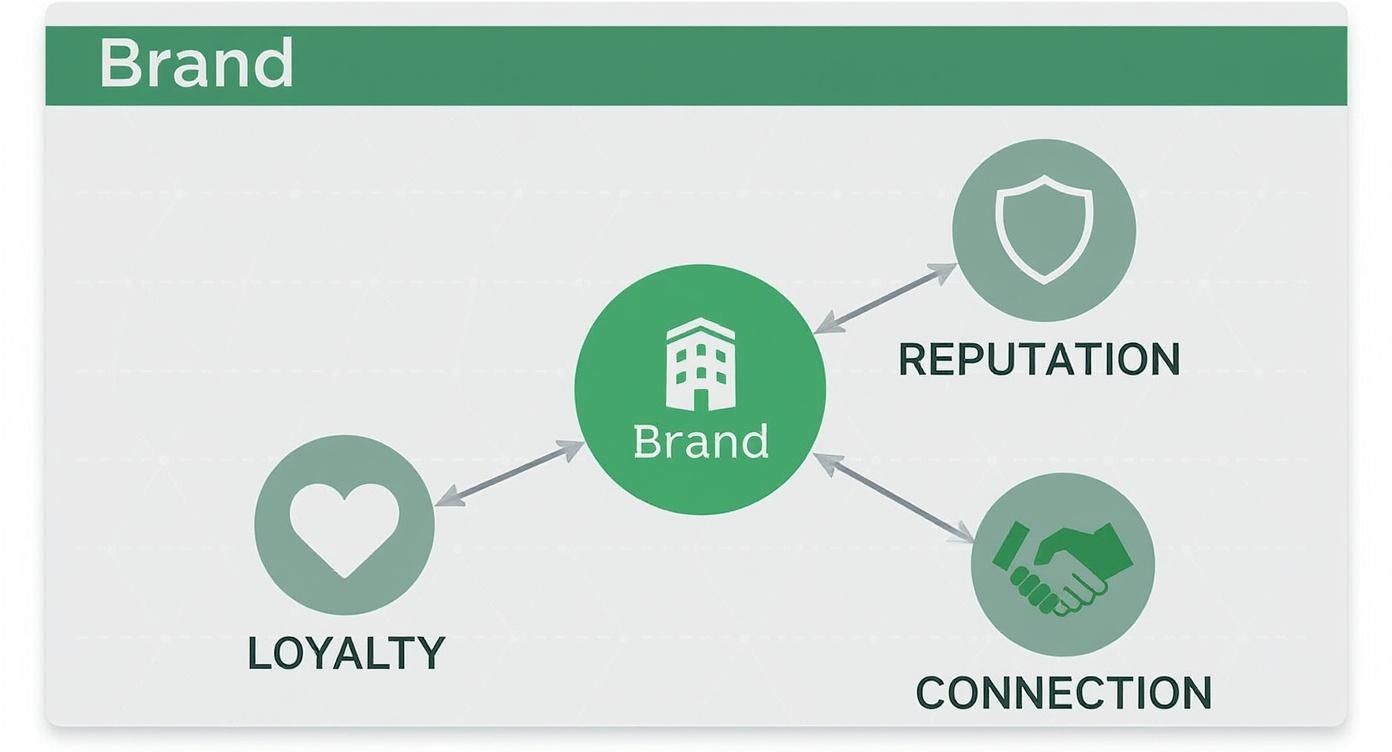
As you can see, the benefits go way beyond just the environmental impact. They directly strengthen your reputation, build loyalty, and forge a deeper connection with your audience.
Recycled and Upcycled Materials
Recycled materials are probably the most familiar starting point for sustainable merch. They work by giving a second life to resources that would otherwise be clogging up our landfills. This simple act reduces the need to create brand-new materials from scratch, saving a heap of energy in the process.
One of the big players here is Recycled PET (rPET), a clever material made from old plastic bottles. It's incredibly versatile and turns up in everything from lanyards and tote bags to the fabric for t-shirts and caps. Choosing an rPET product sends a really clear message: you’re serious about tackling plastic waste.
You’ll also see a lot of recycled cotton or paper. These options are fantastic because they cut down on water use and help reduce deforestation. They’re a perfect fit for items like notebooks, pens, and especially tote bags. If you’re looking for quality, eco-conscious options, exploring a range of promotional bags made from these fabrics is a brilliant move.
Plant-Based and Natural Materials
This category is all about materials that come from renewable, natural sources. The big advantage is that they are often biodegradable and have a much lighter carbon footprint than their plastic-based cousins.
- Bamboo: As one of the fastest-growing plants on Earth, bamboo is a sustainability superstar. It's strong, durable, and has a naturally stylish look, making it a perfect choice for pens, coffee cups, and even tech accessories like wireless chargers.
- Organic Cotton: Grown without nasty synthetic pesticides or fertilisers, organic cotton is kinder to the soil, our waterways, and the farmers who grow it. It’s an excellent option for premium apparel and tote bags, showing a commitment to both environmental and social responsibility.
- Cork: This is a wonderful material harvested from the bark of cork oak trees—and it doesn’t harm the tree at all! It's lightweight, water-resistant, and has a unique, earthy texture that’s great for coasters, notebooks, and keyrings.
Choosing a product made from a natural material like bamboo or cork does more than just reduce plastic use. It creates a tangible connection to nature, giving the promotional item a perceived higher value and a more premium feel.
To help you weigh up the options, here's a quick comparison of some popular sustainable materials.
Comparing Popular Eco Friendly Materials
This table breaks down the key features of common sustainable materials, helping you decide which one best fits your product and your brand’s message.
| Material | Primary Environmental Benefit | Common Promotional Products | Considerations |
|---|---|---|---|
| rPET | Reduces plastic waste and landfill | Totes, Lanyards, Apparel, Caps | Quality can vary; ensure it’s certified |
| Bamboo | Highly renewable and fast-growing | Pens, Coffee Cups, Tech Accessories | Sourcing matters; look for FSC certification |
| Organic Cotton | No pesticides, less water usage | T-Shirts, Hoodies, Tote Bags | Can be more expensive than conventional cotton |
| Cork | Harvested without harming the tree | Notebooks, Coasters, Keyrings | Has a distinct natural aesthetic |
| Wheat Straw | Upcycles agricultural waste | Pens, Lunch Boxes, Drinkware | Often blended with other materials |
Each material tells a different story. The best choice is the one that not only looks and feels right but also aligns perfectly with the sustainable values you want to project.
Innovative Bio-Materials
Beyond the usual suspects, a new generation of clever materials is popping up. These are often created from agricultural by-products, turning what was once considered waste into something valuable and useful.
A great example is wheat straw. It's the stalk left over after wheat grains are harvested. Instead of being thrown away, this fibrous material can be turned into a durable, plastic-like composite. You'll find it used for pens, lunch boxes, and reusable coffee cups.
Another is Karst Stone Paper, which is made from recycled stone. Its production uses no water, no bleach, and no trees. On top of that, it's tear-resistant and waterproof, offering a unique and incredibly sustainable alternative for premium notebooks.
Choosing these forward-thinking materials shows your brand is on the front foot, embracing new solutions to old problems. It’s a powerful way to stand out in a crowded market.
By getting to know these material categories, you’re in a much better position to make smart, impactful decisions. The right material not only lines up with your environmental goals but also boosts the value of your promotional product, making sure it’s a gift that people will actually want to keep and use for years to come.
Inspiring Eco-Friendly Product Ideas That People Actually Use
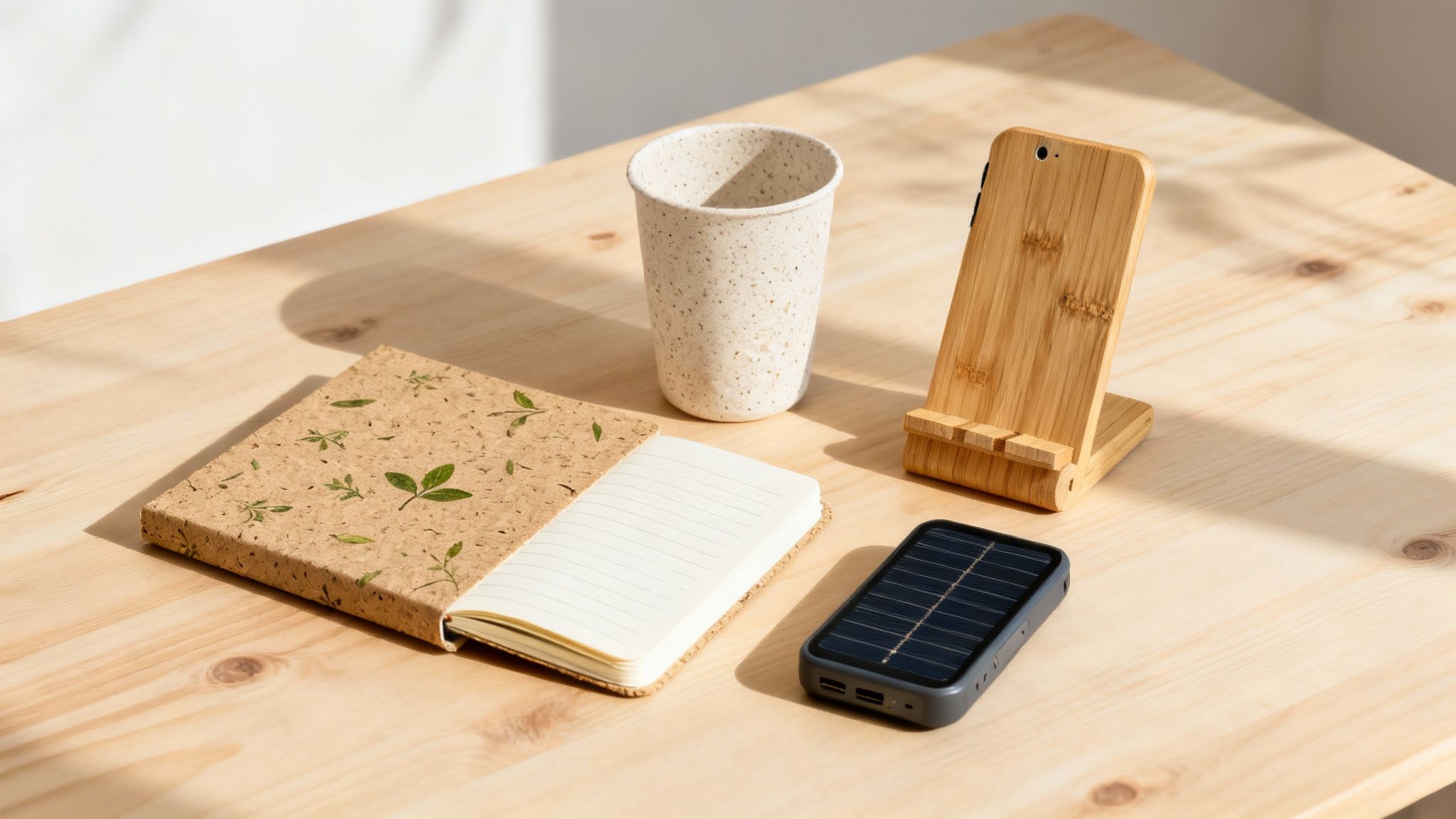
Knowing about sustainable materials is one thing, but seeing them brought to life is where the real creativity begins. The most successful eco-friendly promotional products aren't just green—they’re genuinely useful items that fit neatly into someone's daily life.
The goal isn't just to hand out something with a recycling symbol on it. It’s to give away a well-designed, memorable product that people will actually want to use, over and over again.
Let's look past the theory and dive into some practical and clever product categories that really make an impact. These are the kinds of items that deliver value long after the event is over, turning happy recipients into your brand's biggest fans.
Everyday Essentials Reimagined
The best promotional items are often the simplest. They solve a small, everyday problem or just make a daily routine a little better. By offering a sustainable version of a common single-use product, your brand becomes a welcome part of your customer's day.
Reusable drinkware is a classic for a good reason. Instead of another plastic bottle, why not a sleek water bottle made from recycled stainless steel? Or a coffee cup crafted from a surprisingly sturdy wheat straw composite? People use these things constantly—at their desk, in the car, at the gym—which means your brand gets seen every single day.
Likewise, you can't go wrong with a high-quality tote bag made from organic or recycled cotton. They replace dozens of plastic bags over their lifetime and act as a mobile billboard for your business everywhere from the local farmers' market to the supermarket.
The Rise of Plantable Products
If you want a giveaway that's truly unique and tells a great story, look no further than products that literally give back to the earth. This category creates an experience that goes way beyond just receiving a gift.
- Seed Paper Notebooks: These are fantastic. The covers are infused with seeds, so once the notebook is full, you can plant the cover in a pot of soil and watch it grow into wildflowers or herbs.
- Sprout Pencils: This is such a clever idea. When the pencil becomes too short to write with, you just plant it stub-down, and it sprouts into a plant like basil, cherry tomatoes, or lavender.
Items like these create a real emotional connection. They're a powerful symbol of growth and sustainability, perfectly matching a forward-thinking brand message and leaving a genuinely positive memory.
Tech Accessories With a Conscience
Let's face it, we all live online. Tech accessories are always high-value promotional items, and giving them a sustainable twist makes them even more appealing. It shows your brand is in touch with modern innovation and responsibility.
Think beyond cheap, flimsy plastic. Imagine stylish and functional accessories made from sustainable materials that really stand out. Bamboo wireless chargers, cork mouse pads, and phone stands made from wheat straw have a warm, natural feel that feels both premium and considered.
Solar-powered chargers are another brilliant choice, especially for anyone who loves the outdoors or travels a lot. By giving someone a product that runs on clean energy, you’re powerfully reinforcing your brand’s commitment to a greener future. A great range of eco-friendly merchandise will usually feature these kinds of modern, desirable tech items.
A promotional item's success hinges on its perceived value and utility. When an eco-friendly product is also beautifully designed and genuinely useful, it elevates your brand from just another company to one that understands quality and cares about its impact.
Choosing Products With a Purpose
The most impactful eco-friendly products are those that do more than just reduce waste—they tell a compelling story. For example, items made from recycled ocean plastic directly tackle a huge environmental problem, allowing your brand to be part of the solution. These products often come with details about their positive impact, adding real depth and meaning to your marketing.
For more ideas that move beyond the obvious, you can explore some truly practical alternatives to single-use plastics.
By choosing items that are not only sustainable but also practical and desirable, you make sure your marketing investment really pays off. These products don't get shoved in a drawer and forgotten; they get used, appreciated, and talked about, delivering a fantastic return for your brand and for the planet.
How to Choose the Right Eco Product for Your Brand
https://www.youtube.com/embed/Ztwnrqy-z0Y
Picking the perfect eco-friendly promotional product isn't as simple as just grabbing the first thing you see made from bamboo or recycled cotton. If you want to make a real impact, your choice needs to be strategic. It’s about thoughtfully aligning your brand’s values, your audience’s needs, and the genuine usefulness of the item itself.
Let's be honest: a successful promotional product is one that actually gets used, not just shoved in a drawer. When you put function first, your branded item becomes a valued part of someone’s daily life. This simple shift dramatically extends its lifespan, giving your brand more visibility and reinforcing your commitment to sustainability every single day.
Align With Your Brand and Audience
Before you even start looking at products, take a step back and ask yourself: what story do we want this item to tell? The product you choose should feel like a natural extension of who you are as a brand. For instance, a tech company might go for a sleek bamboo wireless charger, while a wellness brand would find organic cotton tote bags or seed paper notebooks a much better fit.
Just as crucial is understanding your audience. What do their daily lives look like? What do they value? A product that solves a real problem for them—like a sturdy reusable shopping bag for their weekly groceries or a high-quality water bottle to keep them hydrated—will always win out over a cheap novelty item. The aim is to give them something so useful it feels less like marketing and more like a genuinely thoughtful gift.
Prioritise Utility and Longevity
Think about it: the most sustainable product is one that lasts. Durability and practicality have to be at the heart of your decision. An item that breaks after a few uses or has no clear purpose is just fast-tracking its way to landfill, completely undermining the whole point of choosing an eco-friendly option.
This is where a "function-first" mindset really pays off. Ask yourself these questions:
- Is it practical? Does this item serve a clear, regular purpose for the people I'm giving it to?
- Is it high-quality? Will it stand up to repeated use and still look good a year from now?
- Is it desirable? Is this something people would actually be happy to use and be seen with?
When you give someone a product that’s built to last, you’re sending a powerful message about your own brand’s commitment to quality. Our comprehensive guide offers more helpful insights on how to choose the right promotional products that tick all these boxes.
Consider the Full Lifecycle
True sustainability goes beyond the materials. It’s about looking at the product’s entire journey, from its creation right through to what happens at the end of its life. For example, if you're looking at tech items, it's worth exploring strategies to reduce electronic waste and choosing products designed for longevity.
The most impactful eco-friendly promotional products are chosen with intention. They reflect a deep understanding of the brand, the audience, and the product's entire lifecycle, turning a simple giveaway into a meaningful brand statement.
This holistic view is more important than ever to Australian consumers. Sustainability is a massive factor in their purchasing decisions now, with one recent report showing that 76% of Australians consider environmental impact when they shop. This isn’t just a niche concern; it influences everything from their retail choices to their banking. Making a clear, informed, and genuinely sustainable choice is critical for building trust with your audience.
Got Questions About Sustainable Promotions? We've Got Answers
Stepping into the world of sustainable marketing often brings up a few practical questions. How much more will this cost? How do you spot the real deal from the "greenwashed" fakes? And, most importantly, how do you know if it's actually working for your brand? Let's clear up some of the most common queries Australian businesses have when they're ready to make a change.
Are Eco-Friendly Promotional Products More Expensive Than Traditional Ones?
This is usually the first question on everyone's mind. While it's true that some sustainable options might have a slightly higher price tag, the gap is closing fast. Honestly, it’s better to think about the total value and return you get, rather than just the initial cost.
Think of it this way: eco-friendly items often feel higher quality, which means people actually use them more and hang onto them for longer. That extended lifespan directly translates to more eyes on your brand for every dollar spent. A sturdy bamboo pen that someone uses every day for a year offers far more value than a flimsy plastic one that gets tossed in a week.
Plus, you're investing in your brand's reputation and building real customer loyalty. These are invaluable long-term assets that almost always outweigh a small difference in the initial price. And today, plenty of popular items, like recycled paper notebooks and reusable cotton totes, are already on par with their non-eco counterparts price-wise.
How Can I Verify a Supplier Is Genuinely Eco-Friendly?
This is a huge one. With "greenwashing"—where companies make misleading claims about their environmental credentials—being a real problem, knowing how to verify a supplier is key to protecting your brand's integrity.
Your best bet is to look for recognised third-party certifications. Think of them as an independent seal of approval, confirming that a product or the business itself meets specific environmental and ethical benchmarks.
Here are a few heavy-hitters to look out for in Australia:
- Forest Stewardship Council (FSC): This is your guarantee that any paper and wood products have come from responsibly managed forests.
- Global Organic Textile Standard (GOTS): When you see this on textiles like cotton, you know they're organically produced and processed under strict social and environmental rules.
- B Corp Certification: This is the big one. It's a comprehensive certification that looks at a company's entire social and environmental impact, from its supply chain right through to its employee benefits.
A transparent, reputable supplier will have no problem showing you documentation on their material sources, manufacturing processes, and any certifications they hold. If they get cagey or hesitant when you ask, that’s usually a red flag.
Don’t be shy about asking direct questions. Check their website for a clear, detailed sustainability policy and see what other businesses are saying in their reviews. A genuinely sustainable partner will be proud of their efforts and happy to share their story with you.
What's the Most Effective Way to Communicate Our Item's Green Credentials?
Honesty and good storytelling are your best friends here. Vague buzzwords like "eco-conscious" or "earth-friendly" can sound empty and don't really mean much. To build genuine trust, you need to get specific and stick to the facts.
For example, instead of just saying a notebook is "green," you could say, "Made from 100% recycled stone paper, saving 20 litres of water per notebook." That one tangible detail makes your claim far more credible and memorable.
You can communicate this on the product itself, on a small info card that comes with it, or even with a QR code that links to a page on your website. Use that space to tell the product's story: why you chose it, the sustainable material it's made from, and its specific environmental benefit. This approach doesn't just inform, it turns a simple promotional item into a conversation starter about your brand's commitment.
How Do I Measure the ROI of a Sustainable Promotional Campaign?
Measuring the return on investment for any promotional product—especially sustainable ones—means looking beyond the immediate sales numbers. A big part of the "return" comes from things like a stronger brand image, deeper customer loyalty, and positive public perception. These are massive long-term assets.
To get a real sense of your campaign's effectiveness, you can track a few key things:
- Brand Recall and Association: After your event, send out a quick survey. Ask people if they remember your brand and if receiving an eco-friendly item made them think more highly of your company.
- Social Media Engagement: Come up with a unique hashtag and encourage people to post photos of themselves using your promo item. This is a great way to generate authentic content and track the online buzz.
- Lead Generation and Conversion: If you handed out the items at a trade show, track the number of leads you gathered and see how many of them convert into customers over the next few months.
- Customer Loyalty and Feedback: Keep an eye on repeat business from the people who received an item. You can also simply ask for their feedback on it in your next email newsletter.
By focusing on these kinds of metrics, you’ll start to build a much clearer picture of the true value your eco-friendly promotional products are bringing to your brand.
Ready to make a lasting impression with promotional merchandise that reflects your brand's values? The expert team at Simply Merchandise is here to help you find the perfect eco-friendly products for your next campaign. Explore our extensive range and get a free quote today at https://simplymerchandise.com.au.
Related Posts

The Power of Promotional Products
Why Use Promotional Products? In a digital world that’s constantly shouting for attention, the right promotional product does...
Read More
Personalised Water Bottle Australia: 2026 Guide
Find your perfect personalised water bottle australia with our expert guide for 2026. Choose materials, branding, & suppliers for max...
Read MoreInvalid password
Enter