


The perfect embroidered cap doesn't just happen. Long before a single stitch is made, the real work begins with choosing the right cap to build on. Think of the cap as the canvas for your brand's story. The style, the fabric, the very way it's built—all of it comes together to define the final look and feel of your custom headwear. Getting this first step right is crucial, ensuring your design doesn't just look great, but truly fits your brand's identity and purpose.
Choosing the Perfect Cap for Your Brand
The foundation of any brilliant embroidered cap is, of course, the cap itself. The trick is to match the physical product to your brand's personality and how it's going to be used. Is it for a sharp corporate event, a rugged team uniform, or trendy retail merch? A sleek, modern brand will naturally lean towards a different style than one with a more relaxed, vintage feel.
Getting to know the core components of a cap helps you make a much smarter, more informed decision. Every little detail, from the shape of the crown right down to the type of closure, influences not just how it looks but how practical it is.
Decoding Cap Styles and Structures
Your first big decision is the style. Each type of cap offers a distinct look and gives you a different kind of surface to work with for your embroidery. Let's break down the most popular options you'll come across.
-
Structured Baseball Caps: These are the classic, modern caps you see everywhere. They have a stiff buckram lining in the front two panels, which creates a crisp, professional silhouette that holds its shape brilliantly. This gives you an ideal, smooth canvas for detailed logos, making them perfect for corporate branding and sports teams.
-
Dad Hats (Unstructured Caps): With their relaxed, comfortable fit and no internal stiffening, dad hats have a really casual, laid-back appeal. They're usually made from soft materials like cotton twill, and their unstructured form is great for simpler, more classic logos. They’re a crowd-pleaser for anyone after comfort and easy style.
-
Flat-Brim Snapbacks: Heavily associated with streetwear and youth culture, snapbacks feature a wide, flat visor and a structured crown. Their bold look makes them a real statement piece, fantastic for brands wanting to project a modern, edgy image. That large, flat front panel is a dream for prominent, eye-catching embroidery.
The structure of the cap directly impacts how your embroidery will sit. A structured cap provides a stable, flat surface almost like a stretched artist's canvas, ensuring your design has crisp, clean lines. An unstructured cap is more like fabric held in a hoop—it's better suited for designs that can flow with a softer, more contoured surface.
The Importance of Panels and Closures
Looking beyond the overall style, the construction details play a massive role. The number of panels, for instance, determines the cap's fit and the available embroidery space. A 6-panel cap has a seam running right down the centre of the front, which can sometimes interrupt a really intricate logo. A 5-panel cap, on the other hand, gives you a single, uninterrupted front panel, making it a fantastic choice for larger or more complex horizontal designs.
Closures also have a big say in both function and style. Snapbacks are super easy to adjust with their plastic snaps. Strapbacks tend to offer a more premium feel with leather or fabric straps and a metal buckle. And then you have Fitted caps, which have no closure at all for a clean, seamless look, but they do require you to get the sizing just right.
Selecting the Right Fabric
Finally, the fabric you choose will influence everything from durability and comfort to the final quality of the embroidery itself.
- Cotton Twill: This is probably the most common and versatile choice out there. It’s durable, breathable, and holds stitches beautifully, making it a reliable workhorse for almost any design you can throw at it.
- Polyester & Performance Blends: If the caps are for athletic or outdoor use, these synthetic fabrics are the way to go. They’re lightweight, brilliant at wicking moisture, and resist wrinkles and stains. Their smooth surface is excellent for creating really sharp embroidery.
- Wool Blends: Offering a premium, classic look, wool is often used for high-end snapbacks and fitted caps. It provides a rich texture that looks fantastic but might require a little more specific care.
To help you visualise how these elements come together, here's a quick reference guide.
Cap Style and Fabric Suitability at a Glance
| Cap Style | Best For | Common Fabrics | Embroidery Consideration |
|---|---|---|---|
| Structured Baseball Cap | Corporate branding, uniforms, promotional events | Cotton Twill, Polyester Blends | Firm, stable surface is ideal for intricate and detailed logos. |
| Dad Hat (Unstructured) | Casual wear, retail merchandise, giveaways | Cotton Twill, Washed Canvas | Softer surface works best for simpler logos and text-based designs. |
| Flat-Brim Snapback | Streetwear brands, youth marketing, retail | Wool Blends, Polyester, Acrylic | Large, flat panel is perfect for bold, statement-making embroidery. |
| Trucker Cap | Outdoor events, casual brands, promotions | Cotton/Poly front, Nylon Mesh back | The foam front panel provides a great, smooth canvas for vibrant designs. |
Choosing the right combination of style, structure, and fabric is the foundational first step toward creating truly memorable embroidered caps. When you're ready to see what's possible, you can browse the extensive selection of customisable caps and hats to find the perfect starting point for your next project.
How Your Design Becomes an Embroidered Logo
Ever wondered how a flat digital logo gets turned into a sharp, textured design on a cap? It's a fantastic mix of old-school craft and modern tech, and getting it right is all about precision. The journey from your computer screen to the final stitched product has a few key steps, and knowing what they are makes all the difference.
It all kicks off with a crucial process called digitising, which is basically teaching the embroidery machine how to read your design.
The Crucial First Step: Digitising Your Artwork
Before a single needle touches the cap, your logo has to be digitised. You can think of it like an architect creating a blueprint for a building, but in this case, a specialist uses software to map out your entire design stitch by stitch. This isn't just a simple file conversion; it's a manual process where an expert plots every detail—what type of stitch to use, which direction it should run, how dense the threads should be, and the exact colour sequence.
Honestly, this is where the magic happens. A rushed or poorly digitised file will give you a messy logo, with puckered fabric and fuzzy details. But when it's done right by a professional, every part of your design comes out looking clean, crisp, and perfectly rendered on the curved surface of the cap.
Digitising is easily the most important part of getting top-quality embroidery. It’s like a composer writing music for an orchestra. The digitiser is the composer, telling each needle exactly what to do and when to do it, making sure all the threads work together to create a perfect final piece.
From Blueprint to Tangible Design
Once the digitised file is ready, it's time to get stitching. There are two main ways to get an embroidered design onto a cap, and each offers a completely different look and feel.
-
Direct Embroidery: This is what most people think of when they hear embroidery. The design is stitched straight onto the cap's fabric. The machine's needles get to work, pulling threads through the panels to build your logo one stitch at a time. This gives it a classic, seamless look where the logo feels like it's part of the cap itself.
-
Embroidered Patches: For this method, we first embroider your logo onto a separate piece of backing material. Once the patch is finished, we apply it to the cap, usually by heat-pressing it on or stitching it around the edges. This makes the logo pop, giving it a distinct, raised profile. It's also a great option for super-detailed logos that can be tricky to embroider directly onto certain cap fabrics.
The right choice really depends on how complex your logo is and the style you're going for. If you're keen to see exactly how it all comes together, you can learn more about the entire embroidery process and see what goes on behind the scenes.
Exploring Different Stitch Techniques
Not all stitches are created equal. The technique used can totally change the texture and impact of your embroidered caps, turning a simple logo into something special.
-
Flat Stitch (Satin/Fill Stitch): These are the workhorses of the embroidery world. Satin stitch is used for smooth, clean lines—perfect for text and borders. Fill stitch is what we use to cover larger areas with solid colour. Most logos will use a combination of these two.
-
3D Puff Embroidery: If you want your design to literally stand out, 3D puff is the way to go. We place a small piece of foam on the cap and then the machine stitches over it. The density of the stitching cuts the foam, and we remove the excess, leaving behind a raised, three-dimensional logo with a bold, tactile finish. You see this a lot on snapbacks and baseball caps for that big, impactful look.
The image below gives you a quick visual of the customisation journey.
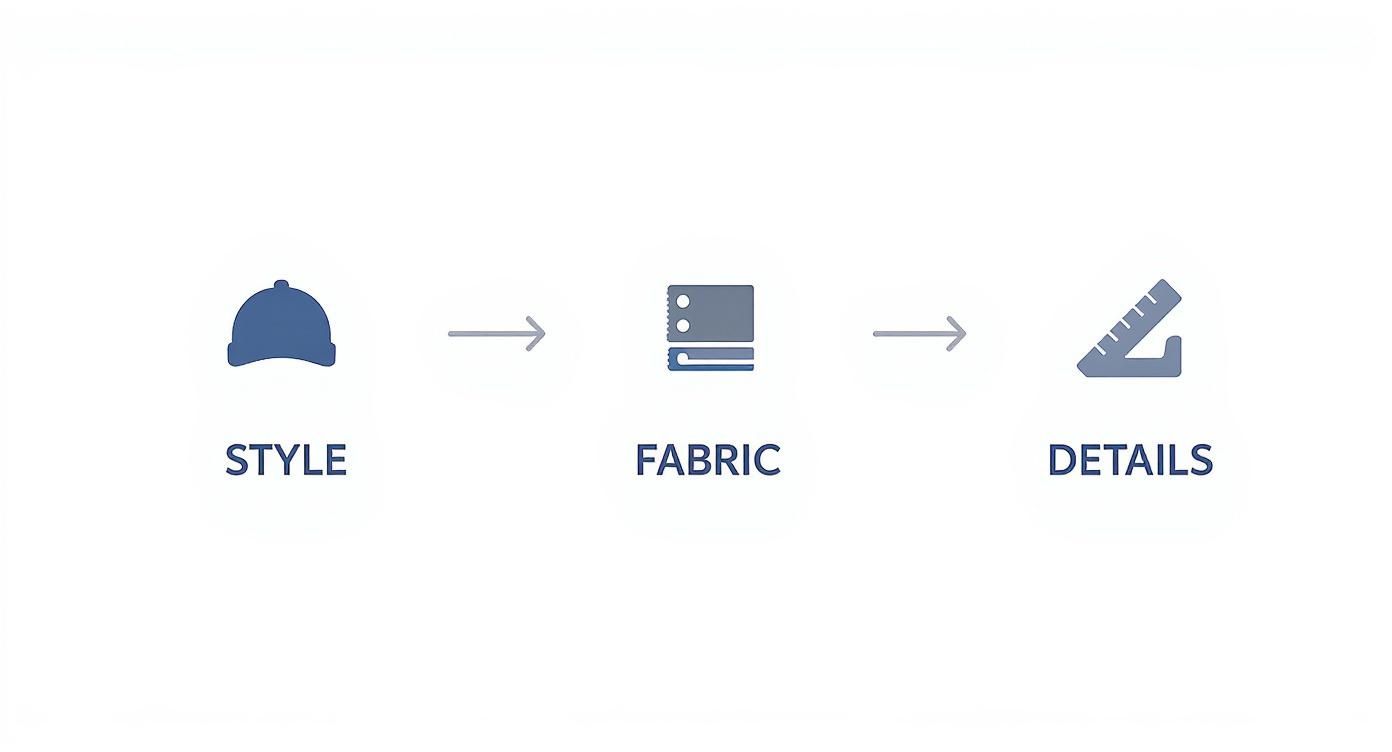
As you can see, choosing the right style, fabric, and details sets the stage for everything else. By understanding how your design is digitised and stitched, you'll have much more control over the final product and end up with a cap that truly represents your brand.
Artwork and Placement Strategies for Maximum Impact
Even the most brilliant design can fall flat if it isn't executed properly. When it comes to embroidered caps, getting it right means paying close attention to two things: your artwork file and where you decide to put the logo. These two elements work hand-in-hand to turn a simple design into a polished, professional statement that gets noticed for all the right reasons.
Think of your digital artwork like the blueprint for a house. If the blueprint is blurry or inaccurate, you're not going to end up with a well-built structure. It’s the same with embroidery; the quality of your artwork file is the foundation for the quality of the final product.
Preparing Your Artwork for Embroidery
Embroidery isn't like printing on paper. It's a physical process that uses thread and needles to bring a design to life, which means some digital files are much better suited for the job than others. The main goal is to provide a clean, scalable file that the digitising software can read perfectly.
-
Vector Files Are King: If you can, always send your artwork in a vector format. These are files like AI (Adobe Illustrator), EPS, or SVG. Unlike regular image files (like a JPG or PNG), vectors are built with mathematical paths, not pixels. This means we can resize your logo to any dimension without it becoming blurry or pixelated, keeping every line sharp and clean.
-
Simplicity is Key: A design that looks incredible on your computer screen might be far too complex for thread. Tiny text, super-fine lines, and subtle colour gradients just don't translate well into stitches. It's always best to simplify your logo where you can, focusing on bold shapes and clear, distinct lines. As a good rule of thumb, make sure any text is at least 6mm high so it’s still easy to read once stitched.
-
Limit Your Colour Palette: While we can embroider designs with lots of colours, every new thread adds a layer of complexity and cost. Sticking to a smaller, high-contrast colour palette not only helps with your budget but also makes your design really pop. Most logos look their absolute best with 4-6 colours or fewer.
If you want to get into the nitty-gritty of file types and how to get them ready, check out our simple guide for artwork submission tips: https://simplymerchandise.com.au/pages/artwork-submission-tips-a-simple-guide-for-beginners
Choosing the Perfect Placement
Where you put your logo is just as important as the design itself. Every spot on a cap is like a different piece of real estate, perfect for sending a specific message. Your choice can completely change the vibe, from a bold promotional statement to a subtle, premium branding touch.
The front panel is prime territory, of course, but don't forget about the other options you have.
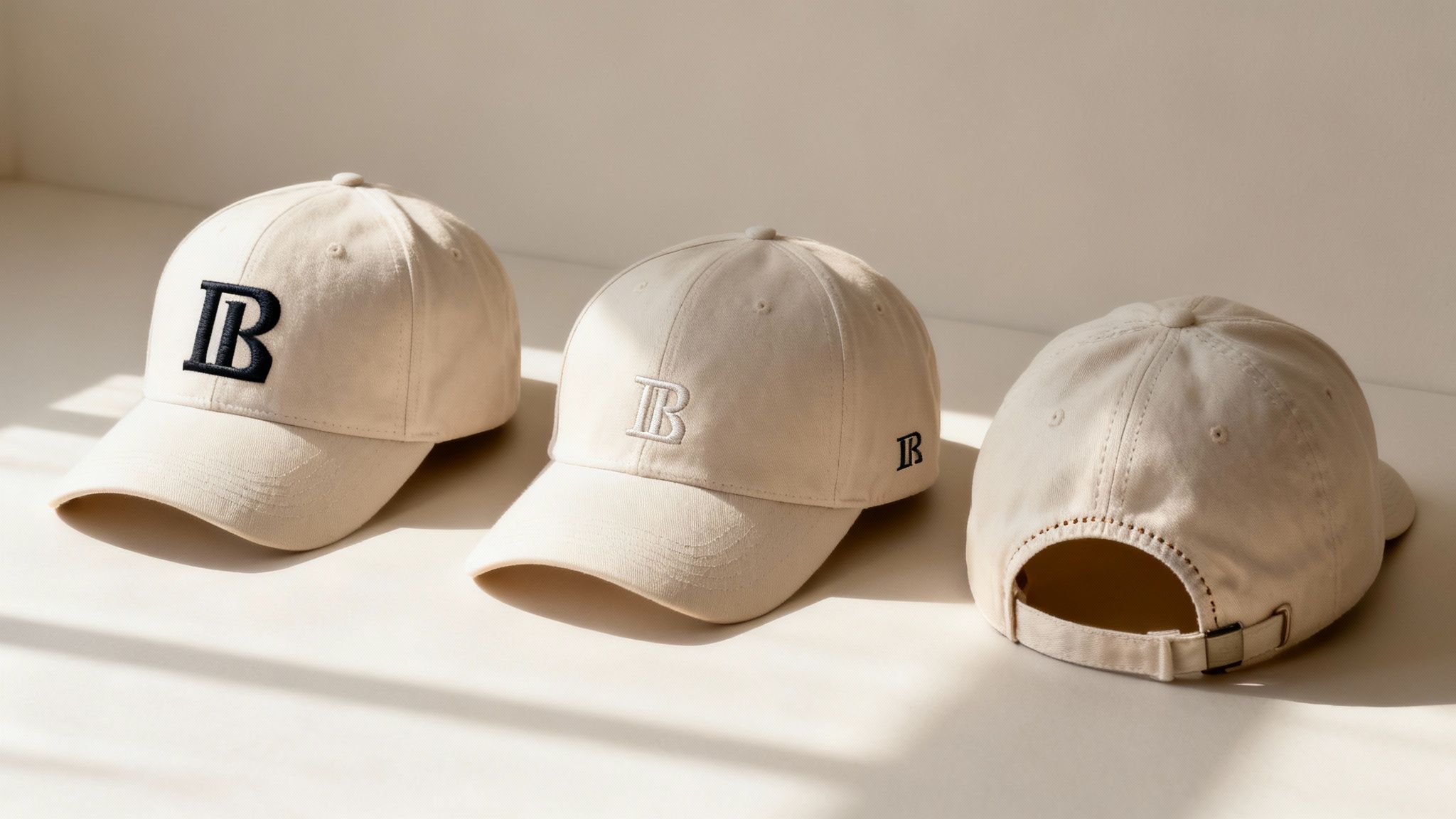
Here's a quick look at the most common placement zones and what they're best for:
-
Front Centre: This is the classic, most popular spot for a reason. It's the largest area for embroidery—usually up to 5.5 cm high—making it the perfect place for your main logo. A design here is impossible to miss and makes a powerful brand statement.
-
Side Panels (Left or Right): The sides are fantastic for secondary details. Think about adding a website address, a small icon representing a product line, or an anniversary year. This spot adds another layer of customisation without clashing with the main event on the front.
-
Back Arch: The area just above the closure strap is a great spot for a tagline, a location (like "Sydney, AUS"), or your web address. It's a clever way to add extra info that's visible when someone is walking away.
Think of cap placement like arranging furniture in a room. The front panel is your sofa—the main focal point. The sides are like accent chairs, adding character and detail, while the back is the bookshelf, offering extra information for those who look a little closer.
In the end, the best approach often involves using a few of these placements together to tell your full brand story. By preparing your artwork carefully and thinking strategically about placement, you'll make sure your custom embroidered caps look sharp, professional, and exactly how you pictured them.
Getting to Grips with Custom Embroidery Costs
When you’re planning a budget for custom caps, it helps to know what actually goes into the final price. The cost isn’t just pulled out of thin air; it’s a direct result of the materials used and the time your design spends on the embroidery machine. Getting a handle on these factors means you can plan your project properly and avoid any last-minute budget surprises.
The single biggest driver of your cost is the stitch count. This is simply the total number of stitches needed to create your logo on the cap. Think of it like this: the more intricate and larger your design, the more thread the machine has to lay down. More thread and more machine time mean a higher stitch count, and that directly translates to a higher price.
For example, a simple line of text might only take 2,000 stitches. But a detailed company crest with lots of colours and fine lines? That could easily top 10,000 stitches. This is why a clever, slightly simplified design can often be a great way to manage costs while still making a strong impression.
What Else Affects Your Quote?
While stitch count is the main player, a few other things will influence the final per-unit price. Each of these adds a little something to the process, whether it's more materials or a more specialised setup, and that’s reflected in the cost.
Here’s what else to keep in mind:
- Number of Thread Colours: Every time the colour changes, the embroidery machine has to stop and re-thread. Most suppliers will include a certain number of colours in the base price (often up to six), but if your logo is a full-blown rainbow, you can expect the cost to nudge upwards.
- Specialty Techniques: Want to really make your logo pop? Techniques like 3D puff embroidery look fantastic, but they do cost more. This method involves stitching over a foam base to create a raised, three-dimensional effect, which requires extra materials and a more involved stitching process.
- The Cap Itself: Don't forget the cost of the blank cap. A premium wool blend cap is naturally going to have a higher price tag than a standard cotton twill dad hat.
The custom apparel scene in Australia, including embroidered caps, is part of the larger Tailoring and Clothing Accessories Manufacturing industry. It's a big market, generating around AUD 1.5 billion in revenue, but it also sees a lot of competition from overseas imports. Knowing this gives you a bit of context for local production costs and the value you get from quality Aussie craftsmanship. You can learn more about the trends shaping Australian apparel manufacturing from recent industry reports.
Why Ordering More Saves You Money
One of the best ways to bring down your cost per cap is to increase your order size. The initial work of setting up an embroidery run—digitising your artwork into a stitch-ready format and programming the machines—is a fixed, one-off cost. When you spread that setup fee over a larger number of caps, the price for each individual hat drops.
Ordering in bulk is the ultimate cost-saving strategy. The per-unit price for an order of 250 caps will be substantially lower than for an order of 25 caps, even for the exact same design. It's a classic case of economy of scale.
Finally, you’ll want to have a clear idea of the timeline. A standard embroidered cap project has a few distinct steps, and each one takes time to get right.
- Artwork Proofing (1-2 business days): We’ll send you a digital mock-up so you can see exactly how your logo will look before we stitch a single thread.
- Production (5-10 business days): Once you give the thumbs-up, your caps join the production queue.
- Shipping (2-5 business days): Delivery time will depend on where you are in Australia.
All up, it’s smart to plan for a lead time of about two to three weeks. This gives everyone enough breathing room to handle the proofing, production, and shipping without rushing.
Putting Your Custom Caps to Work
So, your beautifully embroidered caps have arrived. What now? A great cap is more than just something to keep the sun off; it's a powerful marketing tool just waiting to be put into action. Think of each one as a walking billboard, ready to carry your brand's story wherever it goes.
From pulling together a sharp team uniform to making a huge impression at a trade show, custom embroidered caps are incredibly versatile. They're also built to last, meaning they’ll keep promoting your brand long after the first wear. This durability makes them one of the most cost-effective promotional items you can get your hands on.
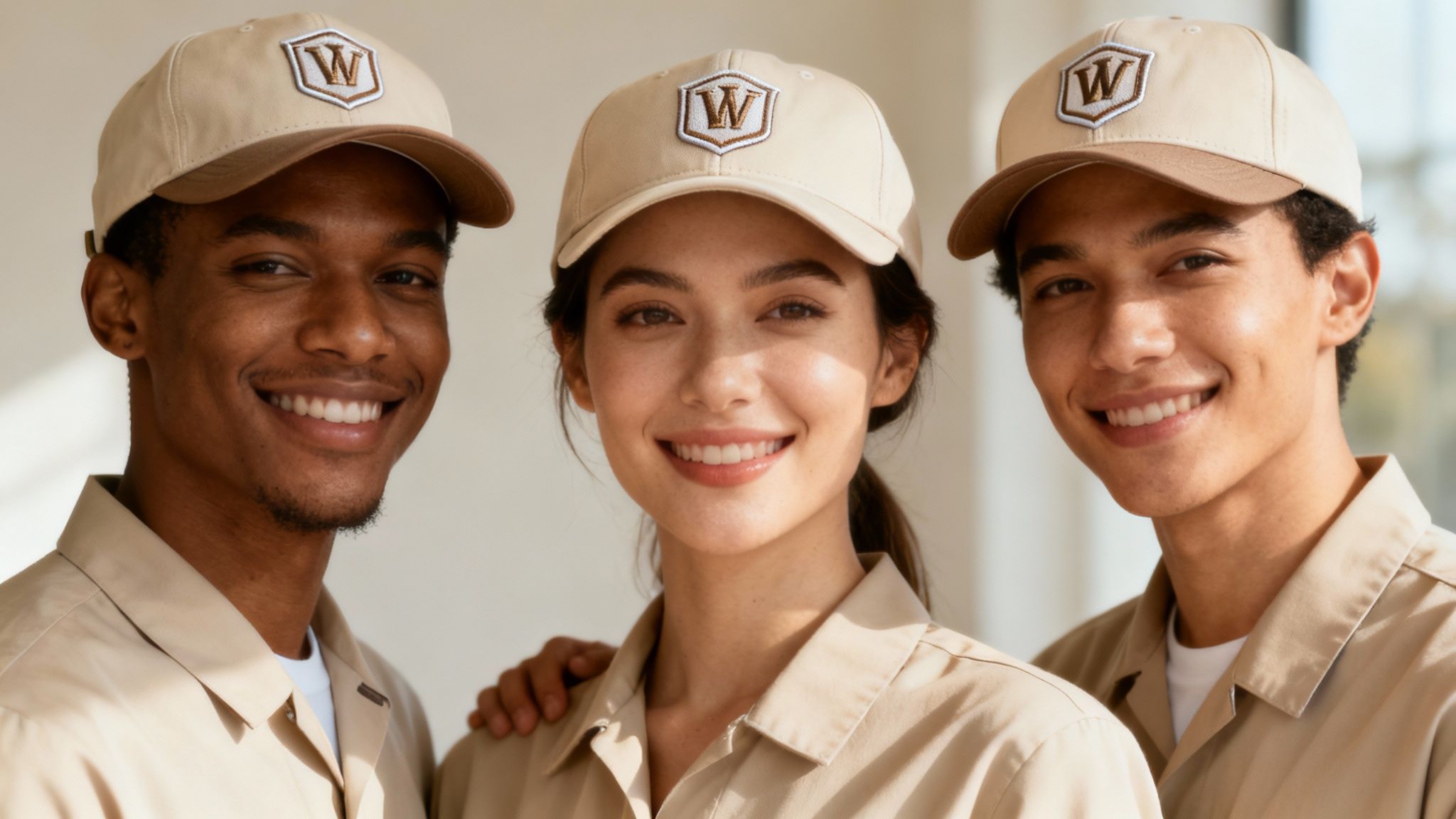
Unifying Teams and Building Morale
One of the quickest wins with custom headwear is the instant sense of unity it creates. When added to staff uniforms, a well-designed cap gives your team a professional, cohesive look. It helps customers instantly spot who works for you and fosters a real feeling of belonging among your crew.
The same magic works for sports teams, local clubs, and volunteer groups. Wearing that shared emblem builds pride and camaraderie, turning a group of individuals into a unified team. It's a simple but effective way to build a strong identity, which is why caps are a cornerstone of all kinds of branded clothing.
High-Impact Giveaways and Promotional Tools
Standing out at a crowded conference or trade show is tough. A flyer often ends up in the bin, but a high-quality embroidered cap is something people actually want. Offering them as a premium giveaway ensures your brand stays top-of-mind long after the event wraps up.
An embroidered cap is a conversation starter. When someone wears your cap, they are not just a recipient of your marketing; they become an advocate for your brand.
This is what makes them such fantastic tools for building goodwill. Every time someone wears your cap, they're giving you organic exposure, carrying your logo into new circles and reaching audiences you might never have connected with otherwise.
Driving Sales as Retail Merchandise
For a lot of businesses, custom caps are a fantastic revenue stream all on their own. Cafes, breweries, tourist spots, and clothing brands can easily turn their logo into a piece of must-have merchandise. A cool, well-made cap becomes a souvenir that customers are genuinely happy to buy and show off.
This is especially true in Australia, where tourists and locals alike see caps as practical, stylish, and a great way to represent a place they love. They offer sun protection while sporting an iconic Aussie design or a favourite local brand.
As you think about your strategy, consider how your custom caps can empower your biggest fans. Giving them great gear is a key part of understanding what a brand ambassador is and how they drive growth. By putting your caps to work in smart ways, you can boost brand recognition, lift team spirit, and build real connections with your audience.
Finding the Right Partner for Your Project
Creating the perfect custom embroidered cap can feel like a big undertaking, but with the right partner, it’s actually a straightforward and even enjoyable process. It’s tempting to just shop around for the lowest price, but the real value lies in finding a team of experts who can take your idea and turn it into a finished product you’ll be proud to put your name on.
Think of a great supplier as an extension of your own team. They should make the entire journey, from quoting to delivery, feel smooth and predictable.
A top-notch supplier will have a process built around you, the customer. It all starts with a clear, easy-to-understand quote and a simple way to get your artwork over to them. From there, you should receive a detailed digital proof. This is your chance to see exactly how your design will look and catch any potential tweaks needed for size, colour, or placement before a single stitch is made. It’s a crucial step that a good partner will never skip.
What to Look for in a Supplier
When you're weighing up your options, there are a few key things that really separate the good from the great. These are the tell-tale signs of a company that’s serious about quality and customer experience.
- Expert Advice: Your supplier shouldn't just take orders. They should be a source of practical advice, helping you choose the right cap style and fabric to make your logo look its best.
- Design Optimisation: A skilled team knows how to translate a digital file into thread. They'll help fine-tune your artwork to make sure it embroiders cleanly and professionally.
- Commitment to Quality: Look for a partner who is proud of their work. This shows in their choice of high-quality materials and their dedication to delivering a durable, impressive final product.
- Reliable Timelines: A professional outfit will give you a clear and realistic production timeline upfront. This is essential for planning your events or marketing campaigns without any last-minute stress.
Think of your supplier as a co-pilot for your project. They shouldn’t just take your instructions; they should help you navigate potential turbulence, like picking the best stitch type for a detailed logo or suggesting a better cap style for 3D puff embroidery.
Finding a partner who nails these points makes all the difference. Their expertise becomes your advantage, helping you create standout caps that truly reflect your brand’s quality. To see how a dedicated team manages this from start to finish, you can learn more about our specialised in-house custom embroidery services and how we handle every step. It’s this kind of collaboration that turns a good idea into a great one.
Common Questions About Embroidered Caps
Diving into custom embroidered caps for the first time? It’s completely normal to have a few questions. Getting them answered upfront helps you map out your project, nail down a realistic budget, and feel good about your final choice. Here are some of the most common things we get asked by businesses just like yours.
A big one we hear all the time is, "What's the minimum number of caps I can order?" This can vary, but most suppliers have a minimum order quantity (MOQ) to make the setup worthwhile. You're typically looking at around 24-50 units. It's sometimes possible to order fewer, but you'll usually see the price per cap go up.
Of course, timing is everything. "How long will my order take?" is a crucial question, especially if you're working towards an event. A standard order, from the moment you approve the digital proof to delivery at your door, usually takes about 2-3 weeks. This gives us enough time for proper digitising, stitching, and shipping. If you're in a pinch, just ask—we can often work some magic with express service options.
Getting The Details Right
"Can you actually embroider my really detailed logo?" is a question that pops up a lot. While modern embroidery is incredibly versatile, thread and needle do have their limits. Super fine text or tiny, intricate details can get lost in the translation from screen to fabric. Our team are experts at this and can suggest small tweaks to simplify your design for a clean, sharp finish that still packs a punch.
Budget is always a key factor. We often get asked, "Why does 3D puff embroidery cost more?" It's a great question. This technique uses a special foam underlay to give the design that awesome raised effect, but it requires extra materials and a more involved, slower stitching process. That extra work is reflected in the price, but the bold, standout result is often well worth the investment.
Here's a pro tip: the quality of the final stitch-out is directly linked to the quality of the digitising. A poorly digitised file is the number one reason for puckering, messy stitches, and other embroidery headaches. Always work with a supplier who takes pride in their expert, in-house digitising.
The tradition of putting logos and symbols on headwear has a long, rich history in Australia, well before it became a branding staple. Think of the iconic slouch hat, which often featured embroidered badges to identify regiments during major conflicts between 1885 and 1918. You can dive deeper into this military heritage in this fascinating historical overview from the Australian War Memorial. That same legacy of using embroidery for identity and pride is what we channel into custom caps today.
Ready to create custom embroidered caps that get your brand noticed? The team at Simply Merchandise is here to walk you through it all, making the process simple and the final product brilliant.

