



More than just a way to keep your beer cold, stubby holders are a powerhouse marketing tool wrapped in iconic Aussie culture. At its simplest, it's an insulated sleeve, usually made from neoprene, designed to hug a 375ml can or a classic "stubby" bottle perfectly.
How We Checked These Stubby Holder Facts
Before taking our advice, you deserve to know where it comes from. This guide isn't a rehash of supplier brochures. We reviewed material specifications for insulation performance (comparing neoprene, foam and fabric constructions), checked Australian terminology against how people talk about these products here versus overseas, and analysed what leading Australian promotional suppliers charge, produce and promise. We also looked at real consumption data: Australia drank roughly 1.8 billion litres of beer in 2024, a market valued at about $2.5 billion — a 9.3% jump in value on the year before. Those figures don't measure stubby holder sales directly, but they show why insulated drink accessories remain culturally and commercially relevant here. You can see the underlying market data in this Australian beer market overview.
If a claim in this guide can't be traced back to a material spec, a supplier practice or public data, we've flagged it as opinion rather than fact.
The Aussie Icon That Boosts Your Brand
You'd be hard-pressed to find a backyard barbie, a local footy match, or a sunny arvo at the beach without a stubby holder in sight. They're everywhere. And it's this deep-rooted presence in relaxed, happy social settings that makes them such a brilliant promotional product.
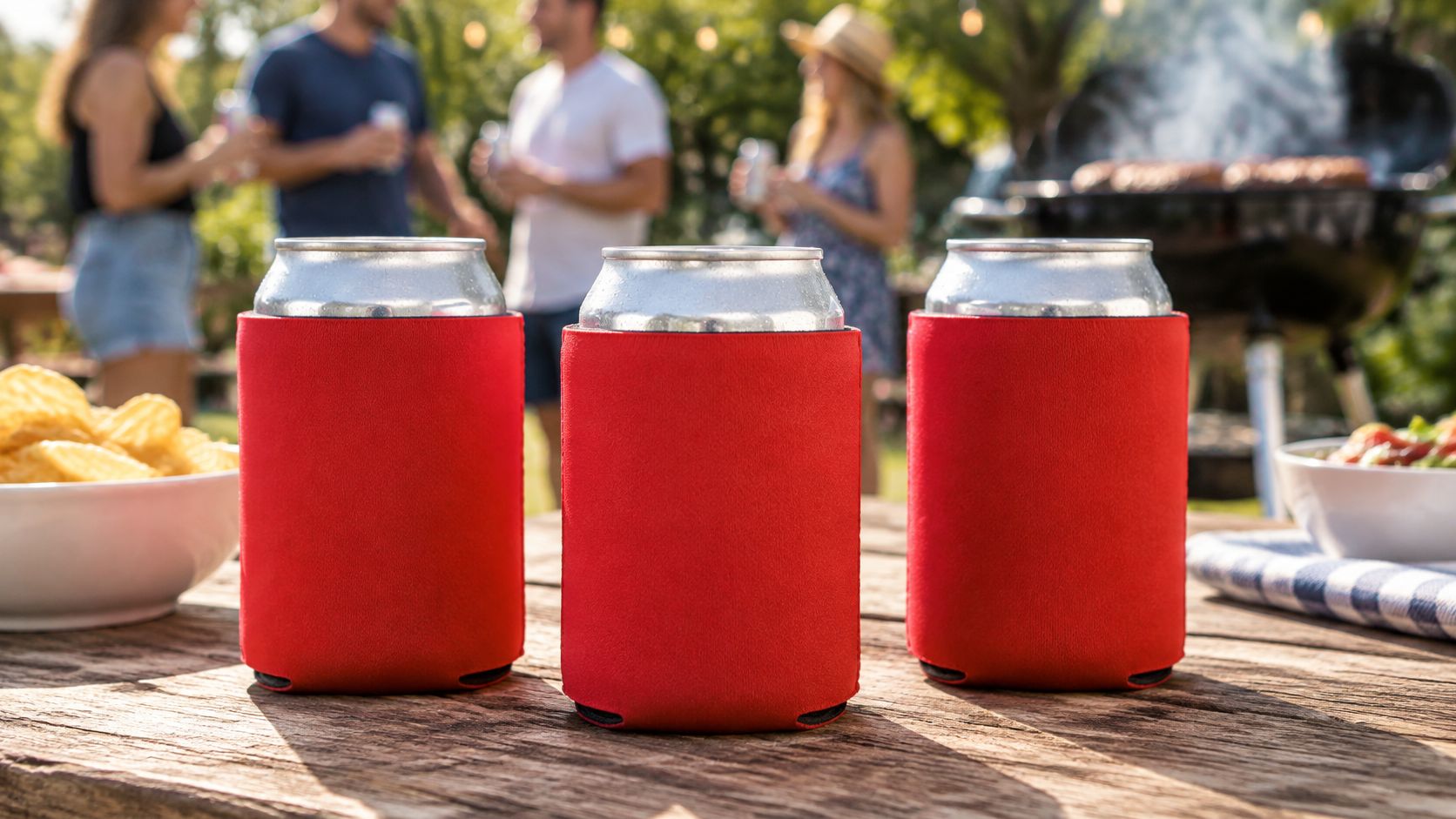
Think of them less as a simple drink cooler and more as a miniature, mobile billboard for your business.
Every time someone grabs their drink, your logo is front and centre. This isn't a one-off glance; it's repeated exposure in a positive, casual environment, creating a subtle but strong link between your brand and good times. A flyer ends up in the bin and a digital ad is quickly forgotten, but a good quality stubby holder is useful. People hang onto them for years.
Why They Are a Smart Marketing Investment
For small and medium-sized businesses, the return on investment from custom stubby holders can be fantastic. They offer a low-cost way to get your brand seen by a huge number of people, again and again.
Here's why they just make sense:
- High Utility: People want them. They get used, which means your brand stays visible long after the initial giveaway.
- Cultural Connection: By using such a beloved Aussie icon, your brand instantly feels more authentic and down-to-earth.
- Cost-Effectiveness: When you buy in bulk, the cost per stubby holder is low, making it a budget-friendly choice for any marketing campaign.
A great stubby holder does more than keep a drink cold; it carries your brand's message directly into the hands of potential customers, becoming a walking advertisement at countless social gatherings.
To get the most out of your investment, check out these expert tips on how to create brand awareness. This will help you turn a simple bit of merch into a powerful strategic tool. Once you grasp their cultural importance and marketing potential, you can make an informed choice for your next campaign.
And if you're looking to build out your promotional kit, you can explore a whole range of other bar accessories for promotional campaigns to really make an impact.
From Pub Necessity to Promotional Powerhouse
To really get why a custom stubby holder has so much marketing punch, you have to know where it came from. This isn't just some random bit of foam; it's a piece of genuine Aussie ingenuity, born from a classic problem: how do you keep a beer cold on a scorching hot day? The story doesn't start in a corporate boardroom, but right in the heart of Australian social life—the local pub.
Before stubby holders, keeping your drink frosty during a long arvo session was a losing battle. Your hands would warm the bottle, and condensation would make it a slippery mess. It was a shared frustration right across the country, from bustling city pubs to quiet backyard barbies. The fix, when it finally arrived, was simple, effective, and quintessentially Australian.
The Spark of an Idea
The breakthrough came from pure, practical need. Back in the 1970s, a New South Wales publican named Alex Benjamin was sick of watching his patrons' beers warm up in their hands. The classic 375ml 'stubby' bottle was the drink of choice, but it was no match for the Aussie heat. He figured the solution wasn't just better refrigeration; it was about insulation after the drink was poured. That simple observation sparked an idea that would become a cultural icon. You can dive deeper into this and other local innovations by reading this interesting blog about Aussie creations.
He started messing around with different materials, looking for something that would insulate the bottle well but still be comfortable to hold. His experiments eventually led him to neoprene, the same synthetic rubber used in wetsuits. It was perfect. Flexible, tough, and a brilliant insulator. The first stubby holder was born, solving two problems at once: it kept the beer cold and the drinker's hand dry.
This simple sleeve of neoprene completely changed the way Aussies enjoyed a cold one. What kicked off as a clever fix in one pub spread like wildfire, quickly becoming a must-have for any social gathering.
What's It Called in Australia? (Stubby Holder vs. Koozie)
Here's the terminology question we get asked more than any other. In America, these sleeves are usually called Koozies, a name borrowed from the Koozie brand that popularised the product there. In Australia, we call them stubby holders, or sometimes beer sleeves, can coolers or bottle coolers. The name comes straight from the 375ml 'stubby' bottle, short and squat, historically distinct from the larger 750ml bottles, that dominated Australian fridges for decades. The same product appears around the world as a koozie, beer cozy, can cooler or beer sleeve, but the Australian expression reflects our own packaging history and everyday slang. You can trace the full set of names in this koozie terminology history.
In our experience, this detail matters commercially, not just conversationally. Clients who consistently use the local term connect instantly with Australian buyers, while imported 'koozie' phrasing can make a campaign feelGeneric and American. Plainly: call them stubby holders here, both for search visibility and for credibility.
The Evolution into a Marketing Giant
At first, the stubby holder was all about function. It was a practical tool that people wanted and used. But its blank surface was a golden opportunity, and businesses were quick to catch on. That simple sleeve was the perfect canvas for a logo.
Before long, breweries and drink companies started printing their branding on them, turning a handy item into a powerful marketing tool. They were given away at events, thrown in with a carton of beer, and sold as merchandise. And people loved it. They didn't see it as annoying advertising; they saw it as a free, useful gift.
A branded stubby holder feels less like an ad and more like a badge of honour. It connects a brand to the cherished rituals of Australian social life—mateship, relaxation, and good times.
The move from a practical item to a promotional powerhouse was so smooth because it tapped directly into the national psyche. By putting their brand on a stubby holder, companies were tying themselves to the relaxed, social lifestyle that Australians hold dear. It wasn't just about getting eyeballs on a logo; it was about brand association.
Why Its History Matters for Your Brand
Understanding this history helps you use stubby holders effectively today. They aren't just another faceless promo product. They're a home-grown solution to a home-grown problem, wrapped up in decades of cultural significance.
When you hand someone a stubby holder with your logo on it, you're connecting with that rich history. You're giving them something that is:
- Useful: It solves a real-world problem, which means it won't get tossed in a drawer. It'll be used for years.
- Culturally Resonant: It feels familiar and authentic, creating an instant, positive connection.
- A Welcome Gift: Unlike a flyer or a business card that gets binned, this is seen as a valuable item.
This built-in goodwill is what makes branded stubby holders one of the most effective and affordable marketing tools in Australia. Your brand becomes part of the celebration, the conversation, and the community, long after your event is over.
Choosing Your Stubby Holder Materials and Styles
Picking the right stubby holder for your campaign is about more than just slapping a logo on something. It's your first big decision, and it sets the tone for the entire promotion. The world of custom stubbies is surprisingly deep, with different materials and styles built for different jobs, budgets, and brand personalities.
Think of it like choosing the right tool. You wouldn't use a hammer to turn a screw. In the same way, a lightweight, foldable stubby holder is perfect for a massive mail-out, but you'd want a premium, stitched neoprene one for a corporate gift that really makes an impact. Your choice says a lot about your brand's attention to detail.
It really boils down to two key things: the material it's made from and the physical style of the holder.

What Are Stubby Holders Made Of?
Three materials dominate the market, and each has a distinct job:
- Neoprene. This is synthetic rubber, the same material used in wetsuits. It's the best insulator of the three, keeping drinks colder for longest, and it has a premium, flexible feel that suits corporate gifts and quality merch. In our experience testing neoprene against cheaper options, the temperature difference after 20 minutes in the sun is noticeable.
- Foam or EVA. Lighter and cheaper than neoprene, foam still does a respectable job of insulation. This is the material for bulk giveaways, such as trade shows, festivals, and mail drops, where you need hundreds or thousands of units at the lowest possible cost per holder.
- Fabric or polyester. Usually laminated over a foam or neoprene core, polyester is the printable surface that makes full-colour sublimation possible. If your artwork is photographic or wraps seamlessly around the holder, the outer fabric is doing the heavy lifting.
That last point is worth understanding: the foam core provides the insulation, while the laminated outer fabric provides the printable surface. Many premium holders combine both — neoprene or foam inside, polyester outside — so you don't have to choose between performance and print quality.
Finding the Right Fit: Popular Stubby Holder Styles
Once you've landed on a material, you need to pick a style that suits how and where it will be used. The shape and build of the holder are just as important as what it's made of.
Here are the most common styles you'll come across:
- Standard Can or Stubby Cooler: This is the classic. A simple sleeve with a glued-in base, designed to fit a standard 375ml can or stubby bottle like a glove. It's the versatile, all-rounder for most campaigns.
- Foldable Flat-Pack Holder: This design has no stitched base, so it can be folded completely flat. This makes it cheap and easy to store, ship, or pop into an envelope for a mail campaign. It's the undisputed champion of portability.
- Zip-Up Bottle Holder: Built for longneck bottles, this style has a zipper up the side to ensure a snug fit from top to bottom. It provides maximum coverage and insulation, making it a huge hit with breweries, bottle shops, and anyone wanting to create more premium merch.
Here's the bottom line: Neoprene gives you superior performance and a premium feel, making it the best bet for leaving a lasting impression. Foam is your go-to for mass distribution, where you need to get your brand into as many hands as possible without breaking the bank.
We noticed that clients who agonise over material choice for days usually regret overthinking it: match the material to how the holder will be used and the decision often takes five minutes. Getting the combination right ensures your holder isn't just a gimmick, but a useful item people will hold onto. It's also worth exploring the available custom printing options to make sure your artwork looks absolutely fantastic on whatever material you pick.
Designing Artwork That Gets Noticed
The material and style of your stubby holder are the canvas, but the artwork is what makes it sing. Your brand's personality comes alive in the design, turning a simple drink cooler into something people want to keep and use. Getting the design right is part art, part science: you need a great idea and a little technical know-how to make sure it looks just as good in hand as it does on your screen.
First things first, you need to understand how your design will get onto the stubby holder. The printing method you choose can make or break the final look, and the right choice boils down to your design's complexity, how long you need it to last, and, of course, your budget.
Key Printing Methods Explained
Think of printing methods like tools in a toolbox – you wouldn't use a sledgehammer to hang a picture frame. A simple one-colour logo needs a totally different approach than a vibrant, full-colour photograph. Matching your artwork to the right process is the secret to a knockout result.
Here are the three most common methods we use:
- Screen Printing: This is the old faithful of the printing world. It's brilliant for bold, simple designs with just one or two solid colours. We push ink through a mesh screen directly onto the stubby holder, which creates a durable print with a slightly raised feel. It's the most cost-effective option for large runs of a straightforward logo or text.
- Heat Transfer: This method acts as a great middle-ground. Your design is printed onto special transfer paper first, then applied to the stubby holder using a combination of heat and pressure. It's perfect for designs that have a few different colours and a bit more detail, giving you more creative freedom than screen printing without jumping to the premium price point.
- Dye Sublimation: This is the top-shelf choice for complex, photorealistic artwork. The magic happens when special inks are heated into a gas that permanently infuses into the fabric of the stubby holder. The result is a stunning, full-colour finish across the entire surface that will never crack, peel, or fade.
Preparing Your Artwork for a Flawless Print
Once you've picked a printing method, the next step is getting your digital file ready. Supplying print-ready artwork is the best way to avoid annoying delays and ensure the final product looks sharp and professional.
Here are a few technical tips to keep in mind:
- Use the Right File Format: Always try to provide your artwork in a vector format like .AI, .EPS, or a vector .PDF. Unlike pixel-based images, vector files can be scaled up or down to any size without getting blurry.
- Convert Fonts to Outlines: This is a classic rookie mistake! Convert all fonts to outlines (or curves) so your text prints exactly as designed, even if our computers don't have your font.
- Specify Colour Modes: Your screen uses RGB light; printers use CMYK ink. Set your artwork up in CMYK so colours on the holder match what you see on screen as closely as possible.
For a more detailed walkthrough, check out our simple guide on artwork submission tips to get it right the first time.
Designing for a Curved Surface
Don't forget, you're not designing for a flat flyer. A stubby holder is a cylinder, and you have to think about how your design will wrap around it.
Place the most important parts of your design, like your logo, website, or phone number, right in the centre of the template. Avoid putting key info too close to the seams or the top and bottom edges, as it can get cut off or distorted when the stubby holder is stitched together.
This same attention to detail applies to other custom event merchandise like printed t-shirts, where placement is everything. Taking that extra bit of time to prepare your artwork properly is what separates good merch from great merch.
How to Use Stubby Holders for Marketing Success

Alright, so you've got the lowdown on materials and design. Now for the fun part: putting your custom stubby holders to work. A smart stubby holder campaign is about more than just handing out free stuff; it's about hitting real business goals.
Their magic lies in a simple formula: low cost plus high perceived value. For a tiny investment, you get a promotional item that people use again and again. This puts your brand right in their hands during relaxed, positive moments, turning a simple giveaway into a mini-billboard that keeps you top of mind.
Building Client Loyalty with Corporate Gifts
In the corporate world, the right gift can say more than a lengthy email ever could. So, ditch the generic pens. A premium neoprene stubby holder, branded with a sharp, professional design, is a gift your clients will use and appreciate. It's practical, quintessentially Aussie, and has a cool, casual vibe.
Gifting a quality stubby holder after a big project or around the holidays is a brilliant way to strengthen a business relationship. It's a small touch that shows you value their partnership, fostering loyalty and encouraging them to come back. This tactic works especially well for businesses in the trades, construction, or anything to do with the great outdoors — and if the gift ties into hosting clients at events, pairing it with the right event service helps too, as covered in this corporate event bartender guide.
Generating Revenue as Merchandise
If you're a band, local footy club, craft brewery, or tourist destination, stubby holders aren't just for promotion—they're a fantastic source of revenue. Fans and supporters are always keen to buy merch that's both affordable and useful, and a good stubby holder is a no-brainer.
By selling them at gigs, games, or your venue, you create a new income stream while your fans do the marketing for you. The trick is to create a design so cool that people are happy to pay for it. When you nail that, your marketing cost flips into a tidy profit.
Driving Engagement at Events and Trade Shows
At a chaotic trade show or a bustling community festival, you need something that grabs attention and makes you memorable. Branded stubby holders are the ultimate crowd-pleaser. Use them as a clever incentive to get people to take action. For example, offer a free stubby holder for:
- Signing up for your email newsletter
- Following your brand on social media
- Watching a quick product demo
Suddenly, a passive wanderer becomes an active lead. Because they're so popular, they create a buzz that drives foot traffic straight to your stand, and since they'll be used for years, your brand stays visible long after the event is over.
One Aussie startup, Dad Cooler, proved this power by selling over 50,000 personalised holders in its first six months, pulling in more than $1 million. Often costing under $2 each in bulk, smart customisation can turn a cheap item into a high-value asset. For more inspiration, explore our full range of promotional products for your next campaign.
Navigating the Custom Ordering Process
So, you've got a brilliant design and a plan for your custom stubby holders. Fantastic. But what happens between now and getting them in your hands? Getting this part right means no nasty surprises, and you'll get exactly what you want, on time and on budget.
Understanding Minimum Order Quantities
The first bit of lingo you'll come across is Minimum Order Quantity, or MOQ. For stubby holders, you're typically looking at an MOQ of around 50 or 100 units.
Why the minimum? Setting up the printing gear costs the same whether you're making 10 or 1,000. The MOQ makes the production run worthwhile for the supplier, and it's what makes the price work for you.
- Higher Volume, Lower Price: The more you order, the cheaper each individual holder becomes. It's all about economies of scale.
- Plan Your Numbers: If you only need 30 holders for a small event but the minimum is 100, you might need to rethink things or find a good home for the other 70.
Factoring in Lead Times
Lead time is the total time from artwork sign-off to the day the box arrives at your door — production and shipping.
A classic rookie error is forgetting about transit time. Always ask your supplier for a full timeline that covers both production and delivery. That shipping leg can easily add a week or more.
For most Australian orders, expect around 2-4 weeks. The best advice? Build a buffer into your schedule. If your event is five weeks away, you should be finalising your order now.
The Importance of Getting a Sample
Before you give the green light on hundreds (or thousands) of holders, it's smart to ask for a sample. It lets you feel the neoprene, see how the colours really look, and inspect the print quality up close. A pre-production sample takes all the guesswork out of the equation. It might add a little extra time and a small cost, but that's nothing compared to the peace of mind it brings.
To make the whole process smooth, learn how to order promotional products effectively with our step-by-step guidance.
Stubby Holder Terminology Around the World
The same insulated sleeve goes by many names depending on where you are, and knowing them helps whether you're ordering offshore, selling to tourists, or just trying to describe your product clearly.
- Australia: Stubby holder — named for the 375ml stubby bottle. Also heard as beer sleeve, can cooler or bottle cooler.
- United States: Koozie — originally a brand name that became the generic term.
- United Kingdom and elsewhere: Beer cozy, can cooler or bottle cooler.
We've served clients who initially ordered 'koozies' from overseas suppliers using American specs and ended up with sleeves sized for US cans that didn't fit Australian stubby bottles properly. The lesson: confirm the actual bottle or can dimensions, not just the name, whenever you're sourcing internationally.
For Australian audiences, though, the choice is simple. 'Stubby holder' is the term people search for, the term they say at the barbie, and the term that signals you're a local business that gets it.
FAQs: Your Stubby Holder Questions Answered
What's the Standard Size for a Stubby Holder in Australia?
In Australia, the go-to size for a stubby holder is designed to perfectly hug a standard 375ml can or the classic stubby bottle. This is your safest bet, as it covers the vast majority of beers and soft drinks you'll find at any barbie or event.
But of course, the drinks market has changed a lot. You can now easily find holders for:
- Slim Cans: Ideal for the seltzers, pre-mixed spirits, and energy drinks that are everywhere these days.
- Tinnies & Tallboys: Got a craft beer crowd? You can get holders for those larger 500ml cans, too.
- Longnecks & Wine Bottles: Zip-up "bottle coolers" are brilliant for keeping 750ml wine bottles or longneck beers chilled.
The golden rule? Think about what your audience will be drinking.
How Long Does It All Take? (Production & Delivery)
As a rule of thumb, budget for a 2-4 week turnaround from artwork proof sign-off to delivery. If you're ordering a massive quantity, have a super complex design, or are sourcing from overseas, that timeline can easily stretch to 6-8 weeks. Always confirm lead times upfront and build in a buffer.
What's the Best Printing Method for a Full-Colour Logo?
If your logo has multiple colours, gradients, or is a full-blown photograph, there's only one answer: dye sublimation. It bakes the ink right into the fabric, producing a full-colour print that won't crack, peel, or fade. Traditional screen printing remains a great, budget-friendly option for simple, one or two-colour designs.
Are There Any Eco-Friendly Stubby Holder Options?
Yes. Many suppliers now offer holders made from recycled materials — think neoprene made from old car tyres or fabrics woven from recycled plastic bottles (rPET). They might cost a fraction more, but a sustainable choice can say a lot about your brand and connect with an eco-aware audience.
Ready to create standout promotional merchandise for your brand? The expert team at Simply Merchandise is here to help with artwork guidance, product samples, and express services to meet any deadline. Explore our huge range of custom products at https://simplymerchandise.com.au.

