Access Denied
IMPORTANT! If you’re a store owner, please make sure you have Customer accounts enabled in your Store Admin, as you have customer based locks set up with EasyLockdown app. Enable Customer Accounts

A Strategic Guide to Business Uniforms in Australia
Posted By Matthew Malios
on
Uniforms aren't just clothes with a logo slapped on them. They're a core part of your brand, a tool for building team spirit, and often, a critical piece of safety equipment. For any Australian business, getting your uniforms right is one of the most visible ways to signal professionalism and build trust with your customers from the first glance.
More Than Just a Logo: Why Uniforms Matter
Think of your team's uniform as your brand in motion. It's a mobile billboard that represents you every time an employee serves a customer, visits a job site, or even grabs a coffee on their break. This constant, consistent visibility helps cement your business in the minds of the public, turning your brand from a name into something people see and recognise in their daily lives.
But the impact goes deeper than just customer perception. Inside your business, a uniform can completely change the dynamic. It levels the playing field, removing visual cues of hierarchy and fostering a genuine sense of being on the same team. When everyone is dressed with a shared purpose, it builds unity and a quiet sense of professional pride. It’s a simple thing, but it works.
This guide is here to walk you through the entire process, from first idea to final delivery. We'll cover all the essentials an Australian business needs to get right, including:
- Picking the right type of garments for your industry.
- Understanding different fabrics for comfort, durability, and safety.
- Choosing the best branding methods to make your logo look sharp.
- Navigating the practicalities of sizing, ordering, and compliance.
Investing in a well-thought-out uniform program is a direct investment in your brand's reputation and your team's morale, whether you're a small café in Melbourne or a large construction crew in Perth. Many businesses also find that pairing their uniforms with other branded gear strengthens their overall presence. You can see a whole world of options by exploring high-quality promotional products.
To get started, let's look at the main types of uniforms. The table below is a quick cheat sheet to help you pinpoint which category is the right fit for your business, before we dive into the details.
Quick Guide to Uniform Types and Their Best Use Cases
| Uniform Type | Primary Industries | Key Features | Main Benefit |
|---|---|---|---|
| Corporate Wear | Real Estate, Finance, Office | Polished, professional, comfortable | Builds brand credibility |
| Workwear | Construction, Trades, Mining | Durable, functional, reinforced | Maximises safety and longevity |
| Hospitality | Cafes, Restaurants, Hotels | Stain-resistant, breathable | Enhances customer experience |
| Safety Wear | Logistics, Infrastructure | High-visibility, protective | Ensures legal compliance |
This gives you a starting point. Now, let’s dig a little deeper into what makes each of these categories unique and how to choose the perfect fit for your team.
Choosing the Right Uniform for Your Industry
Picking the right uniform isn’t just about choosing a colour. It’s about making sure the garment is a perfect fit for the job and the environment it’ll be used in. After all, the ideal outfit for a Sydney real estate agent would be completely useless for a construction worker in Brisbane.
Let's break down the main categories. Thinking about it this way is the first step to making a smart choice for your team, ensuring the uniform works for them, not against them. Each type is designed with a specific job in mind, trying to strike that perfect balance between looking professional and handling the practical realities of the workday.
Corporate and Office Wear
Corporate wear is all about projecting a polished, professional image that instantly builds trust with your clients. Think of a financial advisor or the front-desk team at a hotel—their attire immediately says "we're competent, we're consistent." The focus here is on clean lines, comfortable fabrics, and a smart aesthetic that reflects what your company is all about.
These uniforms are essentially your brand's first handshake. They often include:
- Branded Polo Shirts: A true all-rounder, the polo strikes that perfect balance between comfort and professionalism.
- Business Shirts and Blouses: The classic choice for a more formal, authoritative look.
- Tailored Trousers and Skirts: These pieces complete the professional look while making sure staff are comfortable through a long day at the desk.
If you're looking to create a more sophisticated brand image, it’s worth exploring the full range of corporate wear options to see what styles can really elevate your presence.
Workwear for Trades and Industry
When the job involves getting your hands dirty, durability and function jump to the front of the queue. Workwear is built tough. It’s designed to stand up to harsh conditions, offering protection and practicality for tradies, factory workers, and logistics teams. This is where performance truly trumps appearance.
The Australian workwear market is a serious business, valued at USD 534.24 million and expected to climb to USD 751.42 million by 2033. That growth comes from the non-negotiable needs of industries where safety and resilience are everything. Common workwear includes things like heavy-duty drill pants, reinforced jackets, and steel-capped boots—all designed for the toughest jobs.
Hospitality Uniforms
In hospitality, whether it's a bustling Adelaide cafe or a five-star Melbourne hotel, uniforms have to pull double duty. They need to look great and match the brand's vibe, but they also have to be practical for fast-paced, often messy work. That means ease of movement, breathable fabrics, and stain resistance are absolutely key.
For kitchen staff, getting the details right is crucial for both function and a professional look. This means choosing the right materials for durable and comfortable items like high-quality chef jackets.
School and Team Uniforms
School uniforms are brilliant for creating a sense of identity and equality among students. They help remove distractions and foster a real feeling of belonging, turning a diverse group of kids into a unified community. In the same way, sports team uniforms build camaraderie and make a team instantly recognisable, boosting morale on and off the field.
The image below shows just how these core benefits—branding, culture, and safety—stack up.
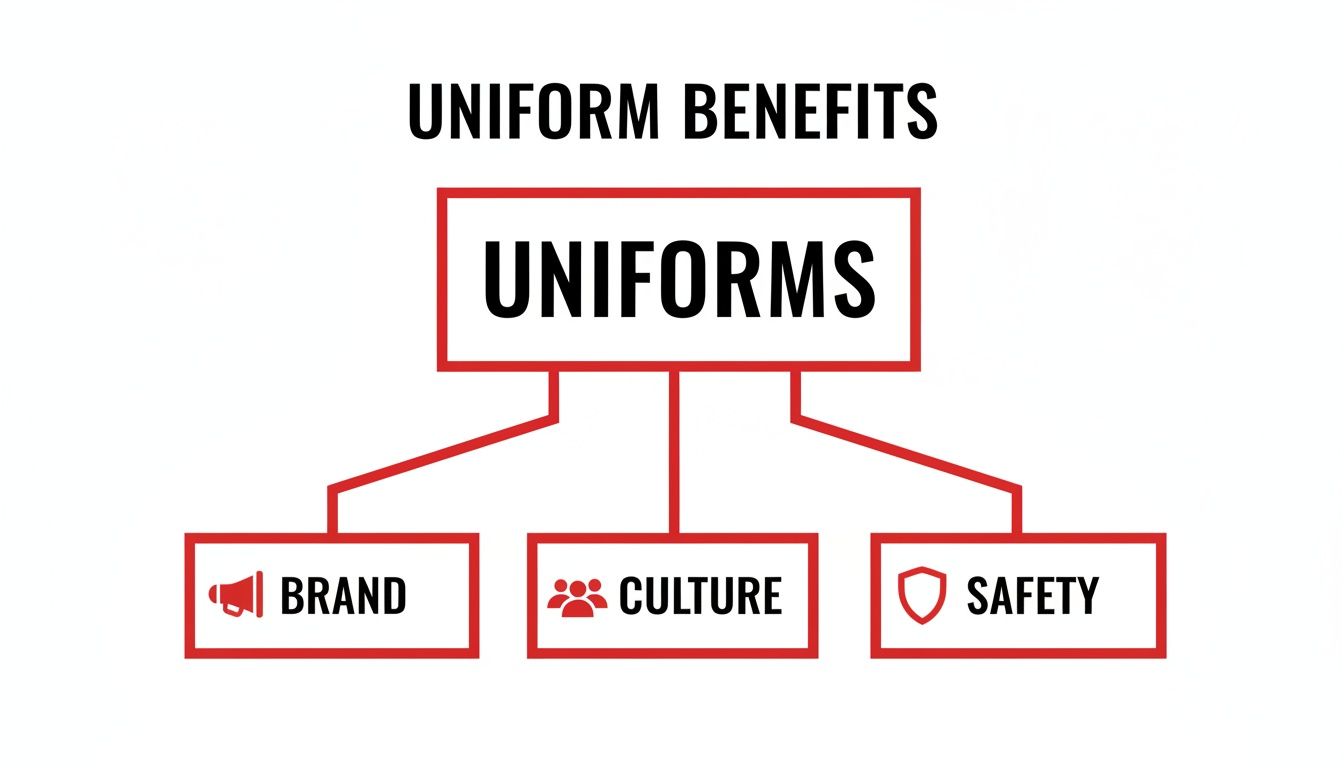
As you can see, uniforms are a foundational tool that supports everything from your marketing and internal culture right through to risk management.
Safety and Protective Wear
For a lot of industries, safety gear isn't just a good idea—it's the law. This category covers everything from high-visibility (hi-vis) vests for roadside workers to flame-retardant overalls for miners in Western Australia and other specialised personal protective equipment (PPE).
The primary purpose of safety wear is hazard mitigation. Its design and materials are dictated by Australian Standards to ensure maximum protection for the wearer, making compliance a non-negotiable aspect of procurement.
These uniforms are specifically engineered to protect your team from workplace risks. Getting this right means you’re meeting your duty of care and avoiding potentially massive legal and financial headaches. Choosing certified and compliant safety wear is one of the most important decisions you'll make.
Picking Fabrics: The Secret to Uniforms That Last and Feel Great
Once you’ve got a style in mind for your uniforms, the next big decision is the fabric. This is where the rubber really hits the road. The material is the heart and soul of the garment, dictating its durability, how comfortable it is on a long shift, and even how sharp your logo looks after a dozen washes.
Get this right, and you've got a uniform your team actually wants to wear. Get it wrong, and it’s just another daily drag.
The key is to think beyond aesthetics. You need to match the fabric to the job. A chef sweating it out in a Darwin kitchen has completely different needs to a real estate agent braving a Melbourne winter. The fabric simply has to be fit for purpose.
What is Fabric Weight (GSM)?
You'll hear the term GSM thrown around a lot. It stands for Grams per Square Metre, which is just a technical way of saying how heavy or dense the fabric is. It’s actually a pretty simple concept when you think about it.
A cheap-and-cheerful promotional t-shirt might be around 150 GSM – light and breezy. At the other end of the scale, a heavy-duty work jacket designed for the elements could be 300 GSM or even more, giving it real substance and warmth.
Now, a higher GSM doesn't automatically equal "better." It just means denser. A high-GSM cotton drill is like your favourite pair of rugged jeans—incredibly tough and built to handle the demands of a trade. A low-GSM polyester, on the other hand, is more like activewear; it's all about breathability and flex for staff who are always on the move.
Natural vs. Synthetic Fibres: The Great Debate
Fabrics generally fall into two camps: natural and synthetic. Each has its own set of pros and cons, and the best choice often comes down to what your team will be doing all day.
Natural Fibres (like Cotton)
- Breathability: Nothing beats cotton for letting air flow, keeping your team cool and comfortable.
- Softness: It feels great against the skin, which minimises the chance of irritation during a long day.
- Absorbency: It’s great at soaking up moisture, but the downside is it can get heavy when wet and takes ages to dry.
Synthetic Fibres (like Polyester)
- Durability: Polyester is a workhorse. It’s tough as nails and stands up to shrinking, stretching, and wrinkling.
- Colour Fastness: This is a big one for branding. It holds onto dye exceptionally well, so your company colours stay vibrant wash after wash.
- Moisture-Wicking: Unlike cotton which absorbs sweat, polyester pulls it away from the skin, a fantastic feature for active roles or outdoor work.
For many Aussie businesses, the perfect solution is a poly-cotton blend. This hybrid gives you the best of both worlds: the soft, breathable comfort of cotton paired with the strength and easy-care nature of polyester. It’s a fantastic all-rounder for a huge range of uniforms.
Specialised Fabrics for Tougher Jobs
Sometimes, the standard options just don't cut it. Many roles demand fabrics with special properties to meet safety regulations or just to make the job easier.
Think about hospitality staff hustling through a busy service; moisture-wicking fabrics are a game-changer for keeping them cool and presentable. For tradies and industrial workers, safety is the number one priority. This is where you see specialised materials like flame-retardant textiles or fabrics with a high UPF (Ultraviolet Protection Factor) rating for anyone working under the harsh Aussie sun.
When you're outfitting these teams, it's not just a suggestion—it's essential to choose compliant gear. To get a handle on what’s required, check out our detailed guide to workwear and hi-vis safety gear. It’s the best way to make sure your team is not only comfortable but properly protected under Australian workplace standards.
Bringing Your Brand to Life on Apparel
You’ve nailed down the perfect garments and fabrics. Now comes the fun part: turning that blank apparel into a powerful brand statement. This is where decoration comes in, transforming your uniforms into walking billboards that telegraph your company’s quality and personality wherever your team goes.
Choosing the right decoration method is all about finding the sweet spot between your logo's design, your budget, and the type of garment you're branding. Think of it like this: you wouldn't use a sledgehammer to hang a picture frame. The best technique for a single, intricately detailed jacket is completely different from the right choice for 500 promotional t-shirts. Getting this right is crucial for a professional look that lasts.
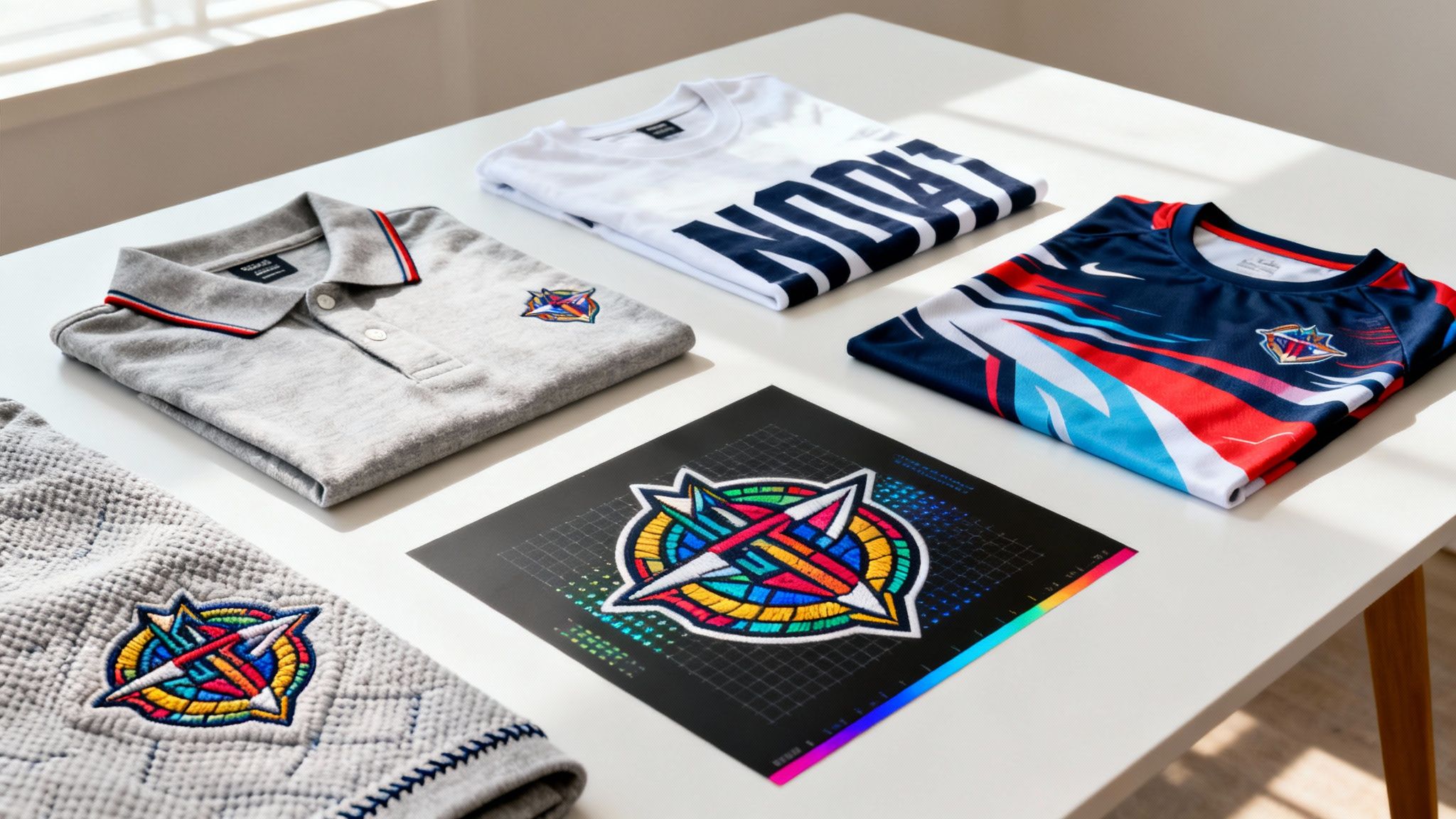
It’s clear Aussie businesses get it. The local market for branded workwear and uniforms is booming, carving out a significant niche in the Asia Pacific. We're talking an estimated USD 790 million market, growing at a healthy 6% a year. That puts Australia right in the mix with neighbours like Japan and India, where industrial growth and safety regulations are pushing uniform adoption sky-high.
Embroidery: The Classic Choice for a Premium Feel
Embroidery is the art of stitching your logo directly into the fabric. It creates a textured, three-dimensional finish that instantly says 'quality' and 'permanence'. This method is incredibly durable—so much so that the embroidery will often outlast the garment itself.
It's the perfect match for:
- Corporate Polos and Business Shirts: It adds an undeniable touch of class.
- Jackets and Outerwear: The sturdy stitching holds up brilliantly on heavier fabrics.
- Caps and Beanies: It delivers a sharp, high-end look that stands out.
As experts on custom embroidery for apparel branding will tell you, it's a fantastic way to infuse uniforms with your brand's essence. The one thing to keep in mind is that embroidery struggles with super-fine details like subtle colour gradients or tiny text, as threads just can't replicate that level of intricacy perfectly.
Screen Printing: Efficient for Bold, Vibrant Designs
Screen printing works by pushing ink through a mesh screen onto the fabric, one colour at a time. It's a hugely efficient process for larger quantities, which makes it an incredibly cost-effective choice when you need to order in bulk. The result is a bright, vibrant design that sits crisply on the surface of the material.
Screen printing is the absolute go-to for large-scale projects like event t-shirts or promotional giveaways. The setup costs are spread across the entire run, making the per-item price incredibly competitive for orders of 50 or more.
It’s the ideal solution for bold, solid colours on items like t-shirts, hoodies, and tote bags. The trade-off? It becomes less economical for small runs or for designs with a lot of different colours, since a new screen is needed for every single one.
Digital Transfers: For Full-Colour Complexity
So, what happens if your logo is a full-colour photo or has complex gradients that screen printing just can't handle? That's where digital transfers, often called Direct to Film (DTF), save the day. This modern method involves printing your design onto a special film, which is then heat-pressed directly onto the garment.
The process flawlessly replicates complex, multi-coloured logos with stunning accuracy. This makes it perfect for detailed artwork on just about any fabric. Digital transfers are brilliantly versatile, working on everything from sportswear to work jackets and leaving a smooth, vibrant finish.
Sublimation: For All-Over Designs on Sportswear
Sublimation is a bit of a game-changer. It’s a unique process where special inks are heat-fused directly into the fibres of polyester fabric. Instead of sitting on top, the ink literally becomes part of the material. This means the design will never crack, peel, or fade, and it adds zero extra weight or texture to the garment.
Because the ink becomes one with the fabric, it’s the undisputed champion for sportswear and activewear where breathability is non-negotiable. It’s the only method that can deliver those incredible, all-over prints that cover an entire garment seamlessly. The only catch is that it only works its magic on light-coloured, polyester-based fabrics.
Deciding on the best decoration method is a critical step, and knowing the ins and outs of each can make all the difference. To really get into the nitty-gritty, explore our complete guide to custom printing options and find the perfect match for your brand.
Getting Sizing, Compliance, and Logistics Right
You've picked the perfect garments and finalised your branding. Fantastic. Now comes the part that can make or break the entire project: the nuts and bolts of getting the right uniforms to the right people. This is where we tackle sizing, supplier timelines, and the critical Australian standards that keep your team safe. Getting this right is the difference between a smooth, professional rollout and a logistical headache of returns, delays, and frustrated staff.
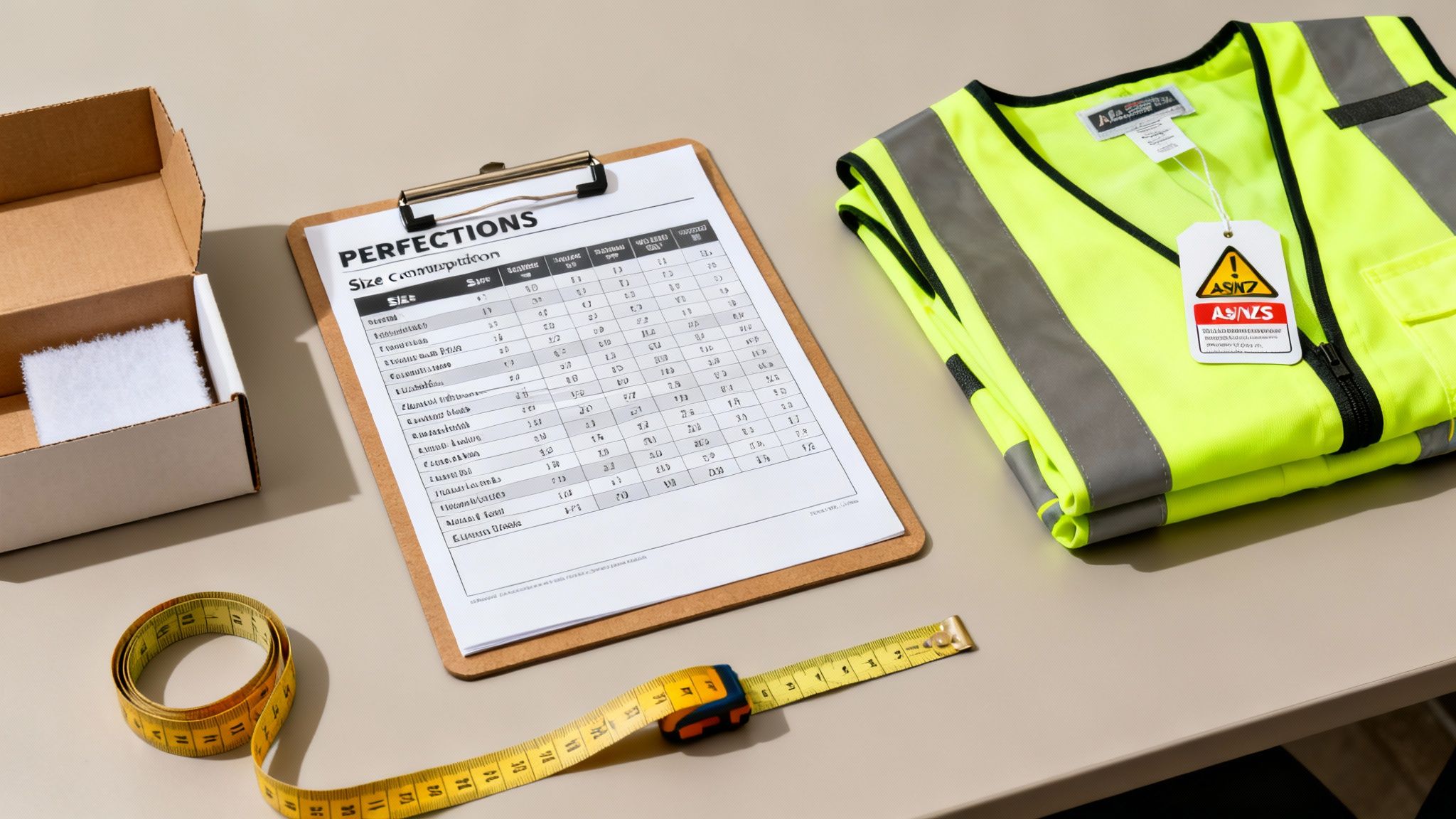
Let’s be honest, incorrect sizes are the number one cause of uniform-related frustration. It’s also an entirely preventable problem if you put a simple system in place from the start.
Creating a Sizing System That Actually Works
First rule of uniform sizing: never assume. A "medium" from one brand can feel like a "large" from another. Don't leave it to guesswork. Your first step should always be to ask your supplier for their official, detailed sizing chart for the specific garments you’re ordering.
Once you have that, create a straightforward process for your team:
- Share the Chart Widely: Email the official sizing chart to every single staff member who will be receiving a uniform.
- Give Simple Instructions: Don't just send the chart—explain it. Include a quick guide on how to measure key points like the chest, waist, and hips. A link to a "how-to-measure" video on YouTube can work wonders here.
- Order a Sizing Set: This is the gold standard for getting it right, especially for larger teams. A sizing set is basically a collection of blank sample garments in every available size. You can then let staff physically try them on to find their perfect fit before you place the full order. It completely removes any doubt.
Taking these steps empowers your team to make the right choice the first time, which drastically cuts down on returns and ensures everyone gets a uniform they feel comfortable in from day one.
Understanding Australian Safety Compliance
For a huge number of Aussie businesses, uniform compliance isn't just a good idea—it's the law. This is especially true for safety gear and protective workwear, which must meet strict Australian Standards (AS/NZS) to be legally compliant. High-visibility clothing and Personal Protective Equipment (PPE) are the most common examples.
Following AS/NZS standards isn't optional. Using non-compliant gear not only puts your people in danger but opens your business up to serious legal and financial risks from workplace safety breaches.
When you’re sourcing safety-related uniforms, always check that the products are certified. Any reputable supplier will have no problem providing this information and will often list the specific compliance codes on the product page. Look for codes like AS/NZS 1906.4 (for hi-vis materials) or AS/NZS 4602.1 (for the design of hi-vis garments). If you can't see it, ask for the compliance documentation.
Making Sense of Key Logistics Terms
Finally, getting familiar with a couple of key terms will make the ordering process feel a lot less intimidating. The two you’ll hear most often are MOQs and lead times.
Minimum Order Quantities (MOQs) simply refer to the smallest number of items you can order at once. You'll often see this with custom-made apparel or complex screen printing jobs where the setup cost and effort are significant. Always ask about the MOQ before you get too far down the design path.
Lead Times are the total time it takes from the moment you sign off on the final design to the day the finished uniforms land on your doorstep. For most branded apparel in Australia, a typical lead time is around 2-4 weeks. This window covers everything: sourcing the blank stock, scheduling the job, the actual branding process, and shipping. Always build this timeline into your planning so you’re not caught out before a launch or event.
Budgeting for Uniforms and Measuring Your ROI
It’s easy to look at a uniform budget and see just another expense on the books. But that’s a rookie mistake. Think of it less as a cost and more as a direct investment in your brand, your team's spirit, and the trust your customers place in you. A smart budget looks past the price tag on a shirt and focuses on the real value those uniforms will deliver day in and day out.
Figuring out a realistic budget means looking at a few moving parts. The upfront cost will obviously depend on the quality of the garments, how complex your branding is, and of course, how many you need. A tough, embroidered work jacket will cost more than a basic screen-printed tee, but its longevity and professional look often deliver far greater value in the long run.
Building a Smart Uniform Budget
The best budgets are built with the future in mind. Don't just plan for the big initial order; think about the ongoing needs of your business. Factoring in these costs from the get-go saves you from surprise expenses down the track and keeps your team looking sharp and cohesive.
To put together a budget that actually works, make sure you account for:
- Initial Purchase: This is the main outlay for garments and branding to get everyone kitted out.
- New Hire Kits: As your team grows, you'll need funds set aside to welcome new staff.
- Replacement Stock: It’s always smart to have a small inventory on hand for when items get damaged or worn out.
- Seasonal Variations: Will you need warmer jackets for winter or lighter polos when summer hits? Plan for it.
Approaching it this way turns your budget from a one-time spend into a proper, sustainable uniform program.
Calculating the Return on Your Investment
The real magic happens when you start to measure the Return on Investment (ROI). This isn't just about crunching numbers; it's about connecting what you spend to real-world benefits that help your business grow.
Think of your uniforms as a mobile, low-cost marketing campaign. Every time an employee is out in public, they're building your brand recognition and credibility, creating thousands of impressions that would otherwise cost a fortune in advertising.
The ROI on uniforms stacks up in a few key ways. They create a brilliant first impression, signalling professionalism the moment a customer sees your team. They also build a sense of unity and pride among staff, which can genuinely improve performance and even reduce employee turnover. And in many industries, compliant safety gear offers the clearest ROI by preventing costly accidents and helping you sidestep hefty non-compliance fines.
Uniforms are a big deal in Australia's USD 28.3 billion clothing retail market, which has seen steady growth of 2.6% annually over the last five years. With budgets tightening, businesses and customers alike are looking for practical value. This makes durable, well-branded workwear a savvy investment for any Aussie SME. You can dig deeper into the Australian clothing retail sector on IBISWorld.
Just picture a local plumbing company. When the team arrives in clean, branded uniforms, they immediately look more professional and trustworthy than a crew in mismatched gear. That credibility alone can be the difference between winning a quote and losing it, making the investment in apparel pay for itself many times over.
Common Questions About Business Uniforms
Jumping into the world of business uniforms always brings up a few practical questions. Getting solid answers upfront helps you make better decisions and sidestep common headaches, making the whole process—from quote to delivery—a lot smoother.
Here are the straightforward answers to the questions we hear most often from Australian businesses just like yours.
How Do I Manage Sizing for a Large Team?
Getting the right fit for everyone can feel like a huge task, but there are a couple of great ways to handle it. The easiest first step is to get a digital sizing chart from your supplier and share it with your team. They can measure themselves at home with a simple guide.
But if you want to get it perfect, ordering a sizing kit is the way to go. This is a set of blank garments in every size, so your staff can physically try them on before you place the final order. It takes the guesswork out of the equation and dramatically cuts down on returns, ensuring everyone is comfortable from day one.
What Is the Best Branding for a Professional Look?
For that classic, premium look that really lasts, it’s hard to go past embroidery. It physically stitches your logo into the garment, giving it a high-quality, textured finish that holds up incredibly well to wear and washing. It’s the perfect choice for corporate polos, jackets, and hats where you want your brand to project quality and permanence. You can find out more in our guide on what embroidery involves and why it’s so popular.
How Do I Ensure Safety Wear Meets Australian Standards?
This one is non-negotiable. You absolutely must work with a reputable supplier who guarantees their gear meets the latest Australian Standards (AS/NZS). Before you commit to an order, ask for the compliance certification for any hi-vis or protective clothing you're buying.
A key thing to look for on product pages are the specific codes, like AS/NZS 1906.4 for hi-vis materials. Never take a risk on uncertified gear—it’s crucial for meeting your legal duties and, most importantly, keeping your team safe.
What Is a Realistic Turnaround Time for Custom Uniforms?
For a standard order with embroidery or screen printing, you should generally plan for a 2-4 week turnaround. This clock starts ticking after you’ve signed off on the final artwork. This timeframe gives enough breathing room for production, the actual decoration process, and shipping anywhere in Australia.
Just remember, more complex jobs or massive orders will naturally take a bit longer. Always get a firm estimated delivery date from your supplier before you lock anything in.
Ready to create uniforms that make your brand stand out? The expert team at Simply Merchandise is here to help you with everything from design and sizing to choosing the perfect branding method. Start building your professional look today!
Related Posts

The Power of Promotional Products
Why Use Promotional Products? In a digital world that’s constantly shouting for attention, the right promotional product does...
Read More
Personalised Water Bottle Australia: 2026 Guide
Find your perfect personalised water bottle australia with our expert guide for 2026. Choose materials, branding, & suppliers for max...
Read MoreInvalid password
Enter