



A lot of marketing teams end up in the same spot. You need a branded gift that feels polished enough for a client meeting, practical enough for daily use, and durable enough that it won't be forgotten in the back of a cupboard a week later.
That's where the mug conversation usually gets harder, not easier.
Standard ceramic is familiar. Travel mugs can feel useful but often miss the mark for desk-based gifting. Cheap drinkware gets distributed fast, but it rarely says anything good about the brand behind it. If the brief is to give people something they'll keep, a bone china mug deserves a serious look.
The Unforgettable Corporate Gift
A marketing manager ordering for a conference, an HR lead building executive welcome packs, a school organising donor gifts. They're all solving the same problem. They need one item that balances practicality and brand perception.
The trouble is that many promotional products split into two camps. Some are affordable but disposable. Others look premium but don't fit into everyday routines. A mug sits in the middle because people use it at work, at home, and in shared office kitchens. The right one becomes part of someone's day.
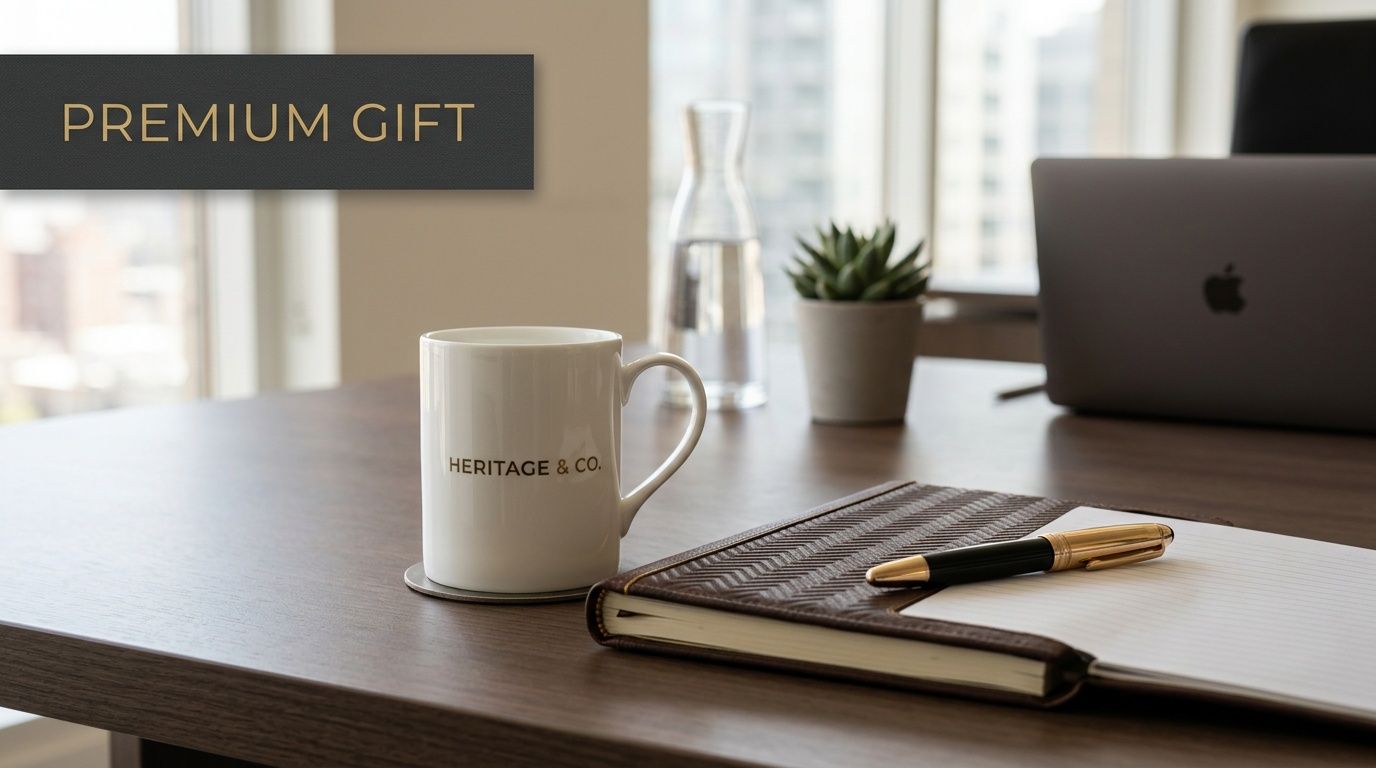
That matters when you're choosing from a broad field of promotional products for business campaigns. The decision isn't just about unit cost. It's about what the object communicates before anyone even notices the logo.
Why this mug feels different
A bone china mug tends to land differently in the hand. It feels lighter, finer, and more deliberate. That changes the whole interaction.
Instead of reading as a generic giveaway, it reads as a considered gift. That's useful in settings like:
- Client appreciation packs where you want the item to feel elevated without becoming flashy
- Executive onboarding kits where every detail shapes first impressions
- Event gifting where one premium item can carry more weight than several forgettable ones
A good promotional mug doesn't just hold coffee. It holds desk space, repeat visibility, and a small but persistent brand signal.
The ROI question buyers actually care about
In practice, the best merchandise isn't always the cheapest. It's the product people keep using.
A bone china mug works when the campaign needs staying power, a premium look, and decoration that doesn't feel like an afterthought. If the goal is to put your brand into daily routine without looking disposable, this is one of the smarter categories to consider.
Understanding the Essence of Bone China
Bone china gets described as delicate all the time. That description misses the point. A better way to think about it is as a refined material recipe, developed to deliver a very specific result.
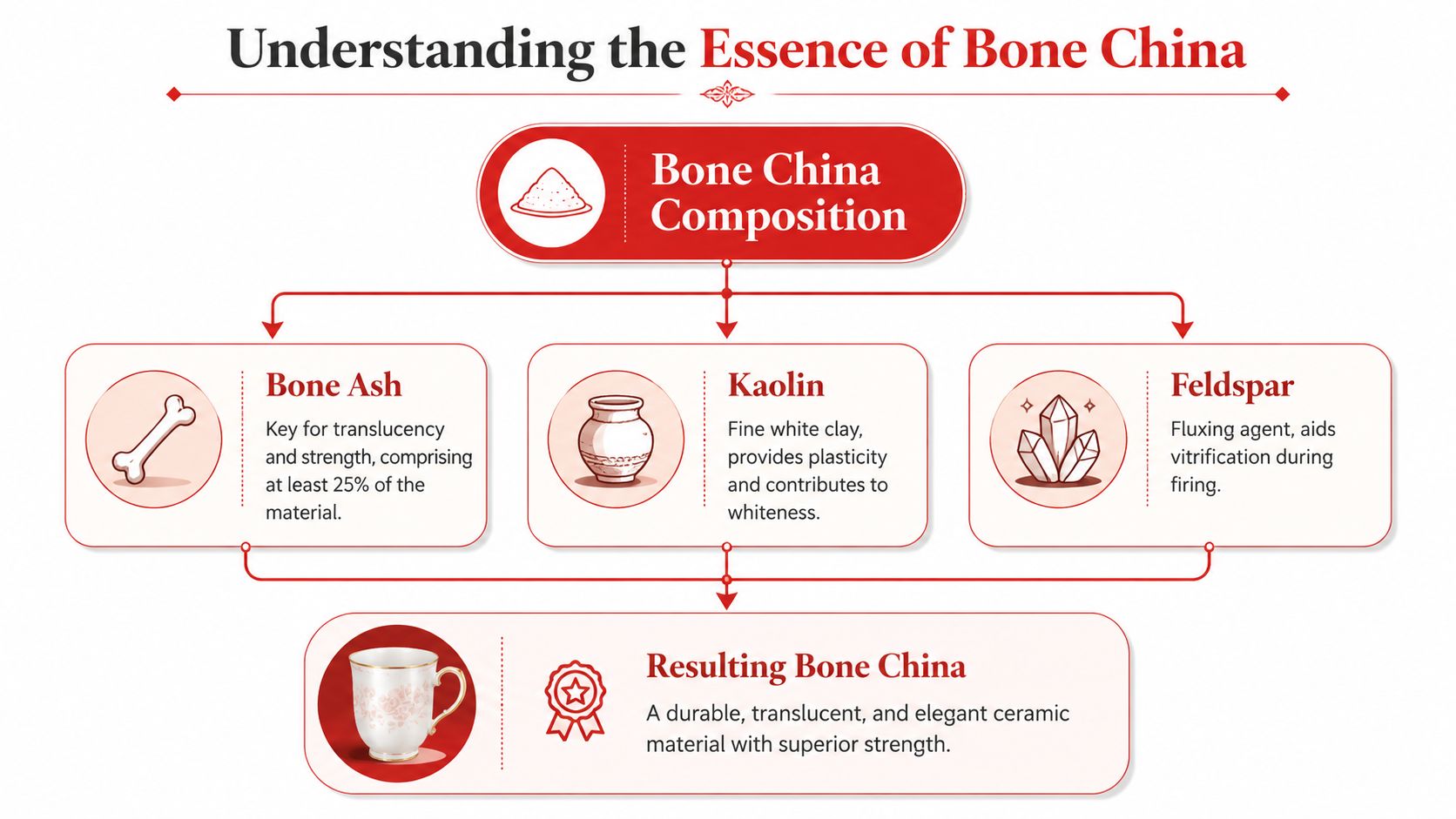
Bone china's formula was perfected around 1800, with a composition of approximately 50% bone ash, 25% kaolin, and 25% china stone, according to the historical overview of bone china. To be officially classed as bone china, the material must contain at least 30% phosphate derived from animal bone, and premium variants reach 45-51% for improved lightness and colour, as noted in that same source.
The recipe behind the finish
The process resembles a baker's formula. Change the proportions, and you do not get the same result.
In bone china, each ingredient plays a role:
- Bone ash gives the body its signature translucency and contributes to strength
- Kaolin provides form and whiteness
- China stone helps create the smooth, vitrified finish people associate with premium drinkware
The end result is a mug with a warm, milky-white appearance rather than the flatter visual feel you often get from standard ceramics.
How to recognise genuine quality
For business buyers, it helps to know what you're looking at when samples arrive. Bone china usually shows itself in a few ways straight away.
- The colour looks softer and cleaner than ordinary whiteware
- The wall thickness often appears finer
- The weight feels lighter in hand than many stoneware styles
- The sound can produce a clear ring when lightly tapped, which many buyers use as an informal quality check
If you're also comparing fine tableware styles for hospitality or gifting, this guide on choosing your bone china tea cup is useful for understanding how shape and finish influence the overall impression.
Why it matters for branded drinkware
For promotional use, material quality affects more than aesthetics. It changes how the mug presents your logo, how it feels in a meeting room, and whether recipients see it as worth keeping.
That's why bone china sits in a distinct position within branded drinkware options for corporate use. It isn't just another white mug. It's a material choice that signals care, polish, and a more premium intent.
Practical rule: If your campaign needs to feel executive, commemorative, or client-facing, start by judging the blank mug before you judge the branding. A strong print on a weak mug still feels like a weak gift.
Choosing Between Bone China Porcelain and Ceramic
Most buyers don't choose a mug material in isolation. They're balancing brand image, budget, event type, freight practicality, and how the item will be used once it leaves the box.
That's why the question usually isn't “Is bone china nice?” It's “Is bone china the right fit compared with porcelain or ceramic for this campaign?”
Bone china has one clear practical edge in promotional use. Its vitrified surface allows for thinner but stronger walls, making it up to 40% slimmer than stoneware and capable of withstanding over 500 dishwasher cycles, based on this bone china durability reference. For an item meant to stay in rotation on desks and in office kitchens, that matters.
Mug Material Comparison for Promotional Use
What works and what doesn't
Bone china works best when the mug itself is part of the message. If you want recipients to feel that your brand has taste, attention to detail, and confidence, bone china does that better than most standard options.
Porcelain can be a strong middle ground. It looks cleaner and more refined than many entry-level ceramics, but it won't always deliver the same lightweight, translucent feel.
Stoneware ceramic is the workhorse. It suits campaigns where volume matters more than finesse. If you're handing out large numbers at community events or broad awareness campaigns, it's often the sensible choice.
If your logo needs to sit on a mug that feels expensive before anyone reads the print, bone china usually wins. If you need maximum quantity on a tighter spend, ceramic usually wins.
Matching the material to the campaign
A simple way to decide:
- Choose bone china for boardroom gifting, premium events, staff recognition, and high-value client packs.
- Choose porcelain when you want a polished office mug without moving fully into premium territory.
- Choose ceramic stoneware for broader distribution, practical internal use, and campaigns driven mainly by quantity.
For buyers who like comparing drinkware by how it affects the ritual of use, even outside promo, a product example like this ceramic V60 dripper for Canadian brewing shows how material changes perceived quality and experience.
If you're weighing those trade-offs across a wider merchandise brief, it helps to use a more structured process for choosing the right promotional products rather than selecting by price alone.
Bringing Your Brand to Life on Bone China
A premium mug only earns its keep if the branding looks right on it. Bone china often outperforms standard options in this regard.
The surface is smooth, bright, and visually clean. That gives print a better stage. Fine lines read more sharply. Colour tends to look clearer. Minimal branding, especially on a white mug, feels intentional instead of sparse.
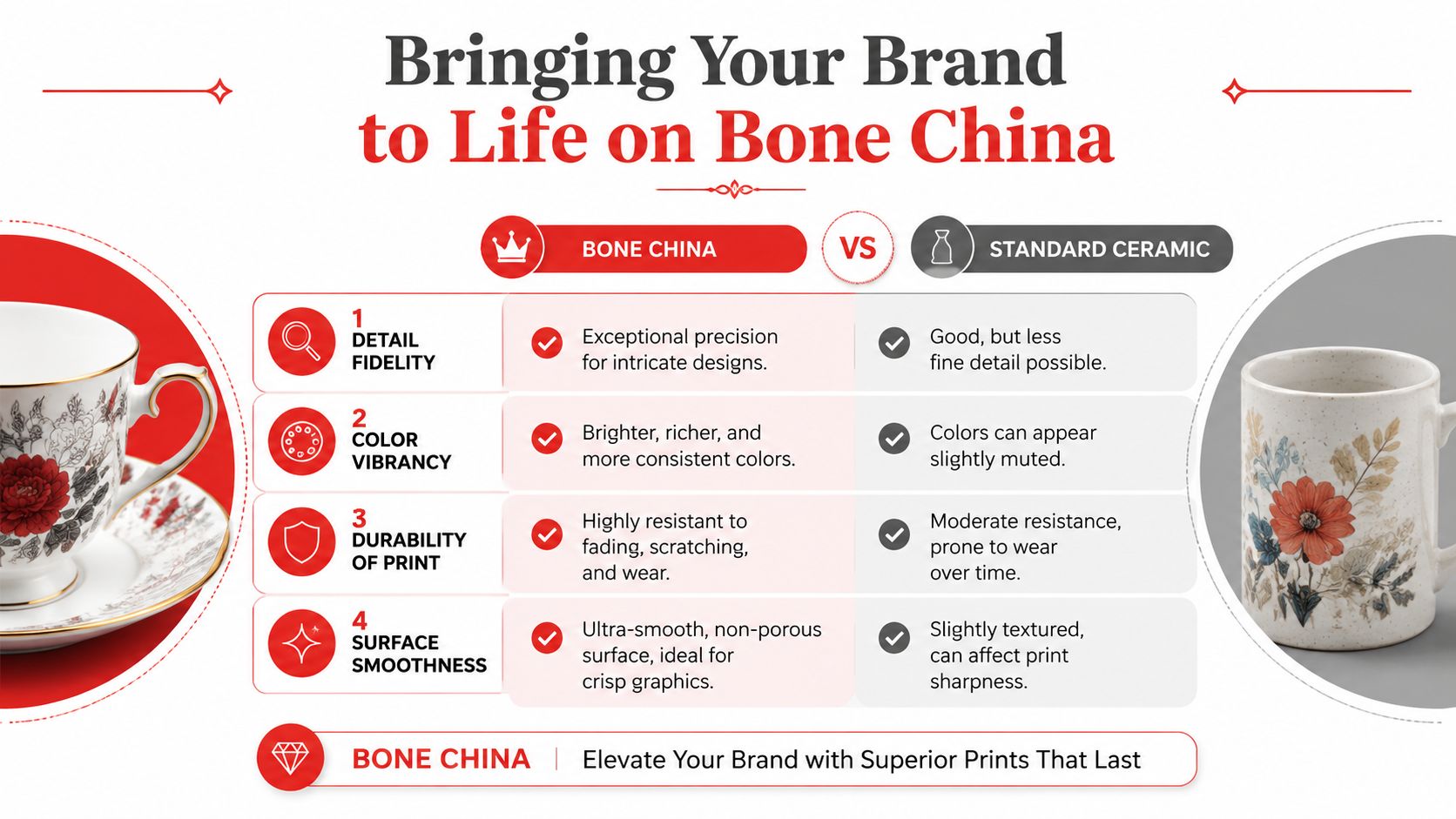
Recent tests cited in this article discussing bone china identification and use found that bone china withstands sublimation printing temperatures up to 200°C with a 95% success rate. The same source notes that standard ceramic holds 75% of the promo market share, which helps explain why bone china is often overlooked despite being viable for high-volume branding.
Which print method suits which design
Not every logo should be decorated the same way.
Sublimation
Best for full-colour artwork, gradients, photographic elements, and wraparound designs. On a clean white bone china mug, sublimation can look crisp and modern.
It works particularly well for:
- onboarding kits with colourful brand systems
- event mugs carrying themed artwork
- campaigns that need strong visual impact rather than a simple one-colour mark
Screen printing
Best for simple logos, bold shapes, and limited colour artwork. If your brand identity is minimal, screen printing often gives the cleanest result.
It's effective when:
- the logo needs strong contrast
- the design is text-led
- the campaign has a conservative corporate style
Laser engraving
This depends on the mug style and finish, but it can suit understated branding where subtlety matters more than colour.
It usually works better for:
- executive gifts
- recognition items
- minimalist branding systems
What makes bone china a better canvas
The material helps the artwork do its job. That's the key advantage.
- White background quality lifts colour and makes dark logos look cleaner
- Smoothness supports finer detail
- Premium perception makes even a small logo feel more refined
- Thin-wall styling gives the whole mug a sharper silhouette
If you've looked at other drinkware categories, such as personalized beer mugs for business gifts, you'll notice the same principle. The decoration method matters, but the base product matters just as much.
Common branding mistakes
The most common mistake is over-designing the mug. Bone china already brings elegance. It doesn't need clutter.
What usually works best:
- a restrained front logo
- a subtle wraparound pattern
- a strong colour decision with plenty of white space
What usually doesn't:
- cramming multiple messages onto a small surface
- using low-resolution artwork on a premium blank
- picking a premium mug and then decorating it with bargain-level design choices
For teams comparing finishes, placements, and production methods, these custom printing options for branded merchandise are where good decisions get made.
Ideal Use Cases for Maximum Campaign Impact
A bone china mug isn't for every campaign. It earns its place when the item needs to feel considered, not merely distributed.
That changes how you use it.
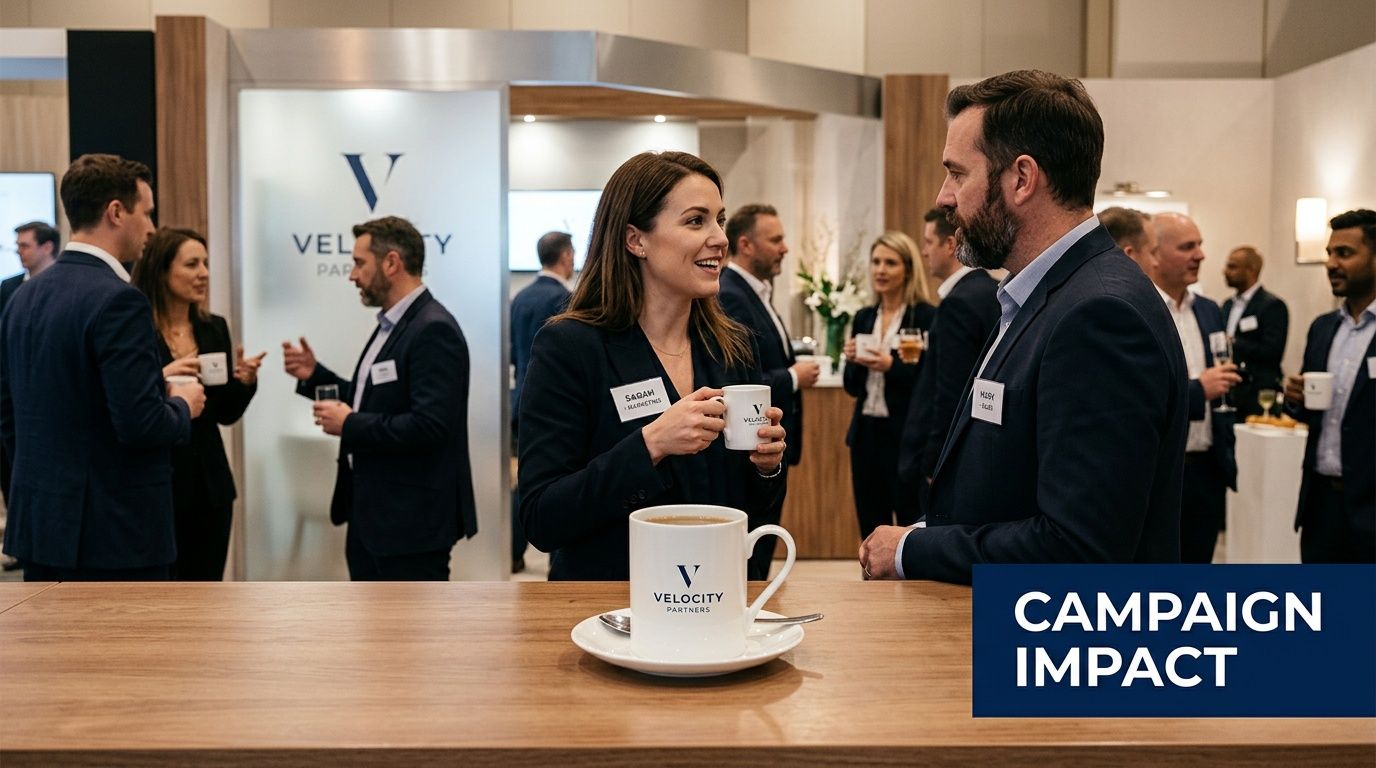
Client gifting that doesn't look generic
A client gift should feel useful without looking routine. A bone china mug works well here because it sits comfortably on a desk, in a home office, or in a meeting room.
A plain notebook and pen can be forgotten. A heavy hamper can feel excessive. A bone china mug lands in a better middle ground. It feels premium, but it still gets used on a Tuesday morning.
Executive and new starter packs
For senior hires, board appointments, or leadership program participants, details carry more weight. The mug becomes part of a welcome set that says, “We've thought about quality.”
This is one of the strongest use cases because the recipient is likely to use the mug repeatedly in a work context. That gives the brand recurring visibility without forcing the logo into the spotlight.
Events where one better item beats several cheap ones
Trade shows and conferences often tempt teams into volume-first thinking. That can work for broad reach, but it doesn't always create recall.
A better strategy in some settings is to offer a more selective premium gift:
- as a speaker pack item
- as a VIP delegate gift
- as a prize for a key conversation or product demo
- as part of a partner hospitality set
The right branded mug can do more for a relationship than a bag full of low-value freebies.
Commemorative and milestone gifting
Bone china also suits moments with emotional weight. Company anniversaries, retirement gifts, donor thank-you packs, board achievements, school milestones. These aren't throwaway occasions.
In those cases, the mug becomes more than a vessel. It becomes a keepsake people can still use, which is a far more effective outcome than a decorative item that stays boxed away.
Where it's less suitable
It's not the best fit for every brief. If the campaign is purely about mass exposure at the lowest possible entry point, standard ceramic will often be more practical.
Bone china makes more sense when the goal is depth of impression, not just reach.
Care Cost and Ordering Logistics
Once a buyer likes the look of a bone china mug, the next questions are usually practical. Can it handle office life? What does ordering look like? How do you avoid a premium item turning into a delayed project?
Those questions matter because a good product can still become a frustrating campaign if the process is loose.
Care expectations
Bone china's reputation sometimes makes buyers assume it's too delicate for normal use. In practice, modern promotional bone china is often chosen because it balances a premium feel with everyday function.
For office and home use, the safest approach is straightforward:
- check the specific product spec before approving bulk production
- match the print method to expected use
- avoid assuming every finish behaves the same way under heat, washing, or repeated handling
If the branding is central to the campaign, treat the decoration method as part of the durability decision, not just the design decision.
Sampling before bulk approval
Always request a sample when the mug is carrying brand importance. That's especially true for executive gifting, event hospitality, and any campaign where colour matching matters.
A sample helps you assess:
- the whiteness of the mug body
- handle comfort
- print sharpness
- how the mug photographs for internal launch or event promotion
- whether the product feels premium in hand
Buyer check: Never approve a premium drinkware order from a flat mock-up alone if the campaign has senior visibility.
MOQ and production realities
Minimum order quantities exist because custom drinkware production involves setup, decoration preparation, and freight handling. Bone china projects can also require more care in packing and approval.
That means small test runs may be possible in some situations, but they won't always be the most cost-efficient path. Buyers usually get the best result when they lock in artwork early, confirm decoration placement clearly, and allow enough time for proofing.
Cost and timing trade-offs
Bone china generally sits above standard ceramic on the cost spectrum. That doesn't automatically make it expensive. It makes it selective.
The better question is whether the campaign benefits from a higher perceived value item. If yes, the extra spend can be justified. If not, a more practical mug style may deliver better value.
When you're ready to move from shortlist to production, use a clear process for ordering promotional products in Australia. That's usually where lead times, branding approvals, freight planning, and sample decisions either stay under control or start causing trouble.
A Lasting Impression in Every Sip
The best promotional products don't shout. They settle into daily life and keep doing their job.
A bone china mug does that better than most branded drinkware when the brief calls for polish, usefulness, and long-term presence. It feels refined in the hand, supports high-quality decoration, and suits the kind of campaigns where perception matters as much as practicality.
That's why it works so well for client gifting, premium events, onboarding kits, and milestone moments. The mug isn't just carrying coffee. It's carrying your brand into repeated use.
For the right campaign, that's a smart investment.
If your team wants merchandise that looks considered, performs well, and earns its place on someone's desk, bone china is one of the strongest options available.
Frequently Asked Questions
Are bone china mugs ethically sourced
This depends on the manufacturer and product line. Bone china traditionally uses animal bone-derived material, so buyers who have ethical sourcing requirements should ask that question early and get the supply details confirmed before approval.
Are bone china mugs microwave safe
Many are, but you shouldn't assume all decorated mugs are. Microwave suitability can depend on the mug body and the print or finishing method used. Always confirm the exact product specification before placing the order.
Can I order a small batch first
Often you can request a sample or discuss a smaller initial run, but custom drinkware usually works best with planned quantities because setup and decoration processes affect pricing and efficiency.
Is bone china too fragile for office use
Not necessarily. Its premium feel leads many buyers to assume it's delicate, but well-made promotional bone china can be a practical everyday mug when the product and branding method are chosen properly.
If you're planning a premium gifting campaign, executive onboarding pack, or event giveaway and want expert guidance on the right bone china mug, speak with Simply Merchandise. Their team can help you match the product, print method, budget, and timeline so your branded drinkware looks sharp and delivers lasting value.

