


For any Australian business, custom keyrings are one of the smartest marketing investments you can make. They offer an incredible return by putting your brand in front of customers every single day, and they do it for a fraction of the cost of other advertising methods. These aren't just trinkets; they're powerful, pocket-sized billboards that keep your business top-of-mind.
Why Custom Keyrings Are Your Secret Marketing Weapon
Think about the essentials people never leave home without: their phone, their wallet, and their keys. Attaching your brand to a set of keys means you become a small but constant part of someone's daily life. It’s a level of visibility and repetition that's hard to beat, especially on a tight budget.
This is where their real power lies. A digital ad is gone in a flash, and a brochure often ends up in the bin. But a well-made custom keyring sticks around, creating a tangible, lasting connection. Every time someone locks their front door, starts their car, or opens their office, they're physically interacting with your brand.
The Strategic Impact of a Small Item
A truly effective keyring campaign comes down to making a few smart choices upfront. It’s not just about slapping your logo on a piece of plastic or metal. The goal is to create something people actually want to use.
This means thinking carefully about a few key things:
- Material and Quality: What vibe does your brand have? A sleek, laser-engraved metal keyring might be perfect for a premium corporate brand, while a colourful, flexible PVC design could be a better fit for a fun, youth-focused business. The material speaks volumes about your company's standards.
- Design and Utility: Let's be honest, a clunky or ugly keyring gets tossed in a drawer. But a beautifully designed one, maybe with a handy bottle opener or a small LED torch, becomes an essential tool. That’s how you guarantee daily use and maximum brand exposure.
- Audience Connection: The real win is creating a keyring that your target audience loves. When you turn a simple giveaway into something they value, you've created a genuine brand ambassador.
By transforming a functional, everyday object into a branded keepsake, you ensure your marketing message isn't just seen—it's carried. This constant, physical reminder builds brand recall and loyalty in a way that fleeting digital ads simply can't.
The numbers back this up. Custom keyrings are a key part of Australia's personal accessory industry, which is on track to hit AUD 1.7 billion in revenue by 2025-26. This shows a solid, ongoing demand from consumers for personalised items.
To get a better sense of how keyrings can fit into your overall marketing plan, have a look at our complete overview of promotional products. For a different perspective on the industry, this guide to promo products offers some great insights as well.
Your Custom Keyring Project at a Glance
Getting started can feel like a lot, but breaking it down makes it simple. This table gives you a quick snapshot of the main things you'll need to think about to get your project off the ground.
Use this as a starting point to frame your initial ideas. Nailing down these key decisions early on will make the entire process smoother and ensure you end up with a keyring that truly works for your brand.
Choosing Materials That Tell Your Brand Story
The material you choose for your custom keyring does more than just hold keys; it communicates your brand's personality before you even say a word. Think of it like a handshake. A heavy, cool-to-the-touch metal keyring offers a firm, confident greeting, while a soft, flexible PVC one gives a friendly, casual high-five. Each material tells a different story.
Choosing the right one is all about matching the physical feel of the keyring to the emotional connection you want to build. This isn't just a functional decision; it's a core part of your branding strategy. A luxury car dealership wouldn't hand out a flimsy plastic keyring, just as a vibrant street-food festival wouldn't opt for a formal leather one.
The right material helps you hit your specific marketing goals, whether that's getting your name seen everywhere or creating a lasting connection.
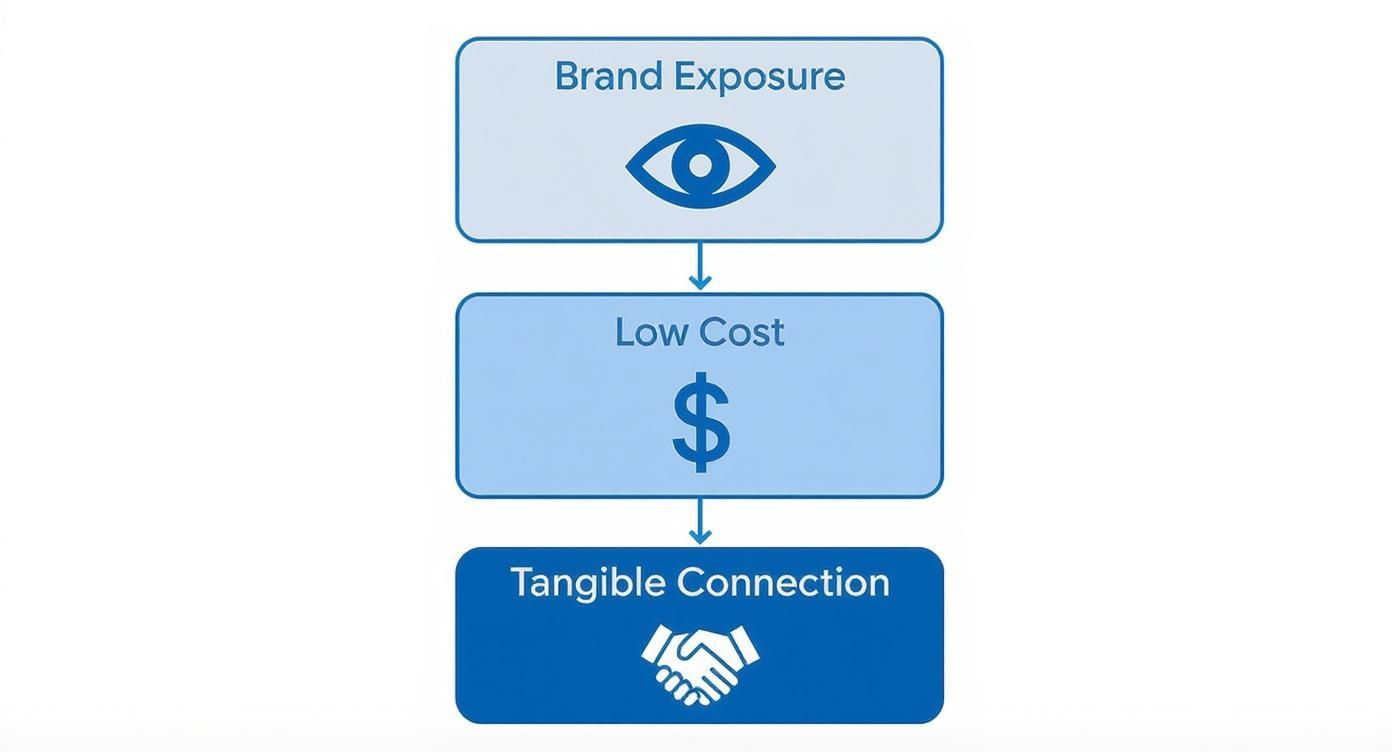
This shows that no matter if you're aiming for widespread brand exposure or a meaningful, tangible connection with your audience, there’s a custom keyring strategy that fits.
Metal: The Premium and Permanent Choice
For a sophisticated, high-end feel, metal keyrings are the go-to. Think of alloys like zinc or brass, which have a satisfying weight and a premium finish. They are perfect for corporate gifts, real estate settlement presents, or automotive promotions where quality and longevity are non-negotiable.
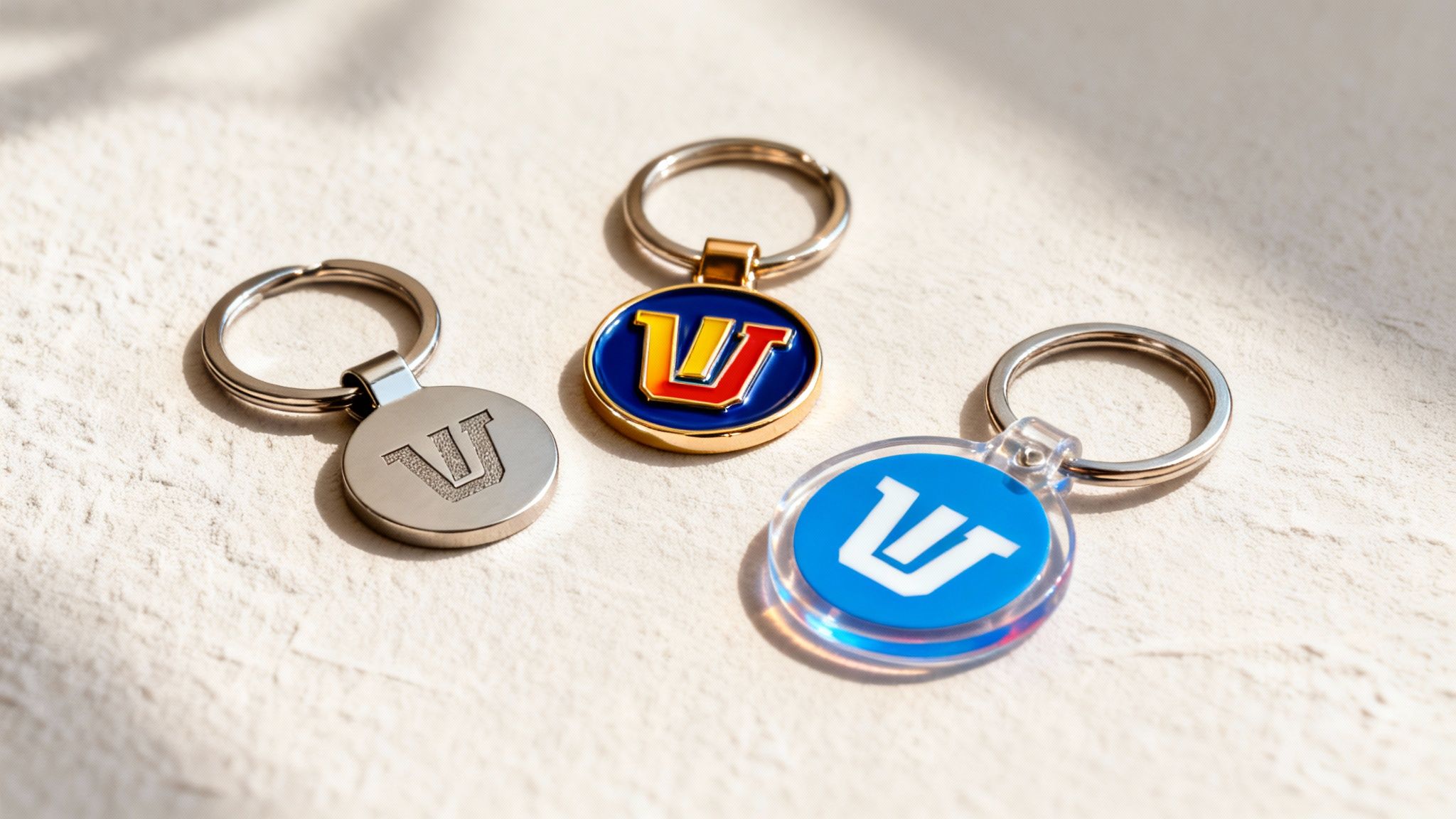
The durability of metal is its biggest selling point. We typically brand them using laser engraving or by filling recessed areas with enamel. These methods ensure your logo won't rub off or fade, becoming a permanent part of the keyring and reflecting a brand that’s established and reliable.
Acrylic: The Clear and Colourful Contender
Acrylic offers a modern, clean, and incredibly versatile canvas for your brand. Because it's often clear, you can print full-colour, high-resolution graphics that seem to float inside the material, creating a vibrant, eye-catching effect. It's also lightweight yet surprisingly tough, resisting shatters much better than glass.
This makes acrylic keyrings ideal for campaigns that rely on detailed imagery or bright colours. They’re a fantastic choice for tourism operators, artists, or tech startups and are a cost-effective way to get a professional finish with even the most complex designs.
PVC: The Fun and Flexible Favourite
When your brand is all about fun, energy, and creativity, soft PVC is your best friend. This rubber-like material can be moulded into almost any 2D or 3D shape, letting you turn your logo or mascot into a tactile, memorable object. Just think of the unique keyrings you see at music festivals, for youth brands, or at product launches.
PVC allows for complete creative freedom. The ability to craft a unique shape that directly represents your product or brand creates a powerful and playful reminder in your customer's pocket.
Their soft, flexible nature also makes them durable and safe for all ages. Better yet, the colours are injected directly into the mould, so they stay bright and won't scratch off over time.
Classic Materials: Wood and Leather
For brands that want to convey tradition, craftsmanship, or an eco-conscious ethos, you can’t go past the timeless appeal of wood and leather.
- Wood: Materials like bamboo or sustainably sourced timber have a natural, rustic charm. They’re perfect for eco-friendly brands, outdoor adventure companies, or artisanal businesses. Engraving on wood creates a beautiful, subtle, and tactile finish.
- Leather: Genuine or high-quality PU leather signifies elegance and durability. It’s a classic choice for executive gifts, heritage brands, and any company wanting to project an image of timeless quality. Debossing (pressing the logo into the material) is a popular branding method that adds to its sophisticated feel.
To help you decide, here’s a quick breakdown of how these common materials stack up against each other.
Comparing Keyring Materials for Your Campaign
This table should give you a clearer picture of which material will not only look great but also align perfectly with your brand's message and budget.
The global market certainly reflects this demand for diverse and personalised accessories. The keychain pendant market, which includes custom keyrings in Australia, was valued at approximately USD 2.14 billion in 2024 and is expected to grow significantly. This growth is driven by consumer desire for unique materials and bespoke designs. You can explore more details in the full keychain market research report.
Ultimately, the best material is the one that aligns with your brand's identity and clicks with your target audience. Consider the message you want to send and choose the material that tells that story most effectively.
Making Your Logo Stand Out with the Right Technique
Picking the perfect material for your keyring is a great start, but it's only half the job. How you get your design onto that material is what truly brings it to life. This choice will shape the final look, feel, and even how long your logo lasts. It's the difference between a design that just sits on the surface and one that feels like it’s part of the keyring itself.
Think of it this way: the material is the canvas, and the branding method is the brushstroke. Each technique offers a completely different finish. Matching the right one to your chosen material and brand style is the key to creating a keyring that people will actually want to use. Let's walk through the most common options we see here in Australia.
Laser Engraving for a Permanent, Premium Finish
Laser engraving is essentially tattooing your logo onto a metal or wooden keyring. A high-precision laser beam carefully etches your design directly into the surface. The result? A permanent mark that will never peel, fade, or rub off. No ink is involved—the laser just removes a tiny top layer of the material to reveal your logo.
This process leaves a subtle, sophisticated, tone-on-tone effect that speaks of quality. It’s an absolute winner for high-end corporate gifts, luxury brands, or any time you want to leave a lasting, classy impression.
Full Colour Printing for Vibrant and Detailed Designs
Got a logo with lots of colours, gradients, or maybe even a photograph? Full-colour UV printing is what you need. Think of it as developing a high-resolution photo right onto the keyring’s surface.
The tech behind it uses UV light to instantly cure the ink as it's applied, locking it in place. This creates a surprisingly durable and scratch-resistant finish. It’s the go-to for acrylic or flat metal keyrings where you need your branding to be bold, bright, and impossible to miss. Every tiny detail is captured with absolute precision.
This technique is a game-changer for intricate designs. Because the UV ink cures instantly, it doesn't bleed, allowing for sharp lines and accurate detail on even the most complex logos.
This means you can get photo-quality results, turning a simple keyring into a piece of pocket-sized art.
Enamel Filling for Classic Colour and Texture
Enamel keyrings have that timeless, classic appeal, much like a high-quality pin or badge. The process starts with a custom-shaped metal base with recessed areas, which are then carefully filled with coloured enamel. This gives the design a fantastic tactile feel and bold, solid blocks of colour.
You’ll generally come across two main styles:
- Soft Enamel: The enamel fills the recessed areas but sits just below the raised metal lines, giving it a textured, dimensional effect you can feel with your thumb.
- Hard Enamel: Here, the enamel is filled right to the top of the metal lines and then polished completely flat. This creates a super smooth, jewellery-quality finish.
This method is brilliant for brands that want a durable, colourful product with a high perceived value.
Debossing and Embossing for a Tactile Impression
For softer materials like leather or silicone, debossing and embossing create a subtle yet powerful statement. Instead of adding colour, these techniques use a custom-made metal die to physically press a design into the material.
- Debossing: This is when your logo is pressed into the material, creating a sunken impression.
- Embossing: This is the opposite, where the logo is pushed up from the material, creating a raised, 3D effect.
This tactile finish adds a real touch of class and is perfect for brands going for a more understated, elegant look. If you want to get into the nitty-gritty of these methods, our guide to custom printing options covers it all in more detail.
Die-Casting for Completely Custom Shapes
Why settle for a circle or square when your keyring could be your logo? Die-casting offers the ultimate level of customisation. We create a unique mould just for you and then inject molten metal to produce a keyring in literally any 2D or 3D shape you can dream up.
This is the path to take when you want to create something truly one-of-a-kind. Think a car-shaped keyring for a dealership or a house shape for a real estate agency. It transforms a simple promotional item into a bespoke icon for your brand.
Getting to Grips with Costs, Quantities, and Timelines
Figuring out the logistics for custom keyrings in Australia can feel a bit like a puzzle, but it really just comes down to a few key pieces: the price, how quickly they can be made, and when they’ll land on your doorstep. Get these straight from the start, and you can plan your budget and schedule like a pro, making sure your keyrings arrive for your big event without any last-minute panic.
The final price tag on your custom keyrings isn’t a single, flat figure. It's built from a few different elements, with the main ones always being the material you pick, how complex your branding is, and—crucially—how many you order.
What Goes Into Your Final Quote?
Think of it like ordering a custom pizza. A simple margherita is one price, but when you start adding premium toppings like prosciutto, truffle oil, and buffalo mozzarella, the cost naturally goes up. Your keyrings are no different.
- Your Choice of Material: A lightweight acrylic keyring is always going to be easier on the budget than a premium, die-cast metal one.
- Branding Method: A straightforward one-colour print is much more cost-effective than intricate laser engraving or a detailed, multi-coloured enamel design.
- Complexity of Design: A standard shape is simple to produce. A completely custom 3D shape, on the other hand, needs its own unique mould, which adds to the initial setup fee.
These setup costs—for things like creating moulds, preparing screens, or calibrating machinery—are a one-off expense. And this is exactly where ordering in bulk becomes your secret weapon.
Economies of scale is the name of the game here. That initial setup cost gets spread across every single keyring in your order. So, the more you make, the less each individual keyring costs you. Ordering 250 units will always give you a much better price-per-piece than ordering just 50.
Understanding this principle is vital for getting the most out of your marketing spend. For a deeper dive into the numbers, this guide on sourcing bulk key rings for your business is a fantastic resource for understanding optimal quantities and costs.
Planning Your Production and Shipping Timeline
Right, so your design is locked in and you’ve placed the order. The clock officially starts on getting your keyrings made and delivered. Timelines here in Australia can vary quite a bit, usually falling somewhere between two to six weeks, but it all depends on a couple of critical factors.
The biggest decider is whether your keyrings are made locally or brought in from an overseas factory. Aussie production can sometimes mean a faster turnaround, especially for simple jobs, but it might come with a higher price tag. Sourcing from overseas often works out cheaper, particularly for large or complex orders, but you’ll need to factor in more time for international shipping and customs.
Here’s a rough breakdown of what the journey looks like:
- Artwork Proofing (1-3 days): First, your supplier sends you a digital mock-up of your design to sign off on.
- Production (10-20 business days): This is the hands-on part where your keyrings are manufactured, branded, and finished.
- Shipping (5-15 business days): Delivery times will depend on where they’re coming from and where you are in Australia—getting a parcel to Sydney is a bit different to sending it to a regional town.
My best advice? To avoid the stress and extra cost of rush fees, always plan your order well ahead of your deadline. The easiest way to get a clear, accurate timeline and cost breakdown is to request a formal quote. It will lay everything out for you, giving you the clarity you need to manage your project with total confidence.
Getting Your Artwork Ready for a Flawless Finish
Getting your design file right is probably the single most important thing you can do to make sure your custom keyring looks as good in real life as it does on your screen. When you nail the artwork from the get-go, you save a ton of time, sidestep frustrating (and sometimes costly) mistakes, and end up with a seriously sharp-looking product.
Think of it like giving a chef a perfect recipe with all the right ingredients prepped. The better the prep work, the better the final dish. Let’s walk through what you need to know to get your design files production-ready.
Vector vs. Raster: The Blueprint and the Photo
Okay, let's talk file types. This might sound a bit technical, but it's actually pretty simple and makes a huge difference. You'll mainly deal with two types: vector and raster. For custom keyrings, one is definitely the star of the show.
A vector file is like an architect's blueprint. It’s built with mathematical lines and curves, which means you can stretch it to the size of a billboard or shrink it to fit on a button, and it will stay perfectly crisp and clear. No fuzziness, no jagged edges. The most common formats you'll see are .AI, .EPS, and .PDF.
A raster file, on the other hand, is like a digital photo. It’s made up of a grid of tiny squares called pixels. It looks great at its original size, but the moment you try to make it bigger, it gets blurry and pixelated. You’ll recognise these as .JPG, .PNG, or .GIF files.
When you're making custom keyrings here in Australia, a vector file is always the gold standard. It's the only way to guarantee super-sharp engraving, clean printing, and precise mould-making for a professional result every time.
Your Pre-Production Artwork Checklist
Before you hit 'send' on those design files, give this list a quick once-over. Sorting these things out now will dodge the most common hold-ups and get your project moving faster. For a deeper dive, check out our simple guide on artwork submission tips for beginners.
- Outline All Fonts: This is a big one. You need to convert any text in your design into a solid shape (this is often called "creating outlines"). It locks the font in, so there's no risk of it being swapped for a generic one if your supplier doesn't have the exact same font installed.
- Set Your Colour Mode to CMYK: Your computer screen uses RGB (Red, Green, Blue) light to show colour. But printers use CMYK (Cyan, Magenta, Yellow, Black) ink. To avoid any surprise colour shifts, make sure your file is set up in CMYK mode.
- Specify Pantone (PMS) Colours: If colour accuracy is critical – especially for a brand logo – you need to provide the Pantone Matching System (PMS) codes. Think of it as a universal recipe for colour that ensures your specific shade of red is the exact same shade of red, no matter who prints it.
- Embed or Send Linked Images: If your design has to include a photo or raster element, make sure it’s embedded in the file or sent along as a separate, high-resolution file (aim for at least 300 DPI).
The Final Check: The Digital Proof
After you’ve submitted your artwork, you’ll get a digital proof back from your supplier. This is your final, most critical checkpoint. It's a digital mock-up showing exactly how your design will look on the keyring you've chosen – size, colours, position, everything.
Look over this proof with a fine-tooth comb. Seriously. Check for typos, make sure the colours are right, and confirm the placement is exactly where you want it. This is your last chance to spot any issues before a whole batch of keyrings gets made. Once you approve it, you’re giving the green light for production, so take a moment to double-check every little detail.
Creative Ways to Use Keyrings in Your Marketing
So, you’ve settled on the perfect design and material. Now for the fun part: figuring out how to get these custom keyrings working for your brand. They’re so much more than a simple handout; a well-thought-out keyring can be the heart of a clever marketing strategy, creating a real-world connection that keeps you top-of-mind.
Think of them less as giveaways and more as tiny brand ambassadors. Each keyring carries your message right into the daily lives of your customers, clients, and community, long after that first meeting. The secret is matching the right keyring to the right occasion to really make an impact.
Memorable Trade Show and Event Giveaways
At a bustling trade show, the challenge is always to stand out in a sea of forgotten brochures and business cards. While others are handing out things that end up in the bin, a high-quality, genuinely useful keyring gets clipped onto a bag or a set of keys right then and there. It’s a practical piece of kit that ensures your brand physically leaves the event with potential customers.
- Pro Tip: Go for a design that does double duty, like a bottle opener or a trolley coin. This immediately adds value and makes it far more likely to be kept and used, giving you ongoing brand exposure for months. A brightly coloured PVC keyring can also make a huge visual splash.
Premium Client and Corporate Gifting
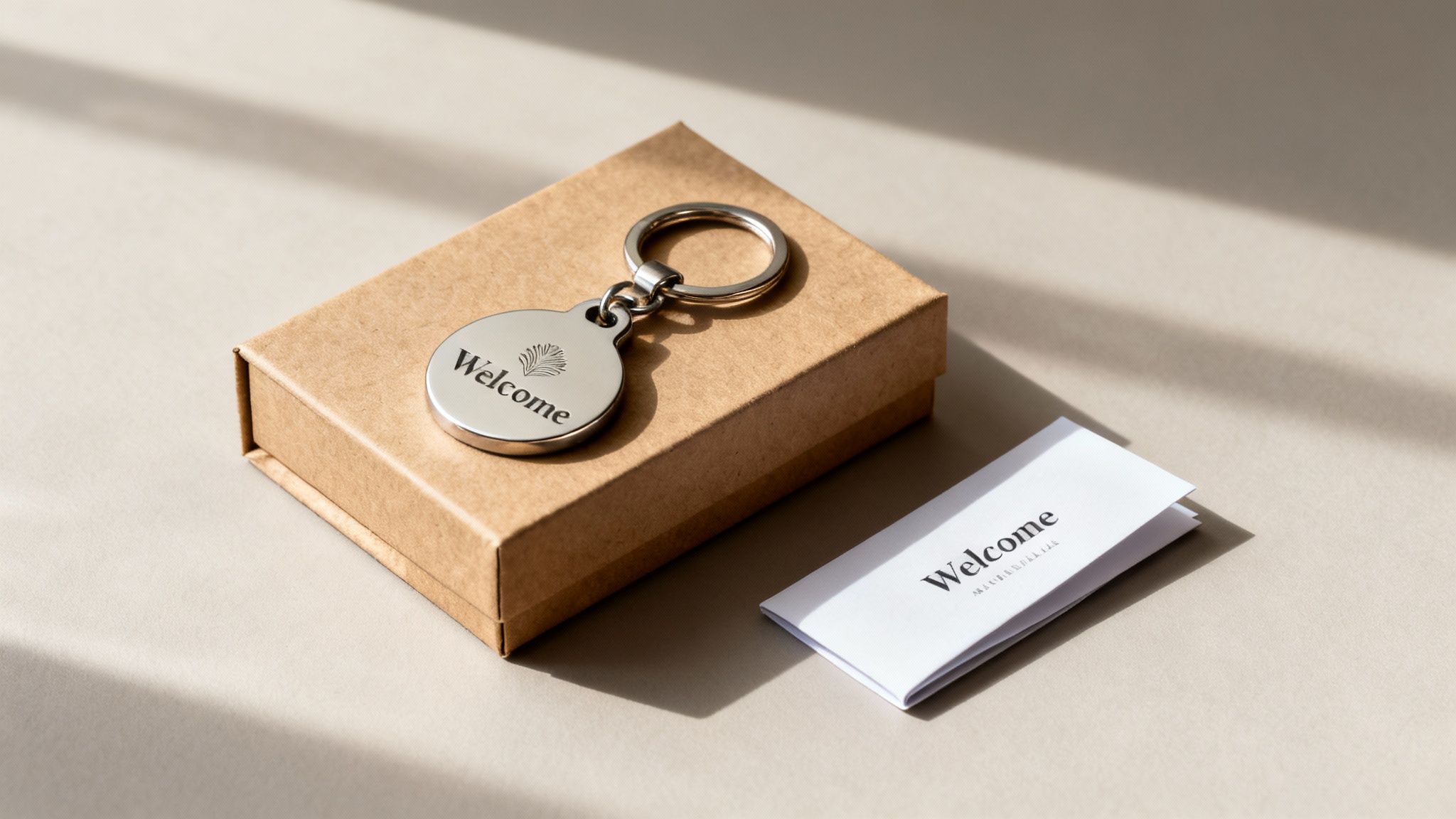
When you want to show you truly value someone, a cheap, flimsy promotional item just won’t cut it. This is where a premium metal or leather keyring really shines. Tucked into a welcome pack for a new client or as part of an end-of-year thank you gift, it sends a powerful message of quality and permanence.
A laser-engraved metal keyring, for example, feels substantial and sophisticated, reflecting the high standards of your business relationship. For Aussie real estate agents, there's nothing more classic than handing over a custom house-shaped keyring at settlement—it's a memorable touchpoint new homeowners will actually use and appreciate.
Building Community and Brand Loyalty
Keyrings are also fantastic for building a sense of belonging. Local sports clubs, university societies, and community groups can use them as affordable merchandise that members are genuinely proud to show off. It’s a simple way to turn a logo into a symbol of identity and shared passion.
Think of a custom keyring as a pocket-sized membership card. It’s a small but constant reminder of being part of a team or community, strengthening that bond every time they grab their keys.
They’re also brilliant fundraising tools for non-profits and charities. Supporters get a low-cost way to show their solidarity, and the organisation gets a walking advertisement for its cause. It's amazing how these little items can generate significant awareness and support for important campaigns.
This approach taps into a clear local trend. Australia holds a notable 4.84% share of the Asia Pacific market for keychain data drives, which points to a strong appetite here for functional, customised accessories. As keyrings become more tech-focused, their marketing potential just keeps growing. You can find more insights on the growth of the keychain industry.
No matter what industry you’re in, using custom keyrings in Australia is a versatile and budget-friendly way to make a lasting impression. From welcoming new customers to rewarding your most loyal ones, they’re a proven tool for building your brand.
Got Questions About Ordering Custom Keyrings? We’ve Got Answers.
When it comes to ordering custom keyrings, a few practical questions always pop up. To help you plan with confidence, we've put together some straightforward answers to the queries we hear most often from businesses across Australia.
Getting these details sorted from the start makes the whole process a breeze.
What’s the Minimum Number of Keyrings I Can Order?
The minimum order quantity, or MOQ, really depends on the style of keyring and the supplier. For straightforward options like printed acrylic keyrings, you can often get started with an order as small as 100 units. This is great for smaller businesses or events where the budget is tight.
On the other hand, for more specialised styles like custom-moulded metal or soft PVC keyrings, the MOQ tends to be higher. You’re typically looking at a minimum of around 100 to 250 units for these. That’s because creating a unique mould involves a fixed setup cost, and it just makes more sense financially when spread over a larger number of keyrings.
Can I Get a Sample Before I Commit to the Full Order?
Yes, and we strongly encourage it! Any good supplier in Australia should be able to provide a sample so you can be 100% happy with the quality before you press go on the full production run. You usually have two ways to do this.
A 'pre-production sample' is a real, finished version of your exact keyring. It’s the best way to physically check the colours, feel the materials, and see the final quality. This might cost a small fee and add a little time to your delivery date, but it offers complete peace of mind.
The other option is to ask for a 'random sample' from a previous job. This is a quick and easy way to gauge the material and print quality of a similar product, and it's often free or costs very little.
Are There Any Eco-Friendly Keyring Options?
Absolutely! With sustainability being a huge focus for Australian businesses and customers alike, the world of eco-friendly promotional products has really opened up. You now have some fantastic choices for keyrings made from sustainable materials.
Some of the most popular green options include:
- Sustainably Sourced Wood and Bamboo: These materials give off a natural, rustic vibe and are biodegradable.
- Recycled Plastics: By giving old materials a new purpose, these keyrings help reduce landfill and environmental impact.
- Recycled Leather: This option delivers a premium, high-end feel while being a far more sustainable choice.
Picking an eco-friendly keyring is a brilliant way to show that your brand cares about the planet.
What if I Don’t Have a Professional Design Ready to Go?
That’s a very common scenario, so don't stress if all you have is a basic logo or a rough concept. Most suppliers of custom keyrings australia have in-house graphic designers on hand to help out.
They can take your low-resolution image or idea and turn it into a print-ready vector file. Sometimes there’s a small fee for this, but it’s often included for free on larger orders. To see how it all works, check out our guide on how to order promotional products. You'll always get a final digital proof to approve before anything goes into production.
Ready to create a custom keyring that gets your brand noticed? The expert team at Simply Merchandise is here to help you every step of the way, from design to delivery. Explore our huge range of custom keyrings today!

