



The most popular advice about eco promotional products in Australia is also the least reliable: choose anything made from bamboo, recycled plastic or a material labelled “compostable”, and the sustainability problem is solved. It isn't. A product's environmental value depends on whether people use it repeatedly, whether its branding survives, and whether Australian waste systems can actually recover it.
That distinction matters for every branded bottle, tote, notebook, uniform and event giveaway. A green leaf on the packaging doesn't prove a realistic recovery pathway, and a technically recyclable item can still go to landfill if recipients can't separate its components or access the right collection stream.
Redefining Sustainable Merchandise Beyond the Label
A sustainable promotional product should answer three practical questions. Will people use it often? Can it last long enough to replace disposable alternatives? What happens when it reaches the end of its useful life? If a supplier can only answer the first question with a material label, the procurement decision isn't complete.
Australia's recovery data makes the issue clear. The National Waste and Resource Recovery Report 2024 states that approximately 56% of packaging was recovered nationally. Recovery varied by material, with paper and cardboard at 68%, glass at 63%, and plastic packaging at only 20%. Those figures don't determine the fate of every promotional product, but they show why material selection and product construction deserve more attention than a generic “eco” label.
A cardboard presentation sleeve may have a more familiar recovery pathway than a mixed-material pouch with plastic film, metal fittings and permanent coatings. A reusable drink bottle can avoid repeated single-use consumption, but only if its shape, lid, durability and care instructions encourage long-term use. The strongest choice is usually the product with a clear purpose and a credible after-use plan.
Practical rule: Specify the behaviour you want to change, not just the material you want to purchase.
Design around use first
Start with the campaign audience. Staff may use a durable bottle or coffee cup every working day. Conference attendees may value a well-made tote that carries equipment after the event. A school may get more value from reusable stationery or hard-wearing apparel than from a novelty item that disappears into a drawer.
A useful durable tote buying guide can help buyers compare fabric, construction and intended use before treating a tote as an automatic sustainable choice. The same discipline applies to every category. Check whether seams, handles, lids, closures and decoration can withstand the expected conditions.
Make the claim match the evidence
Marketing teams should connect merchandise to a wider brand identity rather than making an isolated environmental promise. The guidance on building brand identity with custom promotional merchandise is useful because it places the product, message and audience in the same planning conversation.
A defensible brief records the product's composition, expected service life, packaging, reuse instructions and end-of-life limitations. It also avoids implying that one product can solve a broader waste problem. Sustainable merchandise is credible when the specification, user behaviour and local recovery pathway support the same claim.
Evaluating Popular Eco Materials and Product Categories
Material labels provide a starting point, not a final decision. Australian buyers need to assess the whole product, including mixed components, coatings, decoration, durability and the collection service available to the recipient.
The Department of Climate Change, Energy, the Environment and Water reports that in 2020–21, 86% of packaging placed on the Australian market had good recyclability, yet 35% had good recyclability but wasn't collected or reprocessed, while 44% was sent to landfill. The distinction between designed recyclability and actual recovery is central to promotional procurement.
Drinkware and bags
Reusable drinkware works best when it replaces a clear disposable habit. Stainless steel, recycled aluminium and durable recycled-plastic options each involve trade-offs around weight, insulation, cost, cleaning and end-of-life separation. Specify the intended beverage, washing method and expected handling before choosing the decoration and bottle format.
Tote bags also need a use case. A lightweight bag that tears at the handles won't deliver the same value as a sturdy option that becomes part of a shopper's routine. Don't judge the bag only by its fibre. Review fabric weight, stitching, handle attachment, print durability and whether the recipient can reuse it beyond the campaign.
Bamboo, compostable products and recycled plastic
Bamboo stationery can suit a natural visual identity, but buyers should ask what happens to the pen mechanism, adhesive, coating or printed surface. A compostable product creates a similar problem if the recipient can't access the required industrial composting service. In that situation, a durable reusable product may perform better in practice than a disposable item with a stronger-sounding label.
For a wider product selection, review Simply Merchandise eco products, then request material and disposal information for each shortlisted item. A supplier's catalogue is a sourcing tool, not proof that every product has the same environmental profile.
Textiles deserve particular care. A recycled-polyester shirt may contain recycled input, but the procurement decision should also consider wash resistance, fit, repair, staff hand-back processes and future reuse. For printing considerations, T-Shirt Envy's sustainable printing guide provides useful context on decoration choices, but buyers still need product-specific evidence before making a claim.
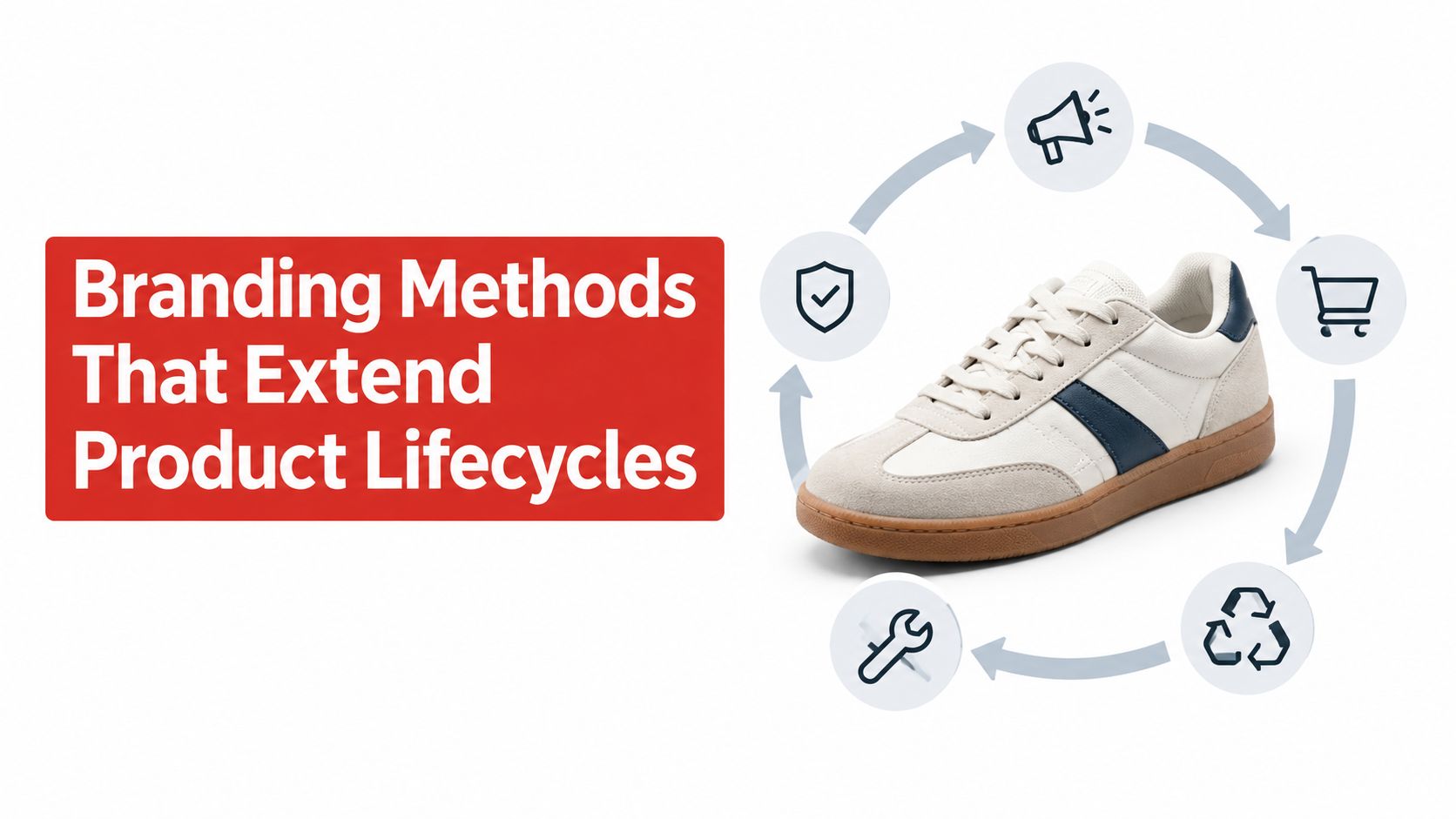
Branding Methods That Extend Product Lifecycles
A promotional item often gets discarded when the logo cracks, fades or peels, even though the base product remains functional. Decoration is therefore part of the sustainability specification. The right method should suit the substrate, expected wear and end-of-life pathway.
Match decoration to the product
Laser engraving suits selected metal, wood and hard-surface products where a permanent mark can remain legible through regular handling. It avoids a separate applied film, although the engraved surface still needs assessment if the product contains coatings or multiple materials.
Embroidery works well for uniforms, caps and heavier textile products. It can create a durable mark, but thread, backing material and garment construction should be included in the end-of-life review. A repairable garment with resilient branding is more useful than apparel that looks tired after limited washing.
Sublimation and digital printing can deliver detailed artwork on suitable fabrics and coated surfaces. Ask for wash and abrasion guidance rather than assuming that a vivid initial result will remain intact. The custom printing options available for a product should be evaluated alongside the item's care instructions.
Protect the recovery pathway
Avoid adding unnecessary trims, laminated patches or permanent coatings that complicate separation. A recyclable bottle may no longer have a simple recovery route if its decoration, lid, sleeve and adhesive are treated as one inseparable construction. That doesn't make every decorated product unacceptable, but it does mean the claim must describe the whole item accurately.
Use a short approval process before artwork goes to production:
- Confirm the base material and all attached components.
- Select a decoration method suited to the expected wear.
- Request wash, abrasion or care guidance where relevant.
- Check whether the branding affects separation or processing.
- Write the environmental copy around the verified product, not the strongest possible interpretation.
The Australian Competition and Consumer Commission's environmental claims guidance requires claims to be truthful, accurate and supported by reasonable grounds. A durable logo can help extend use, but it doesn't justify calling the entire product recyclable if mixed materials or permanent decoration prevent realistic processing.
Better specification: “Designed for repeated use, made with the stated material, and subject to local disposal conditions” is more defensible than an unqualified claim that the item is “fully sustainable”.
Navigating Cost and Lifecycle Considerations
The cheapest unit price can conceal the most expensive procurement decision. A low-cost giveaway that fails quickly, gets ignored or requires repeated replacement may create less value than a smaller order of products people keep and use. Compare cost per use, not only cost per unit.
That approach changes the questions asked at approval stage. Instead of asking how many items fit within the budget, ask what behaviour each item should support, how long it needs to remain presentable, and whether the audience will use it after the event. A premium bottle for a daily commuting campaign may make more sense than a large volume of disposable novelties. A repairable uniform can be more practical than a cheaper garment that needs early replacement.
Treat regulation as a procurement input
State restrictions reinforce this shift. South Australia, Queensland, the Australian Capital Territory, New South Wales and Victoria have introduced restrictions on selected single-use plastics at different times. Victoria's rules, which began on 1 February 2023, cover items including plastic straws, cutlery, plates, stirrers and expanded-polystyrene food and drink containers, and apply even to some biodegradable and bio-based plastics, as described by the Australian Bureau of Statistics circular economy indicator.
The lesson isn't that every promotional product is regulated. It's that event teams shouldn't assume a “biodegradable” label makes a disposable item automatically suitable. Reusable bottles, totes, food containers and longer-life merchandise are often easier to align with waste-reduction objectives because they shift the campaign away from single-use consumption.
Build a lifecycle comparison
Use a procurement worksheet with these fields:
- Purpose: What recipient behaviour will the item support?
- Service life: How should the product perform under normal use?
- Retention: Is it useful after the event or campaign?
- Maintenance: Can users wash, repair or reuse it easily?
- Recovery: Can components follow a realistic local disposal route?
- Evidence: Can the supplier support every environmental statement?
The products by price view can help establish budget options, but price should be only one column in the comparison. Add packaging, freight, expected replacement, artwork durability and disposal guidance before deciding that a lower unit cost represents better value.
Ensuring Compliance and Avoiding Greenwashing Risks
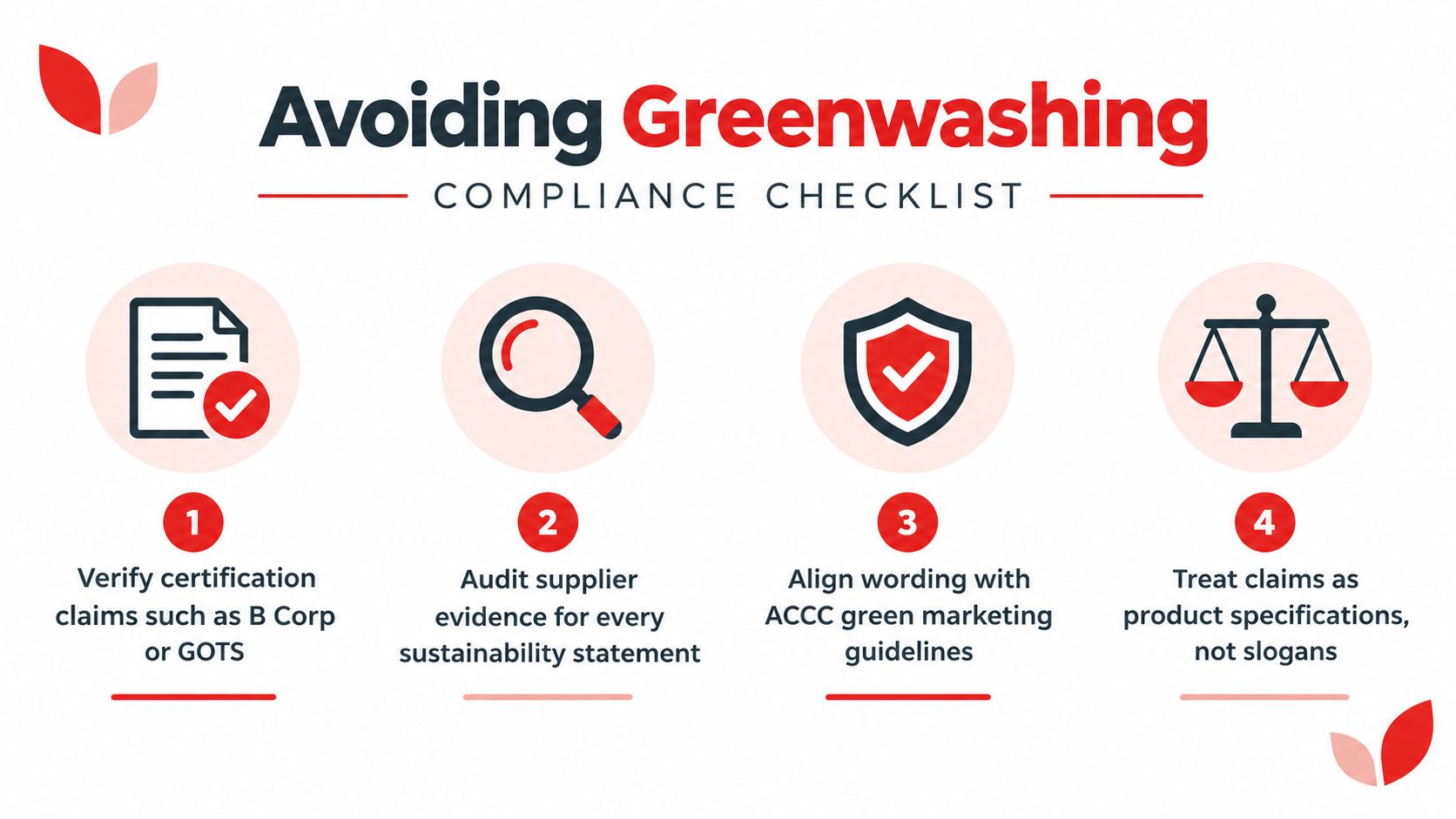
Environmental language belongs in the product specification, artwork approval and campaign review. It shouldn't appear at the end as a creative flourish. The ACCC states that environmental claims must be truthful, accurate and supported by reasonable grounds, and warns that omissions, imagery, colours and logos can create a misleading overall impression even when individual words are technically defensible. Its guidance on environmental and sustainability claims should be part of the approval workflow.
Create an evidence pack
Request the same documentation you'd expect for any material or performance claim:
- Composition: A product datasheet listing the base material, coatings, trims, lids and other components.
- Recycled content: The exact component and proportion claimed as recycled, supported by appropriate evidence.
- Certification: The relevant certificate, standard, certificate holder and chain-of-custody information where applicable.
- Performance: Care instructions, durability information and any testing relevant to the intended use.
- Packaging: The packaging materials, quantity and disposal guidance supplied with the item.
- End of life: A clear explanation of what users should do locally, including limitations around council or workplace collection.
A claim such as “made with recycled PET” is stronger when it identifies the component and exact verified content. “Recyclable” also needs qualification where collection, sorting or processing isn't available to all recipients. Don't use a broad claim to cover a product that contains several materials with different disposal outcomes.
Review the complete presentation
Greenwashing risk doesn't come only from copy. A recycled-content statement beside a green leaf icon or “planet-friendly” badge can imply a broader environmental benefit than the evidence supports. Review the artwork, landing page, packaging and sales script together.
For buyers working with certified goods, an explanation of what SGS certification actually means can help distinguish independent verification from a supplier's internal description. Certification still needs to match the specific product and claim. A certificate for one material or facility doesn't automatically validate every item in an order.
Approval test: If a reasonable recipient could misunderstand the claim after seeing the product, imagery and wording together, qualify the claim or remove it.
Keep the evidence with the purchase order and artwork approval. That record helps marketing, procurement and suppliers use the same approved language, while disposal instructions give recipients a practical way to act on the campaign's message.
Streamlining Your Eco Procurement with Simply Merchandise
Good sustainable procurement is detailed, but it shouldn't become unnecessarily difficult. Teams need a partner that can discuss product purpose, material composition, decoration, artwork, delivery and budget as connected decisions rather than separate transactions.
Simply Merchandise is one option for Australian organisations comparing branded merchandise across categories such as drink bottles, tote bags, stationery, uniforms and event products. Its service model includes free artwork layouts, unlimited revisions, in-house embroidery and access to screen printing, digital printing, sublimation, laser engraving and other decoration methods. Those capabilities are useful when the branding method needs to support product longevity rather than just deliver an attractive first impression.
The practical starting point is a structured brief. Include the audience, campaign purpose, expected use, preferred materials, prohibited materials, packaging requirements, artwork deadline and the environmental wording you intend to publish. Ask the supplier to confirm composition, decoration, care guidance and disposal limitations before production.
Make the order easier to defend
A procurement partner can also reduce internal friction by presenting samples, artwork proofs and product alternatives in a consistent format. That gives stakeholders something concrete to compare. A reusable bottle, tote or uniform can then be assessed for grip, weight, stitching, print quality and usability, not just judged from a catalogue image.
Budget conversations become clearer when the team separates product cost from lifecycle value. A lower-cost item may be appropriate for a short, high-volume interaction, while a smaller quantity of durable merchandise may better suit staff onboarding, client gifting or a long-running community programme. The decision should follow the use case and evidence, not a blanket preference for one material.
Turn sustainability into a reliable brand experience
Recipients notice whether a product is useful, comfortable and well made. They also notice when a campaign makes a claim that doesn't match the disposal instructions. Accurate copy, durable decoration and a realistic recovery explanation give the brand a stronger foundation than a collection of vague environmental slogans.
Before approving your next order, prepare the evidence checklist, shortlist products by intended use and request artwork that reflects the verified facts. Then submit the project through Simply Merchandise's request for a quote with your specifications attached, so the product, branding and compliance requirements can be assessed together.
Simply Merchandise offers Australian-wide branded merchandise, artwork support and durable decoration options for eco-focused campaigns, from reusable drinkware and totes to stationery and apparel. Visit Simply Merchandise to request product guidance and build your next order around repeated use, clear evidence and realistic Australian disposal pathways.

