


Your biggest event is coming up. The stand design is sorted, the team shirts are pressed, and the messaging is clear. Then the doors open and the small details start to work against you.
A paper badge curls at the corners. A pin tears a blouse. Someone from your sales team flips their name tag around and spends half the morning straightening it. A visitor squints, misses the person’s name, and walks past. None of these moments feel dramatic. Together, they change how organised your brand looks.
That is why a name tag badge holder deserves more attention than it usually gets. It is not just a sleeve for a printed insert. It is part of the first impression, part of wayfinding, part of security, and part of how comfortably your team moves through a busy day.
Beyond the Name An Introduction to Strategic Identity
At a conference, people make quick judgements. They notice whether staff look approachable. They notice whether names are readable. They notice whether the event feels put together.
A flimsy badge sends the same signal as a wrinkled pull-up banner. It suggests the details were an afterthought.
A good name tag badge holder does the opposite. It frames identity neatly, keeps information visible, and helps every introduction feel easier. For a marketing manager, that matters because the badge is not only functional. It is part of the brand experience.
Think about a trade show in Sydney. Your team is meeting prospects every few minutes. If each staff member has a clean, consistent badge presentation, visitors can identify who to approach, remember names more easily, and feel more confident engaging. The holder becomes a quiet helper in every conversation.
This is the same logic used in hospitality and retail. Small presentation choices influence whether people trust the experience. If you work in food service or venue marketing, the thinking behind customer touchpoints in this guide on how to attract restaurant customers is useful because the same principle applies here. People respond to signals of care, clarity, and consistency.
There is also a practical side. Badge holders have emerged as a cost-effective alternative to custom name tags in professional settings because they can be reused with updated inserts, which is useful for organisations with changing staff, events, conferences, and temporary access needs, as outlined by NameTag’s overview of badge holders in the professional world.
For teams choosing across a wider range of event and workplace items, it helps to look at badge holders as one piece of a broader branded system alongside lanyards, uniforms, signage, and other promotional products.
Key takeaway: A name tag badge holder is a small object with a large job. It supports professionalism, smoother networking, and a more organised brand presence.
The Anatomy of a High-Impact Name Badge Holder
A strong holder works like a picture frame for professional identity. The insert is the artwork. The holder decides whether people see it clearly, whether it stays protected, and whether it retains its appearance throughout the day.
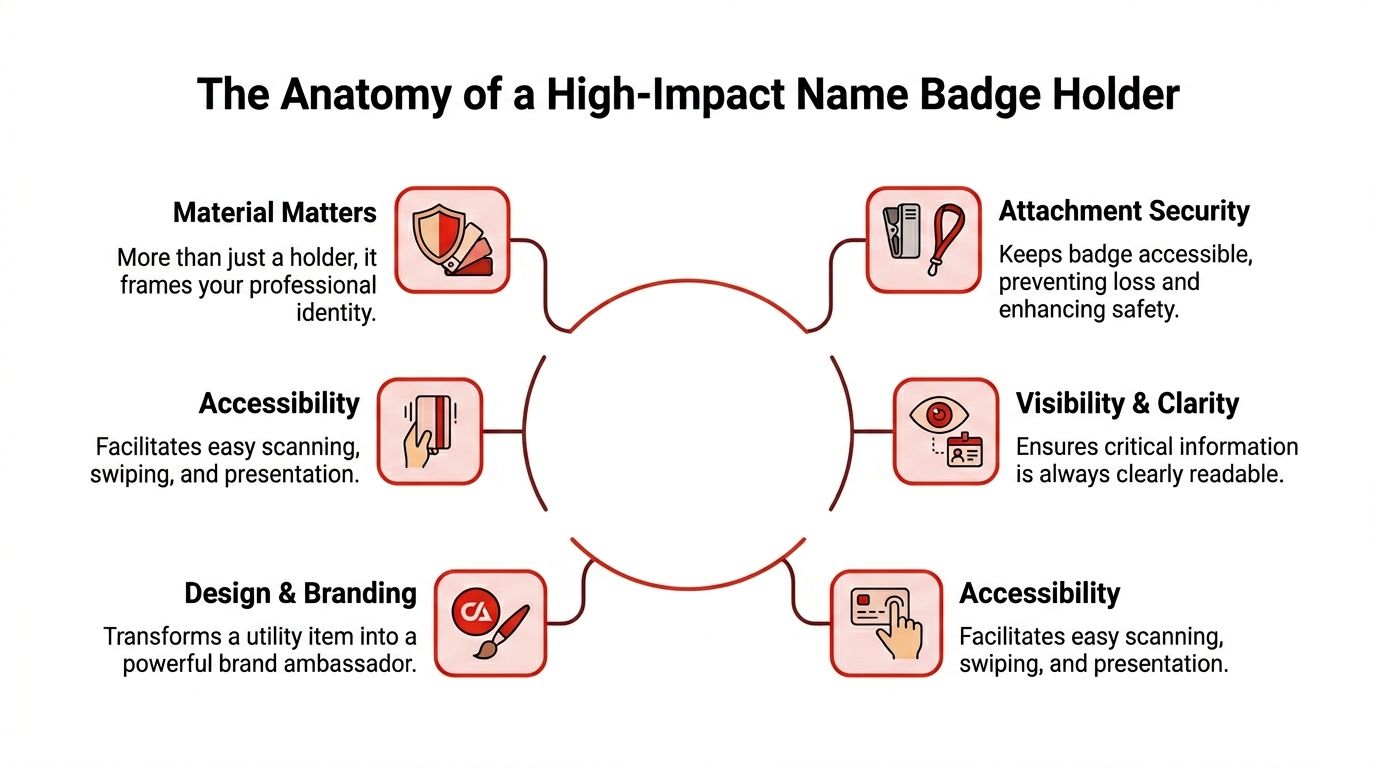
Start with the window and body
The front window needs to be clear enough for names, logos, roles, or access details to remain easy to read under changing light. If the material clouds, creases, or warps quickly, your badge stops doing its job.
The body of the holder also affects feel. A holder that is too thin can curl, collapse, or cling to the insert. A better one keeps its shape and helps the badge sit flat against the wearer.
When readers get confused here, it is usually because all plastic can look similar online. In practice, the difference is obvious. One feels like disposable packaging. The other feels like equipment.
Check the edges and slot punch
The edges do more work than most buyers realise. Weak seams split under repeated handling. Reinforced seams hold up better when a holder is clipped on, removed, packed away, and used again.
The slot punch matters too. That small opening carries the stress of the entire badge every time someone attaches a clip or lanyard. If it is poorly finished, tearing starts there first.
Use this quick quality check when comparing products:
- Look at the seam line: A neat, firm edge usually signals better durability.
- Flex the holder gently: It should bend without feeling flimsy.
- Inspect the slot area: The opening should look clean and strong, not ragged.
- Test insert loading: The card should slide in without a struggle.
Texture, access, and user experience
A holder is not only about storage. It is also about access. Staff often need to show a badge, scan it, or remove the insert for updates.
That is why surface texture can matter. A textured back can help stop inserts from sticking inside the holder. This sounds minor until you are swapping credentials for speakers, contractors, or multi-session attendees and every second counts.
Branding belongs in the anatomy discussion too. A plain holder may be enough for utility use. A branded holder or coordinated badge system turns the item into a visible part of your event identity. If you are matching holder styles, lanyards, and print finishes, it helps to review available custom printing options before you order.
Practical tip: Treat the holder like any other customer-facing branded item. If you would not approve the same material quality for a brochure cover or welcome pack, do not approve it for a badge system.
Choosing Your Perfect Badge Holder Type and Material
This is the point where many buyers either overspend on the wrong product or save money in the wrong place.
A smart choice starts with one question. How will the badge be used? Daily office wear, a school event, a three-day expo, and a volunteer campaign all ask different things from a holder.
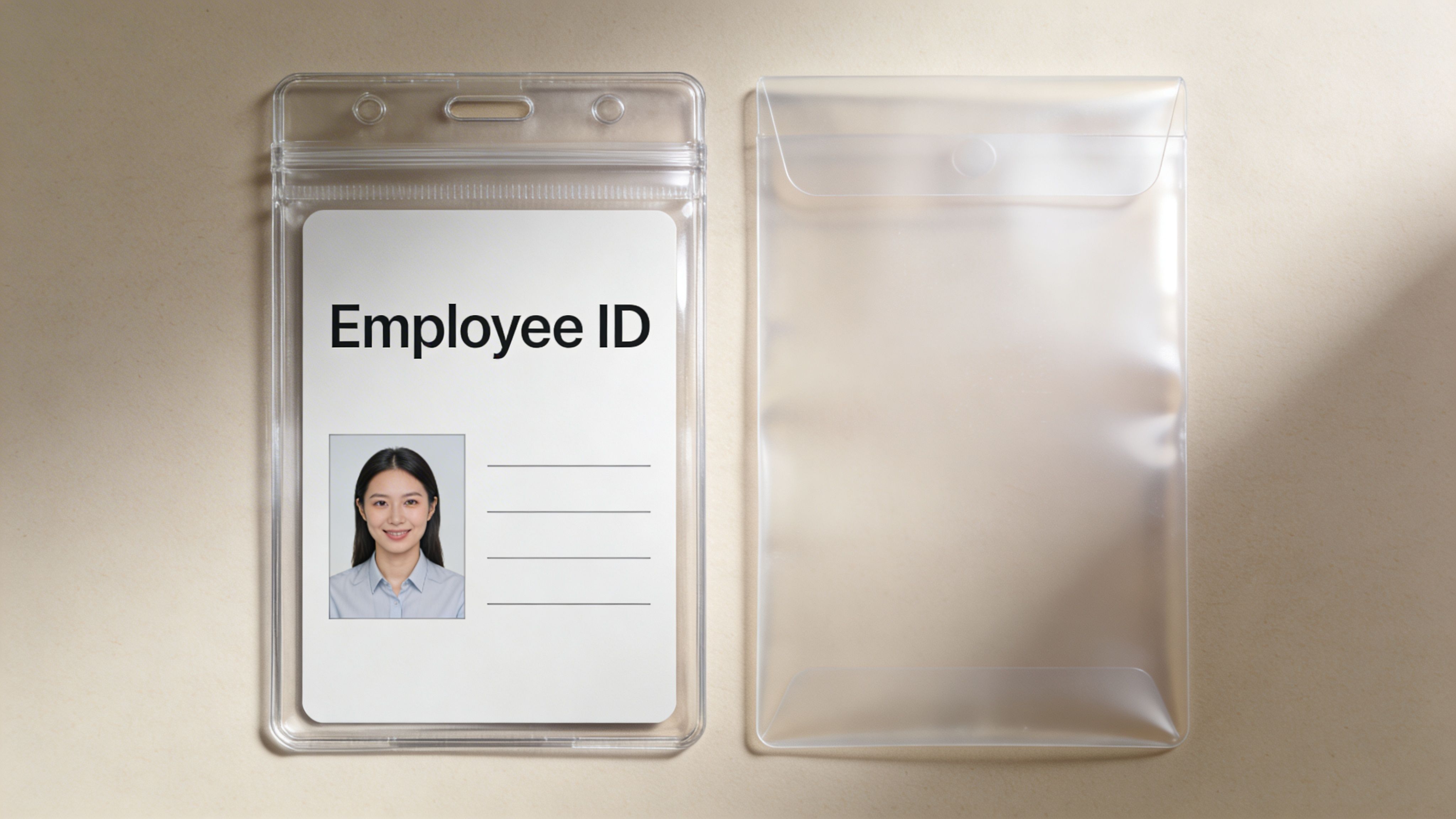
Rigid or flexible
Rigid plastic holders are a strong fit when the card itself matters. Think office access cards, staff IDs, or environments where a badge is swiped often. They protect the insert well and feel structured in the hand.
Flexible vinyl sleeves suit many events because they are lighter, easier to pack in volume, and often more comfortable for long wear. They are especially useful when the insert is printed for a short campaign, conference, or seasonal activation.
Here is a simple side-by-side view.
Thickness changes performance
For Australian trade shows in humid coastal cities like Sydney or Brisbane, heavy-duty horizontal name tag badge holders with 0.040" (1.2mm) total vinyl thickness and a textured back significantly outperform standard 0.020" (0.5mm) holders. The thicker, textured vinyl can reduce insert sticking by up to 40% and helps maintain credential legibility over multi-day events, preventing reprint costs that can affect 15-20% of attendees using flimsy holders, according to Specialist ID’s product guidance on heavy-duty event badge holders.
That is one of the clearest examples of why material choice affects ROI. A holder that looks slightly cheaper on day one can create confusion, admin time, and replacement work by day three.
Match the holder to the job
Use these selection cues when narrowing options:
- For multi-day expos: Choose thicker vinyl with a textured back if humidity, frequent handling, or insert changes are likely.
- For permanent staff IDs: Consider rigid holders for stronger shape retention and card protection.
- For one-off events: Flexible sleeves often strike the right balance between presentation and practicality.
- For sustainability goals: Look into recycled or lower-impact options through a supplier’s eco products range.
Do not ignore orientation and insert size
Horizontal and vertical formats are not interchangeable in practice. A horizontal holder often works well for event names and large-print readability. A vertical holder can suit photo IDs or spaces where a longer format hangs more naturally.
Many teams get caught out when they approve artwork before confirming the holder size. Then the printed insert feels cramped, the font becomes too small, or key details sit too close to the edge.
Buyer’s rule: Confirm holder size first, then build the insert layout around it. Not the other way around.
Mastering Attachments for Comfort and Compliance
The holder gets attention. The attachment decides whether people enjoy wearing it.
That often matters more than anticipated. If a badge is uncomfortable, heavy, awkward, or unsafe, people adjust it all day. They hide it under jackets, clip it in the wrong place, or remove it altogether. Every one of those behaviours reduces visibility.
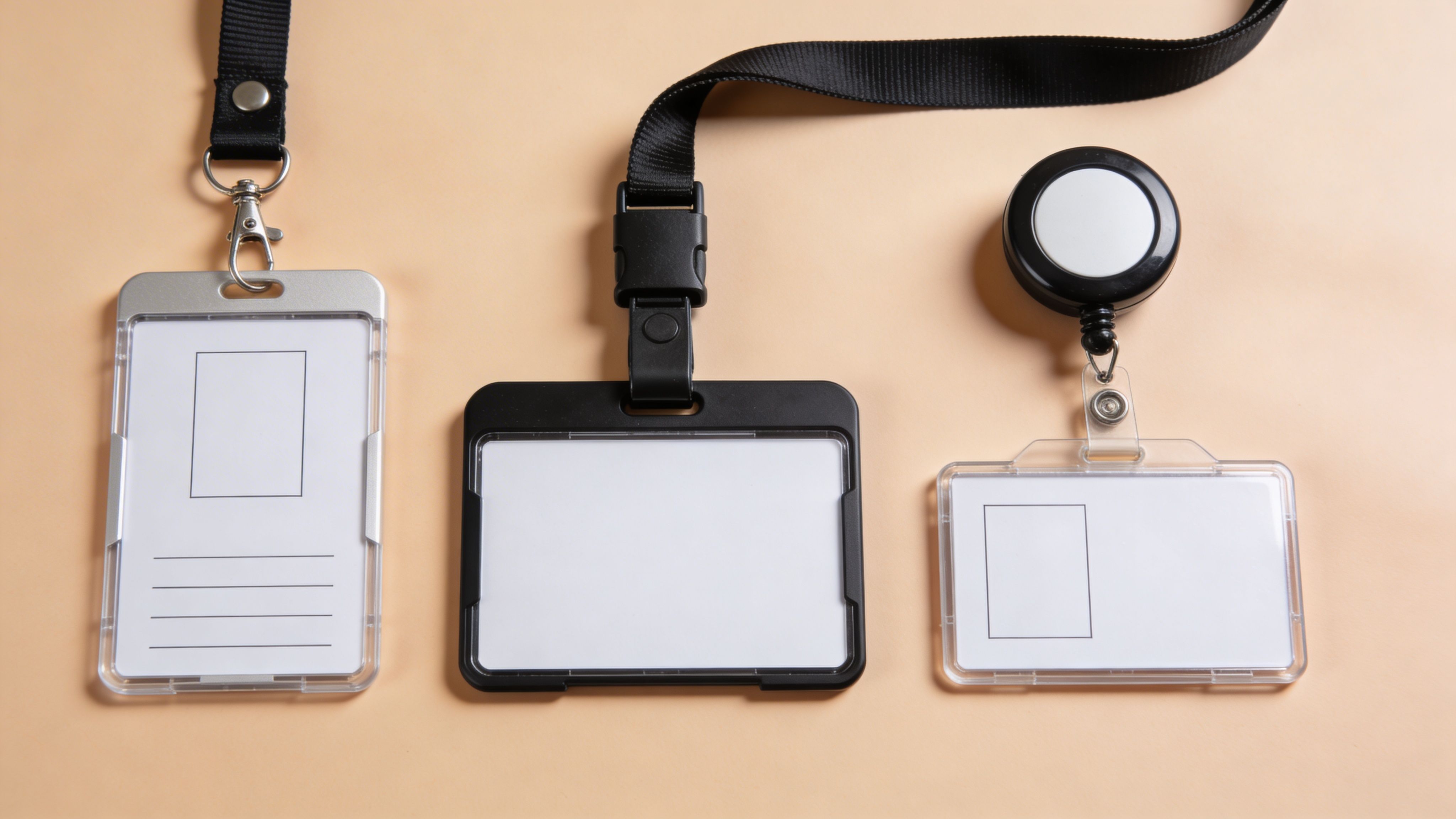
Pins, clips, magnets, and reels
Pins are common and familiar, but they can damage clothing. That may be fine for budget event wear, but less ideal for corporate uniforms or premium front-of-house roles.
Clips are easy and practical. They attach quickly and suit many event settings. The trade-off is movement. A clip-on badge can swing or flip if the user is walking quickly.
Magnets feel polished and fabric-friendly. They are often a smart choice for retail, hospitality, and client-facing teams where garment presentation matters.
Retractable reels are different again. They are useful when the badge also functions as an access card. Staff can swipe, tap, or present credentials without unclipping the whole setup.
Why retractable options matter in active settings
Retractable name tag badge holders with stainless steel cords offer superior durability for active environments, rated for over 15,000 stretch cycles and an 8oz capacity. This design reduces attachment failure by 30% compared to static holders and can lower credential loss incidents by 65% at high-traffic events, making them a smart choice for visible ID requirements, according to this video overview of retractable badge holder performance.
For a marketing or HR manager, the practical benefit is simple. Fewer failures mean fewer interruptions. Staff keep moving, access stays smooth, and your event desk is not constantly solving small problems.
Australian workplaces and events need badge systems that support visibility without creating unnecessary snagging or wearability issues. In active environments, lanyard choice becomes part of that conversation.
When you are dressing teams in branded apparel, it helps to review how badges interact with collars, hi-vis gear, and outer layers such as work wear and hi-vis.
Use this attachment logic:
- Corporate office access: retractable reel for swipe convenience
- Retail or reception: magnetic attachment for cleaner presentation
- Large events: lanyard-compatible holder for visibility and easy issue
- Active or movement-heavy settings: prioritise secure attachments and safety-conscious features such as breakaway options
Comfort tip: The right attachment should disappear into the day. If staff keep noticing it, the system needs work.
Unlocking Your Brand Potential with Customisation
A plain badge holder identifies a person. A customised badge system identifies a brand.
That distinction matters at conferences, careers fairs, onboarding sessions, community campaigns, and internal events. When your badges, lanyards, colours, and print layout all speak the same visual language, people remember the organisation more easily.
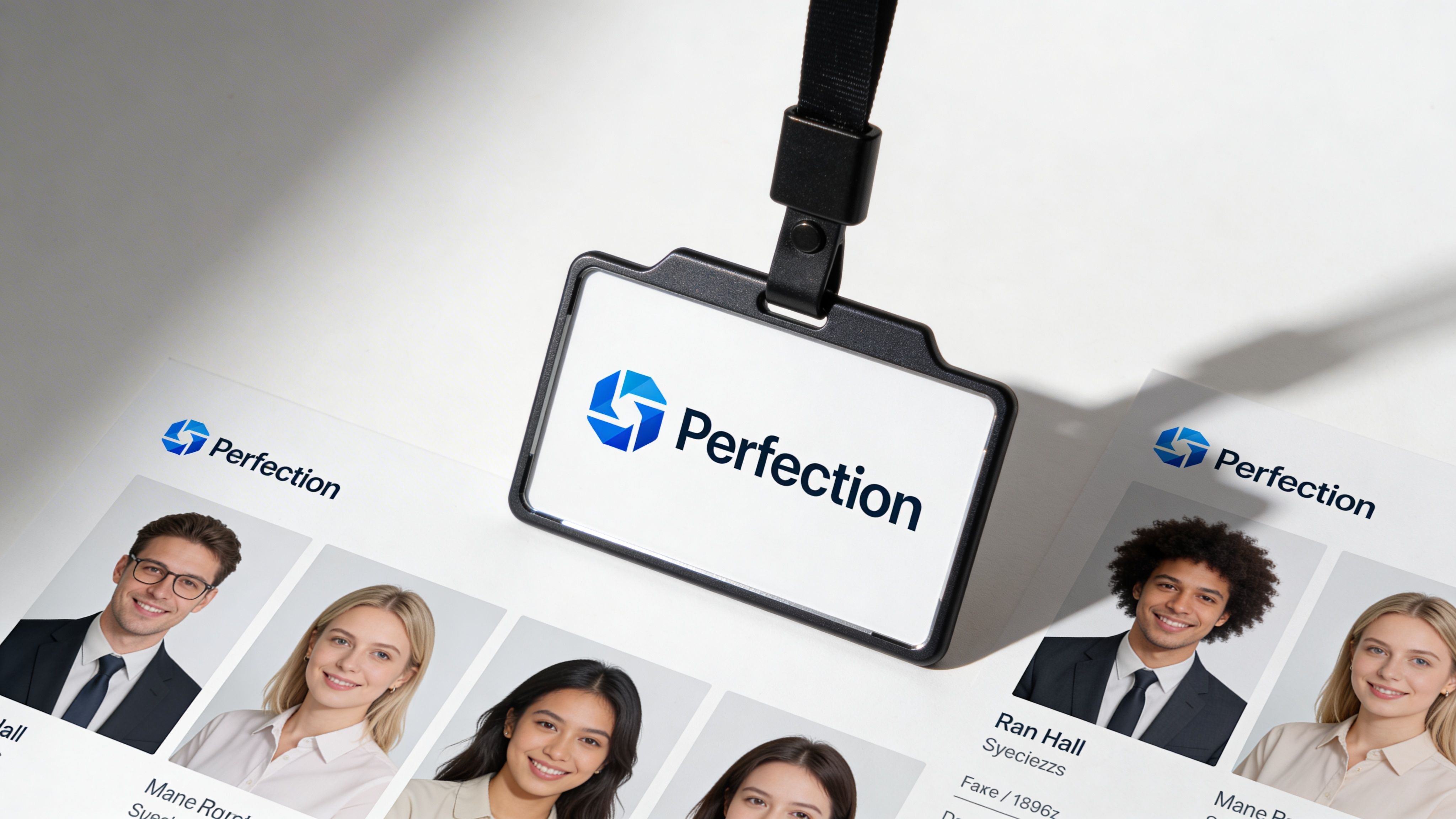
Turn a utility item into a brand cue
A badge usually sits at chest height. That makes it one of the most visible branded elements on a person during conversation. It is seen in greetings, booth chats, photos, registration queues, and speaker sessions.
Customisation can happen in several places:
- On the insert: logos, names, job titles, QR codes, role labels
- On the holder or accessory: colour accents, printed details, shaped elements
- On the lanyard: repeated logo pattern, campaign theme, department colour
If you are refining logo placement, looking at examples of prominent brand logos can be a useful visual reminder that recognisability often comes from clarity and repetition, not from over-designing.
Use colour as a navigation tool
Customisation should do more than make the badge look nice. It should help people move through the environment.
Colour coding is one of the easiest wins. Different colours can distinguish staff, speakers, sponsors, media, volunteers, contractors, or VIP guests. When done well, this reduces confusion without adding clutter.
A badge system becomes part of event operations, not just event décor.
Build a consistent branded set
Many campaigns improve by following this logic. Teams stop ordering the holder, lanyard, and insert as separate decisions and start treating them as one system.
For businesses wanting coordinated merchandise, branded ID solutions can sit alongside uniforms, welcome packs, expo items, and other personalised promotional products. One option in the Australian market is Simply Merchandise, which offers branded merchandise and custom decoration methods that can be applied across related campaign items.
Strong customisation usually follows three rules:
- Keep names readable first. Branding should support visibility, not crowd it.
- Repeat core brand colours carefully. Too many colours make the badge harder to scan.
- Design for real use. A beautiful insert that wrinkles, scratches, or becomes unreadable under event lighting is not a good design.
Branding reminder: The best badge designs do two jobs at once. They help strangers connect quickly, and they reinforce who your organisation is.
Badge Holders in Action Across Australian Industries
The value of a name tag badge holder becomes clearer when you see how different organisations use it.
A Sydney trade show organiser might choose horizontal event holders with distinct colour coding for exhibitors, speakers, and staff. That simple visual system helps attendees find the right person faster and gives the floor a more organised feel.
A Perth school has a different need. Staff and visitors need visible identification that is easy to wear through a full day of movement, supervision, and admin. In that setting, comfort and secure attachment matter as much as presentation. A holder that survives daily handling reduces the friction of routine school operations.
A Melbourne retailer may lean toward cleaner-looking badge solutions for front-of-house staff. The aim there is trust. When a customer can instantly identify who works there, the interaction feels more confident and more professional.
Sustainability is becoming part of the brief
Government agencies and nonprofits are adding another layer to the decision. They still need readable, professional identification, but they may also need purchasing choices that align with sustainability goals.
For Australian government and nonprofit campaigns, there is a 40% year-over-year increase in searches for “biodegradable badge holders Australia”, and eco-friendly badges can yield a 22% higher ROI for nonprofits by enhancing community trust, according to PC Name Tag’s badge holder overview.
That tells you something important. Badge holders are no longer only a logistics purchase. In some sectors, they are becoming a reflection of procurement values and public accountability.
The common thread across industries
The setting changes, but the buying logic stays consistent.
- Events need flow
- Schools need safety and clarity
- Retail needs trust and presentation
- Nonprofits and government often need sustainability alignment
A badge holder works best when chosen for the environment, not from a generic catalogue default.
Smart Sourcing and Ordering Your Badge Holders
Most badge holder problems begin before the order is placed. The issue is not the item itself. It is a rushed brief, a missing sample, or an assumption that all holders are basically the same.
Order with a procurement mindset
Start with use case, not price. Ask who will wear the badge, how long they will wear it, whether it needs scanning access, and what the environment will do to the material.
Then check these points:
- Confirm the attachment type: match it to clothing, movement, and safety needs
- Approve the insert size first: this avoids layout issues later
- Request samples where possible: photos rarely reveal seam quality or feel
- Plan lead times for custom branding: especially if lanyards and inserts are part of the same rollout
- Order before stock pressure hits: reactive ordering often creates avoidable stress
According to ID Wholesaler’s 2023 survey of over 250 ID badging programs nationwide, nearly 70% of organisations delay reordering essential badging supplies until stock is nearly depleted, which points to a reactive procurement pattern that can disrupt operations (ID Wholesaler survey findings).
Keep compliance and risk in view
In Australia, a significant gap exists between business needs and available products, with over 200 unanswered queries on business forums in the last year about WHS-compliant badge holders. The same source states that WorkSafe Australia reported 1,247 workplace incidents involving identification hazards in 2025, making secure, safety-conscious attachments an important step in reducing organisational liability, according to NameTag’s guide page on badge holder sizing.
That makes your final review straightforward. If the badge is hard to wear, easy to lose, or poorly matched to the workplace, it is not a bargain.
Final checklist: Good badge sourcing balances visibility, durability, comfort, branding, and WHS considerations. Miss one, and the system gets weaker.
If you are planning staff IDs, event credentials, onboarding kits, or branded lanyard sets, Simply Merchandise can help you compare holder styles, decoration options, and attachment choices so your badge system fits the way your team works.