



Custom caps are one of the most effective ways to get your brand out there. Think about it: you're turning a simple piece of headwear into a walking advertisement that people actually want to wear. They perfectly blend everyday function with some serious promotional power, giving you a versatile canvas for your logo.
Getting it right, though, comes down to nailing the right style and design for what you're trying to achieve.
Your Guide to Designing the Perfect Custom Caps
Welcome! If you're looking to create custom caps that genuinely capture your brand's vibe, you've come to the right place. This guide is your complete roadmap, walking you through every important step—from picking the right cap style and fabric to mastering the different branding techniques. We'll even pull back the curtain on preparing your artwork, how pricing works, and what to expect for production timelines here in Australia.
By the time you're done reading, you'll have all the know-how to design headwear that not only looks fantastic but also works hard for your business, whether it's for an event, your team's uniform, or a retail collection. Let's get started.
Understanding The Basics
First things first: a cap is so much more than just something to put on your head. It’s a statement. Every single element—the fabric, the stitching, the logo placement—comes together to send a message.
The whole process breaks down into a few key stages:
- Style Selection: This is about finding the right silhouette for your audience. Are they more of a classic baseball cap crowd or a trendy snapback type?
- Material Choice: The fabric needs to match the cap's purpose. Breathable cotton is great for everyday wear, while a tough polyester is better for sports or outdoor work.
- Branding Method: This is how your logo comes to life. Do you want the premium, textured feel of embroidery, or the vibrant, detailed look of printing?
- Artwork Preparation: Getting your logo or design in the right digital format is crucial for a sharp, professional finish.
A well-designed custom cap is essentially a mobile billboard. It generates brand impressions every single time it's worn, offering an incredible return on investment for visibility and team pride.
Making an Informed Decision
Jumping into all these options can feel a bit overwhelming, but it’s really just a matter of breaking it down. Think of it like building a custom car—you wouldn’t just throw random parts together and hope for the best. Every component should be chosen with the final use and the wearer in mind.
For example, a clean, embroidered cap is a perfect fit for a corporate uniform, while a bold, screen-printed trucker cap is a fantastic choice for a casual event giveaway. If you need a hand turning your ideas into a finished product, you might want to look into professional custom product design services.
To help you get a quick start, here’s a simple table breaking down the most popular styles.
Quick Guide to Custom Cap Choices
This little cheat sheet gives you an at-a-glance comparison of popular cap styles and where they shine, helping you make a fast, informed decision.
Hopefully, that gives you a clearer picture of which direction to head in. Each style has its own personality, so picking the one that aligns with your brand is the first step to creating a cap people will love.
Choosing Your Ideal Cap Style and Material
The first, and most important, decision you'll make when creating custom headwear is picking the right style and material. This isn't just about looks; it's about feel, durability, and how your brand comes across. Think of it like a builder choosing tools – you need the right one for the job. A cap for a corporate golf day has very different needs than one for a construction crew.
Getting the style right means knowing who you're making it for and what they'll be doing in it. Each cap silhouette has its own personality, from the classic baseball cap to the laid-back bucket hat. Matching the style to the occasion is the first real step to creating headwear people actually want to wear.
The fabric is just as crucial. It's the canvas for your logo and dictates how comfortable the cap is, how long it lasts, and how premium it feels. Let's walk through the most popular options to find that perfect fit for your brand.
Finding the Perfect Silhouette
The shape of the cap, its silhouette, really sets the tone. While you’ll find endless variations out there, most custom caps fall into a few key categories.
- Baseball Caps: The old faithful. It's the timeless, all-rounder with its rounded crown and curved brim. You honestly can't go wrong with this style for corporate uniforms, sports teams, or general giveaways.
- Snapbacks: Easily spotted by their flat brim and plastic snap closure, snapbacks have a younger, more modern feel. They're a big deal in streetwear and are perfect for merchandise lines aimed at a fashion-conscious crowd.
- Trucker Caps: With that iconic foam front and breathable mesh back, trucker caps are all about a casual, relaxed vibe. They’re a brilliant choice for outdoor events, tradies, or any brand wanting to seem approachable and easy-going.
- Bucket Hats: They've made a huge comeback. The wide, floppy brim offers great sun protection and makes a bold fashion statement. Ideal for festivals, summer retail collections, and any brand that isn't afraid to be on-trend.
If you're looking for inspiration, it can be helpful to explore top golf hat styles, which gives a great overview of different fits and materials that work well for specific uses.
Matching Materials to Your Mission
Once you’ve settled on a style, it’s time to think about the fabric. This choice will affect the cap's breathability, its structure, and even how well your logo embroiders or prints onto it. The key question is: where will this cap be worn?
The right material isn't just about comfort; it's the foundation for your brand's message. A premium fabric can make a simple design feel special, while a performance material adds real, functional value.
For example, a cap for an outdoor adventure company needs to be tough and maybe even water-resistant. On the other hand, a promotional cap for a summer music festival should be all about lightweight, breathable comfort. This decision directly shapes how people experience your brand.
This decision tree infographic helps visualise the process of selecting the right style, branding, and artwork for your custom caps.
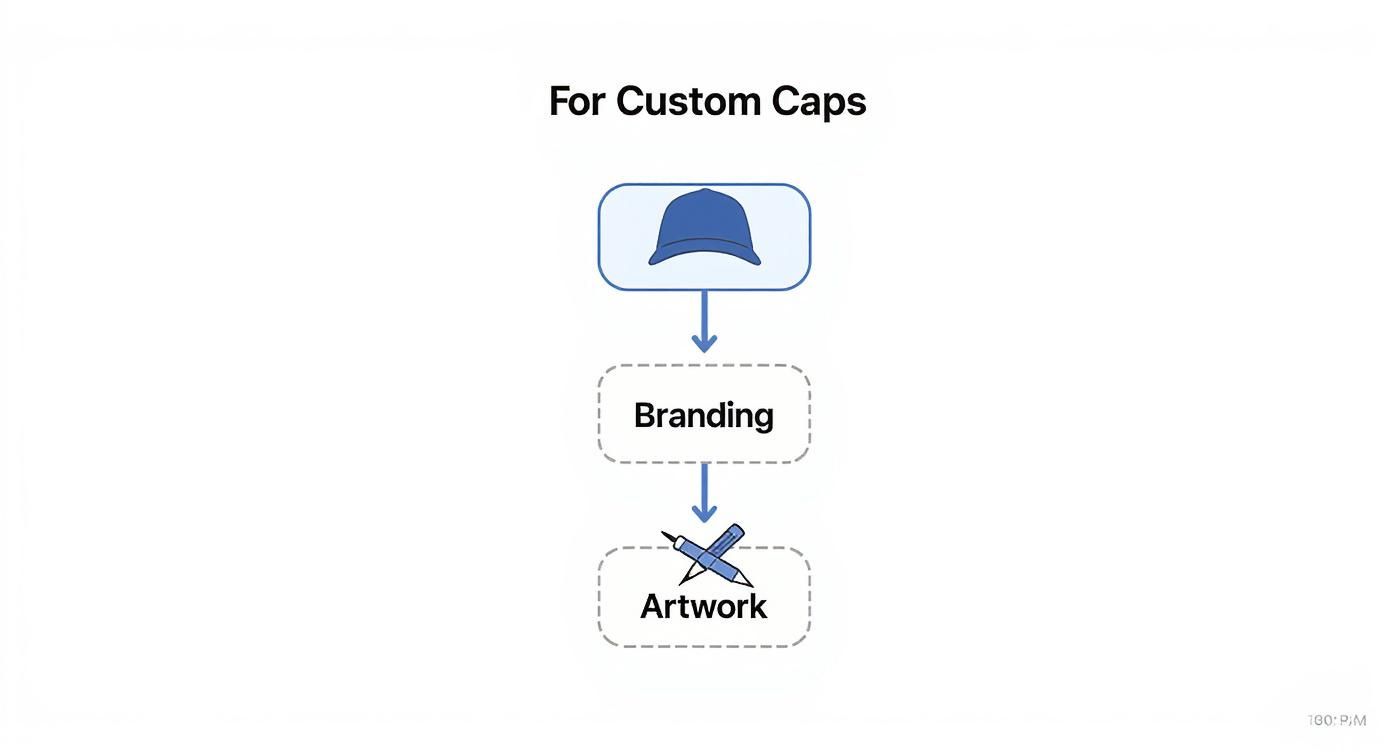 As you can see, starting with the cap's main purpose makes every other decision—from fabric to branding—that much easier.
Popular Fabric Choices Explained
Different fabrics bring different strengths to the table. Here are the most common ones you'll come across when creating custom caps.
- Cotton Twill: This is probably the most popular material, and for good reason. It’s tough, comfortable, and has that classic diagonal weave that looks great with detailed embroidery. It's a solid, breathable choice for most of the year.
- Polyester: If you need a cap for sports or activewear, polyester is your go-to. It's known for being incredibly resilient and great at wicking away moisture. Plus, it resists shrinking and fading, keeping uniforms looking sharp.
- Canvas: As a heavier, sturdier cotton fabric, canvas gives a cap a really rugged and durable feel. It’s a fantastic option for workwear or for brands that want their merchandise to feel more substantial and high-end.
- Eco-Friendly Fabrics: More and more brands are looking for sustainable options. Materials like organic cotton or recycled polyester are becoming a popular way to show you care, without sacrificing an ounce of quality.
Ultimately, the goal is to find that sweet spot where the style and material perfectly match your brand's identity and what the wearer actually needs. To see all these options in action, feel free to browse our full range of custom headwear and find the perfect starting point for your project.
Embroidery vs. Printing: Which Branding Technique is Right for Your Cap?
Once you’ve nailed down the perfect style and material for your custom caps, it’s time for the fun part: getting your logo on there. This is where your brand really comes to life, and the two biggest players in the game are embroidery and printing.
Each method gives a completely different look and feel, and they both have their strengths. Think of it like the difference between a painting and a sculpture. Printing is your painting—it’s flat, can be incredibly vibrant, and is perfect for capturing fine details and a whole spectrum of colours. Embroidery is the sculpture—it’s textured, has real depth, and gives off a premium, tactile vibe that feels built to last.
Neither is ‘better’, but one will definitely be a better fit for your specific design, budget, and what you’re trying to say with your brand.
The Timeless Appeal of Embroidery
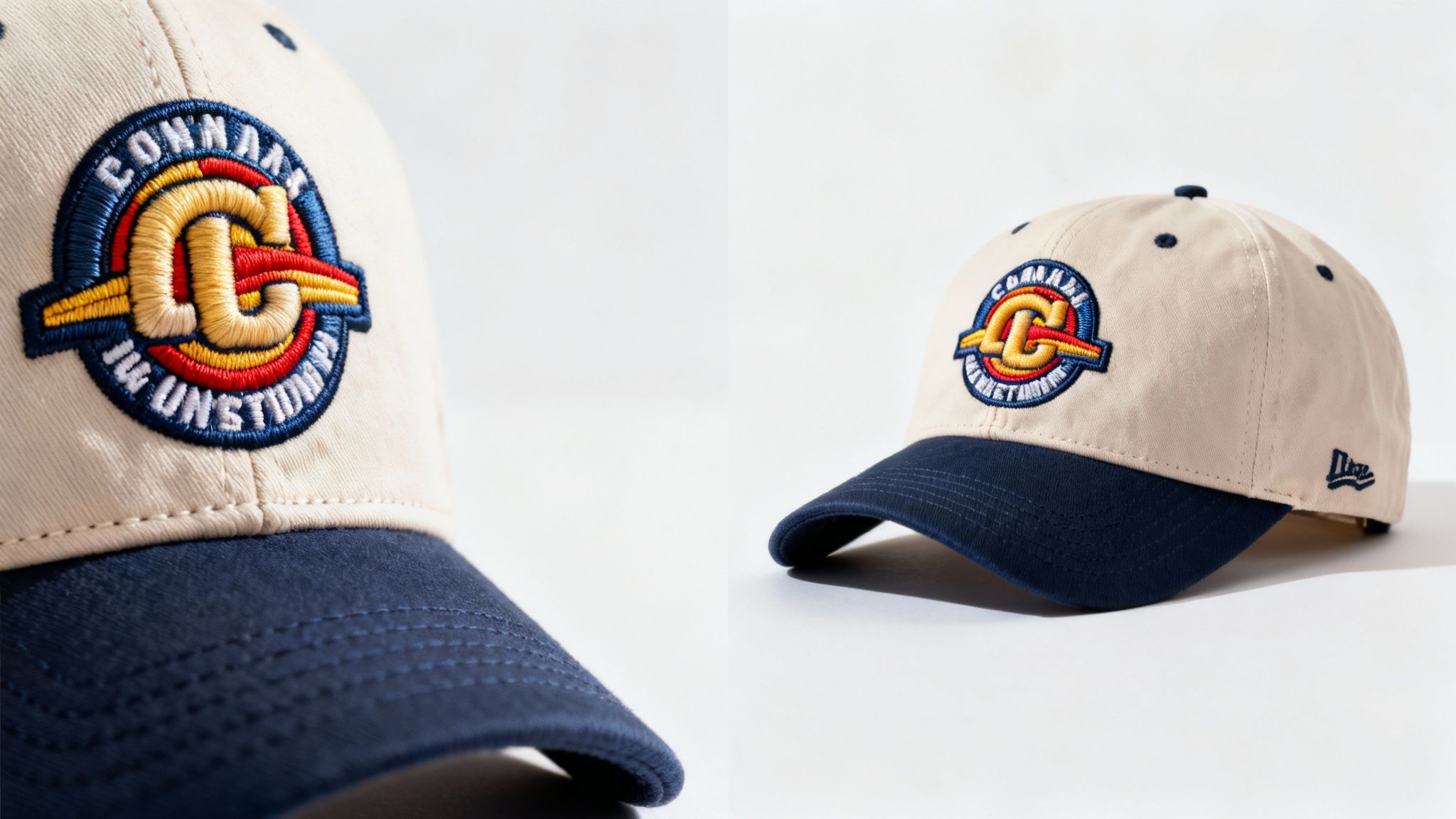
Embroidery is the art of stitching a design directly into the fabric with thread. It's a classic for a good reason. It delivers a high-end, professional finish that’s tough as nails. The design has a real texture you can feel and a subtle sheen that catches the light, making your logo literally stand out from the cap.
For custom caps, you’ll mainly be looking at two types of embroidery:
- Flat Embroidery: This is the go-to, standard technique. It creates a clean, sharp, and sophisticated look that sits flush against the cap. It’s perfect for detailed corporate logos, crisp text, and any design where you want a polished finish that never goes out of style.
- 3D Puff Embroidery: Ready to take it up a notch? This technique adds a foam insert under the stitching, resulting in a raised, three-dimensional effect. It gives your logo a bold, poppy quality you can’t miss. It’s a huge hit with sports teams and streetwear brands looking to make a big statement with simple logos or letters.
Embroidery is widely seen as the premium choice for custom headwear. Its durability is legendary—the branding will probably outlast the cap itself, making it a fantastic investment for staff uniforms or high-quality retail merch.
If you're curious about the nuts and bolts of how it all works, you can learn more about the specifics of embroidery and see how we digitise designs for the stitching process. It’s this craftsmanship that gives it a perceived value printing sometimes can’t quite match.
The Versatility of Printing
Printing is all about applying ink directly onto the cap’s surface. While it doesn't have the same texture as embroidery, its real power is in reproducing complex, multi-coloured graphics with almost photographic accuracy. If your logo has colour gradients, tiny details, or a whole rainbow of colours, printing is almost always the way to go.
The main printing methods you’ll come across for caps are:
- Screen Printing: This is a fantastic, cost-effective option for simpler designs with just a few solid colours. Ink is pushed through a mesh screen onto the cap, a process that’s super-efficient for large orders. This makes it a great choice for promotional giveaways and event merchandise.
- Heat Transfer (Digital Transfer): This is where printing really shines for complex art. We print your design onto special transfer paper and then apply it to the cap using a combination of heat and pressure. Heat transfers are brilliant at reproducing full-colour photos, intricate graphics, and designs with subtle colour fades that embroidery just can’t handle.
So, how do you choose? It really boils down to three things: the complexity of your artwork, the finish you're after, and your budget. If you have a simple, bold logo and want it to scream "professional and long-lasting," embroidery is your best bet. But if your design is all about vibrant colours and intricate detail, printing will bring it to life perfectly.
Preparing Your Artwork for Production
Think of your artwork file as the blueprint for your cap. If that blueprint is blurry, incomplete, or can't be scaled, the final construction is going to have problems. This is why it’s so crucial to understand the difference between the two main types of image files before you send anything our way.
The Gold Standard: Vector Files
For almost every branding method we use, vector files are the undisputed champions. You'll recognise them by their file extensions: .AI (Adobe Illustrator), .EPS, and sometimes .SVG or a vector-based .PDF.
So, what makes them so special? A vector file isn't made of pixels; it's built from mathematical paths and points. This means you can shrink your logo down to fit on the side of a pen or blow it up to cover a billboard, and it will never lose quality. It stays perfectly crisp every single time.
This scalability is absolutely essential for embroidery, where the design needs to be digitised into a clean stitch pattern, and for printing methods like screen printing, where sharp lines are critical for creating a perfect stencil.
When Raster Files Can Work
The other type of file is a raster file, which is what most of us are used to. These are your everyday .JPGs, .PNGs, and .GIFs. Instead of mathematical paths, these images are built on a fixed grid of tiny squares, or pixels.
While raster files are fine for websites and digital photos, they have one major drawback for production: they don’t scale up. If you try to enlarge a small raster logo, it just becomes a blurry, pixelated mess. If you absolutely have to use a raster file, it needs to be very high resolution—we're talking 300 DPI (dots per inch) at the final size it will be on the cap.
A low-resolution raster file is the number one cause of production delays. To be safe, always start with the best quality file you can get your hands on. Using a vector format is the surest way to guarantee a flawless result.
Key Artwork Considerations
Getting the file type right is a massive step, but there are a few other details that will make the whole process smoother.
- Colour Matching: Don't just eyeball your colours. To get a perfect match, you need to provide a Pantone (PMS) code. This is a universal colour-matching system that ensures the thread or ink we use is the exact shade from your brand guidelines, removing all guesswork.
- Sizing and Placement: Think about where you want your logo to go. The front panel is the classic choice, but the sides, back, or even the brim can be great spots. Just remember that each location has different size constraints, so consider how your design will fit within those specific areas.
- Design Simplicity: This is a big one for embroidery. Designs with very fine lines or tiny, intricate text don't always translate well into stitches. Sometimes, simplifying your logo just a little bit can result in a much cleaner and more powerful final product.
For a more detailed checklist, have a look at our simple guide to artwork submission tips for beginners. Taking a few minutes to get your files right from the start will save a ton of time and make sure your custom caps look exactly how you imagined them.
Getting Your Custom Caps on Time: A Look at Production & Delivery
So, you’ve got a killer design and you’re ready to order. Great! But how long does it actually take for those ideas to become finished caps, ready to wear? It's a question we get all the time. Getting your head around the production journey is key to making sure your caps arrive exactly when you need them, without any last-minute panic.
It’s not quite an overnight process. From finalising your artwork and approving a mock-up to the actual production run, each step has its own timeframe. Think of it like a relay race – each stage hands off to the next, and things like design complexity or busy seasons can affect the overall speed. Let's walk through it.
First Things First: Minimum Order Quantities (MOQs)
Before we even talk timelines, we need to touch on Minimum Order Quantities, or MOQs. This is simply the smallest number of caps we can produce in one go. Why the minimum? Because setting up industrial embroidery or printing machines is a detailed process. It just isn't practical or cost-effective to fire them up for only a handful of caps.
The MOQ has a direct impact on your price per cap. As a rule of thumb, the more you order, the cheaper each individual cap becomes because those initial setup costs get spread over a larger number of items. If you're a smaller business or just need a batch for a specific event, finding a supplier with a reasonable MOQ is crucial to getting the project off the ground without being stuck with a mountain of unsold stock.
Your Standard Production Timeline
Once your design is locked in and you’ve hit the MOQ, the real work begins. Here’s a breakdown of what you can typically expect.
- The Digital Mock-Up (1-2 business days): You send us your artwork, and our team gets to work creating a digital proof. This is your first look at how the design will sit on the cap—you'll see the exact size, placement, and colours. We can't move forward until you give this the green light, so a quick approval helps keep things on track.
- The Pre-Production Sample (Optional, adds 1-2 weeks): Got a huge order or a really intricate design? You might want to get a physical sample made first. This lets you hold the finished product in your hands and check every detail before we produce the entire batch. It adds a bit of time, but for big projects, the peace of mind is priceless.
- Mass Production (2-4 weeks): This is where the magic happens. We get to work branding your caps. The timeline here depends heavily on the branding method—detailed embroidery will naturally take a bit longer than a simple screen print—and, of course, the size of your order.
- Shipping and Delivery (3-7 business days within Australia): Once they're all done, we pack them up and send them your way. Delivery times will vary a little depending on where you are in Australia.
The best advice we can give? Plan ahead. All up, a standard order usually takes between 3 to 6 weeks from the moment you approve the artwork to the day the box arrives at your door. Building this lead time into your schedule is the secret to a stress-free experience.
What Can Slow Things Down (Or Speed Them Up)?
While that 3-6 week window is a solid guide, a few things can shift the timeline. Knowing what they are can help you plan even better.
- Design Complexity: A simple, one-colour logo is a pretty straightforward job. But if you’re looking at a cap with complex, multi-coloured 3D puff embroidery on three different locations plus custom internal tags, that’s going to take more time to get just right.
- Seasonal Rush: Some times of the year are just plain busy. The lead-up to Christmas and the end of the financial year are classic examples. Order volumes spike across the industry, which can stretch out production times. If you need caps for these periods, it’s always smart to get your order in well ahead of time.
- Stock Availability: We keep a huge range of caps in stock, but every now and then, a specific colour or style might need to be ordered in from our suppliers, which can add a few extra days at the start.
The world of custom caps in Australia is always buzzing with new ideas, from a bigger focus on sustainable materials to really creative branding techniques. Businesses are realising that a well-designed, eco-friendly cap with something unique like 3D embroidery is more than just a giveaway—it’s a powerful marketing tool. You can see what's currently trending and how Aussie branding is being elevated with headwear trends to get some inspiration.
At the end of the day, the best way to manage your timeline is to have an open chat with us. If you tell us your deadline right from the start, we can guide you through the process. If you’re in a real pinch, we can often suggest different cap styles or branding methods to help you hit your date. For a quick idea of costs and timing for your project, our instant print quote tool is a great place to start.
Inspiring Examples of Custom Caps in Action
Sometimes, the best way to get your own creative gears turning is to see what others are doing. Custom caps are so much more than just something to wear on your head; when done right, they're a seriously powerful branding tool.
Let's dive into a few real-world scenarios to see how different businesses and organisations put custom caps to work for them. From sharp corporate uniforms to must-have retail merch, the secret is always in matching the cap's style, material, and branding to a specific goal. This is how a simple accessory becomes a valuable asset for building your brand and connecting with your people.
For The Modern Tech Company
Tech companies are all about a clean, premium aesthetic that mirrors their focus on innovation and quality. For them, a custom cap isn't just a giveaway—it’s a key piece of a unified team look that builds cohesion, whether in the office or at a major industry conference.
- Cap Style: Think classic and structured. A baseball cap in a sophisticated neutral like charcoal, navy, or black always hits the mark. The emphasis is on a sharp silhouette and impeccable construction.
- Material: Premium cotton twill is the go-to here. It's tough, breathable, and has a quality feel that says "we care about the details" without being flashy.
- Branding Method: Flat embroidery is the perfect choice. A crisp, flawlessly stitched logo on the front panel looks professional and reinforces the company’s high standards.
For The Local Sports Club
For any sports team and its fanbase, custom caps are pure passion. It's about creating a piece of merchandise that supporters are genuinely proud to wear, turning them into walking billboards for the club.
- Cap Style: You can't go wrong with a bold snapback or a classic trucker cap. Both styles have a confident, casual vibe that’s a perfect match for the energy of players and fans.
- Material: A durable wool blend for snapbacks or a sturdy cotton/poly mix for trucker caps ensures they'll hold up through many seasons of cheering.
- Branding Method: This is where 3D puff embroidery really gets to shine. A raised, textured team mascot or logo on the front makes a huge statement and stands out in any crowd.
The global headwear market is booming, driven by fashion trends and the ever-growing use of caps as promotional items. Here in Australia, the demand for custom apparel is a massive part of that, as businesses see firsthand how it boosts brand engagement and visibility.
For The Trendy Retail Brand
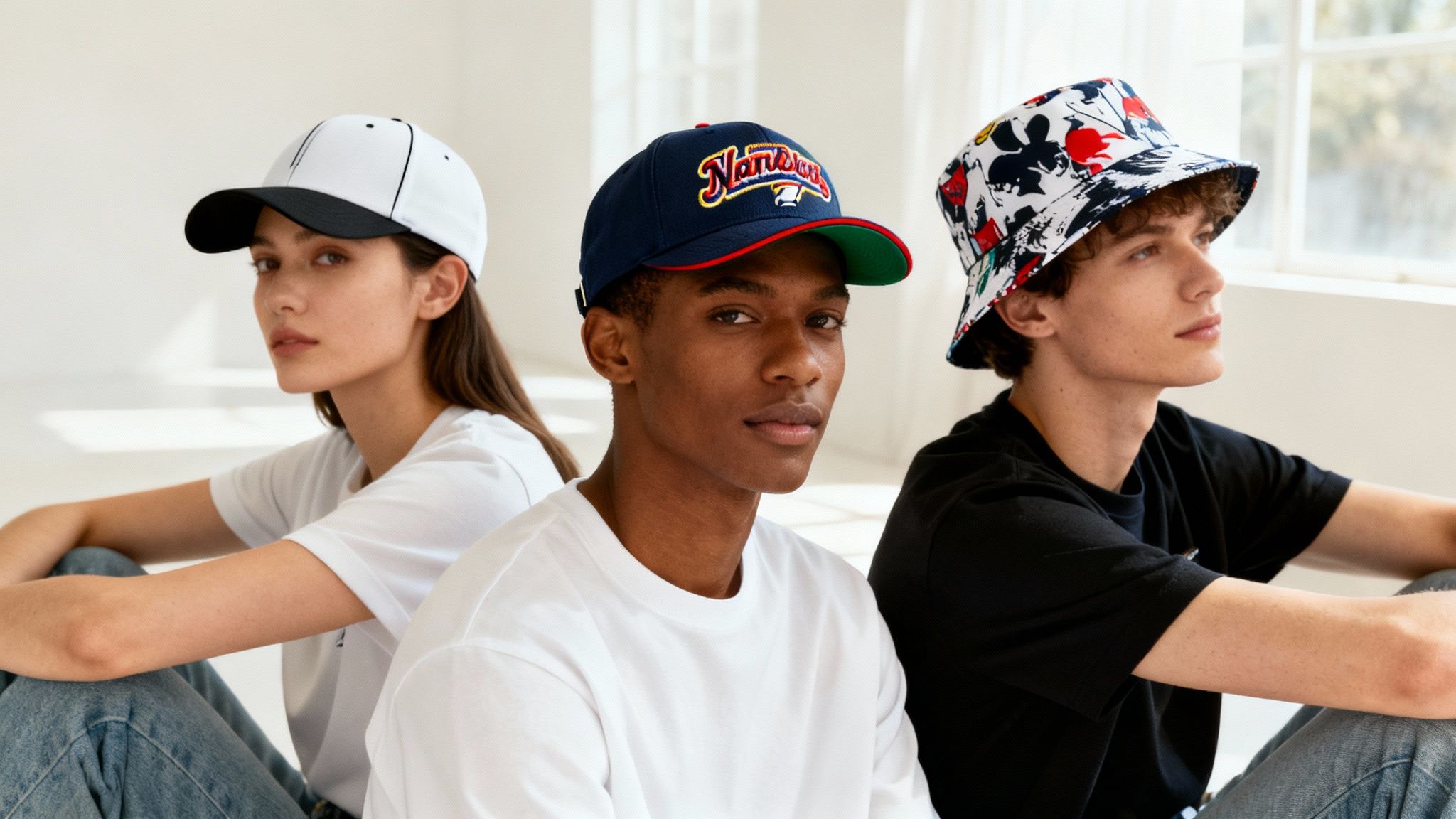
Fashion and streetwear brands treat custom caps as essential accessories in their collections. In this world, a cap isn't just merch; it’s a thoughtfully designed fashion statement that captures the brand's unique identity and speaks directly to a style-savvy crowd.
- Cap Style: A trendy bucket hat or a stylish five-panel "camp" cap is often picked to tap into current fashion movements.
- Material: Interesting fabrics like canvas, corduroy, or even recycled materials are used to add texture and a unique feel, elevating the cap far beyond a standard promo item.
- Branding Method: Often, it’s a mix of techniques. A woven patch (appliqué) sewn onto the front gives it a cool, retro vibe, while a subtle embroidered logo on the back adds a final touch of branding.
As you can see, custom caps are incredibly versatile. They're just one of many powerful tools in a marketer's kit; have a look at our guide on the top 10 promotional products to see how they fit into a wider strategy. By thinking carefully about your audience and what you want to achieve, you can create custom headwear that does so much more than just keep the sun out of your eyes.
Your Custom Cap Questions, Answered
Alright, let's tackle some of the most common questions we get about ordering custom caps. We've put this together to clear up any final details so you can feel completely confident before you hit 'go' on your project. Think of it as the last step before your amazing headwear ideas come to life.
How Much Do Custom Caps Cost?
This is the big question, isn't it? The honest answer is: it depends. There’s no single price tag because the final cost per cap is a mix of a few key things. What you choose – the cap style, how complex your design is, the branding method you go with (embroidery and printing have different costs), and crucially, your order quantity – all play a part.
As a general rule, the more caps you order, the cheaper each one becomes. That’s because the setup costs for the machines and design work get spread across a bigger batch. So, a small, detailed order of 25 embroidered caps will naturally have a higher price per item than a massive run of 500 screen-printed trucker caps.
What’s the Minimum Order Quantity?
The Minimum Order Quantity (MOQ) is simply the smallest number of caps you can order in one go. For most of our custom caps, the starting line is usually around 25 units. This can sometimes shift depending on the specific cap style and how much work is involved in the branding.
Why is there a minimum? It really comes down to the setup. Firing up the embroidery or printing machines involves a fair bit of time and resources. Setting it all up for just one or two caps just isn't practical, so the MOQ ensures the process makes sense for everyone involved.
How Long Will My Order Take?
When it comes to custom gear, a little planning goes a long way. For a standard order of custom caps here in Australia, you should typically budget for about 3 to 6 weeks from the moment you sign off on the artwork proof to the day the box lands on your doorstep. That window covers both production and shipping time.
Just a heads-up: more intricate jobs, like caps with logos in multiple spots or those with cool 3D puff embroidery, might need a bit more time in the workshop. If you’ve got a hard deadline for an event, make sure to tell us right at the start. We can help steer you towards options that will get there on time.
How Should I Care for My Custom Caps?
A little bit of care will keep your custom caps looking brand new for ages. We almost always recommend spot cleaning with a damp cloth and a bit of mild soap. Chucking them in the washing machine can mess with the cap's shape and potentially damage the branding.
Here are a few quick tips to keep them looking sharp:
- Stay Away From the Dryer: The heat from a dryer is the enemy of a cap's structure. Always let it air dry naturally.
- Hand Wash if Necessary: If it needs a proper clean, a gentle hand wash in cool water is your best bet.
- Store Them Right: Don't just crush it in a drawer. Popping it on a shelf or a hook will help it keep its perfect shape.
The growing popularity of custom caps in Australia is really part of a bigger picture – people want personalised gear that’s made to last. This lines up with what's happening in other local industries, too. For instance, the Australian market for plastic caps and closures was valued at around $1.04 billion and is expected to climb. It sounds unrelated, but the shared focus on smart, eco-conscious design shows how consumer tastes are shifting across the board. You can dive deeper into this trend in this detailed industry report.
Ready to create some headwear that people will actually want to wear? The team here at Simply Merchandise is ready to guide you through every step, from picking the right style to getting the final product in your hands.

